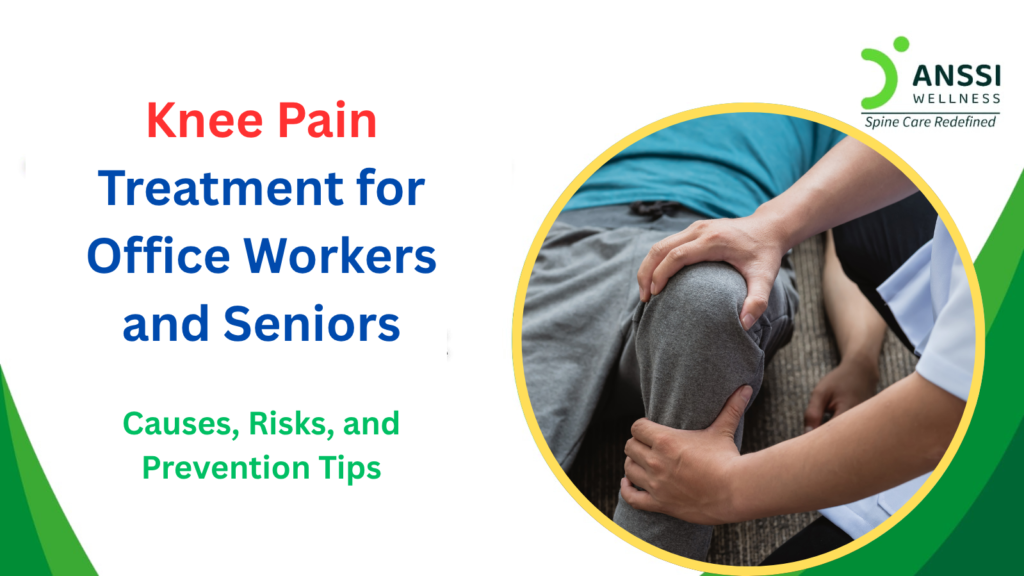
Chronic knee pain is no longer a problem limited to athletes or individuals with physically demanding jobs. Today, it is increasingly affecting two very different groups: office workers and senior citizens. While office workers often develop knee pain due to prolonged sitting, inactivity, and poor workplace habits, older adults experience pain primarily because of age-related wear and tear of the knee joint.
Regardless of the cause, untreated knee pain can gradually reduce mobility, interfere with daily activities, and significantly affect quality of life. The good news is that early diagnosis, lifestyle modifications, and modern non-surgical rehabilitation can help many patients manage their symptoms effectively and maintain an active lifestyle.
Why Office Workers and Seniors Are at Risk
Although their lifestyles differ, both office workers and seniors place unique stresses on their knee joints.
Office Workers
Many professionals spend eight to ten hours sitting at a desk every day. Prolonged sitting reduces joint movement, weakens the muscles supporting the knee, and decreases flexibility.
Common contributing factors include:
- Long periods of sitting without movement
- Poor posture while working
- Weak quadriceps and hip muscles
- Weight gain associated with sedentary lifestyles
- Lack of regular exercise
- Poor workplace ergonomics
Over time, these factors can contribute to stiffness, discomfort, and chronic knee pain.
Seniors
In older adults, knee pain is commonly associated with osteoarthritis, a condition in which the cartilage protecting the joint gradually wears away.
Additional contributing factors include:
- Age-related cartilage degeneration
- Reduced muscle strength
- Previous knee injuries
- Decreased balance and coordination
- Reduced flexibility
- Long-term mechanical wear of the joint
As the joint deteriorates, everyday activities may become increasingly difficult.
Common Symptoms of Chronic Knee Pain
Persistent knee pain often develops gradually. Early recognition allows treatment to begin before the condition progresses.
Common symptoms include:
- Persistent aching around the knee
- Morning stiffness
- Swelling around the joint
- Clicking or grinding sensations during movement
- Pain while climbing or descending stairs
- Difficulty standing after prolonged sitting
- Reduced range of motion
- Pain while walking long distances
A medical assessment is advised if these symptoms persist for a few weeks.
How Untreated Knee Pain Affects Daily Life
Many people delay treatment, believing knee pain is simply part of ageing or a temporary consequence of work-related strain. However, untreated knee pain may progressively affect multiple aspects of life.
- For office workers, chronic pain can reduce concentration, productivity, and workplace comfort. Sitting for long periods may become increasingly uncomfortable, while commuting and climbing stairs become challenging.
- For seniors, persistent knee pain may reduce independence. Walking, shopping, household chores, and recreational activities may become difficult, increasing the risk of social isolation and reduced physical activity.
Reduced mobility may also contribute to muscle weakness, weight gain, poorer cardiovascular health, and an increased risk of falls.
When is Knee Surgery Recommended?
Not every patient with chronic knee pain requires surgery.
Orthopaedic specialists may recommend surgical treatment in situations such as:
- Advanced osteoarthritis with severe cartilage loss
- Major ligament injuries
- Certain meniscal injuries
- Significant joint deformity
- Persistent symptoms despite appropriate conservative treatment
Procedures may include arthroscopy or total knee replacement, depending on the underlying condition.
Like any surgical procedure, knee surgery carries potential risks, including infection, blood clots, prolonged rehabilitation, and recovery time. Older adults and patients with certain medical conditions may also face increased surgical risks. This is one reason why many individuals explore conservative treatment options before considering surgery, when clinically appropriate.
Prevention Tips for Office Workers
Simple lifestyle changes can help reduce stress on the knees and lower the risk of chronic pain.
Helpful strategies include:
- Stand and walk every 30 to 60 minutes.
- Maintain a healthy body weight.
- Strengthen the quadriceps, hamstrings, and hip muscles.
- Adjust workstation ergonomics.
- Avoid sitting continuously for long periods.
- Wear supportive footwear.
- Include regular stretching and low-impact exercise in your routine.
These habits help improve circulation, maintain joint flexibility, and strengthen the muscles that support the knee.
Prevention Tips for Seniors
Older adults can also take practical steps to protect their knee joints.
Recommended measures include:
- Engage in low-impact activities like swimming or walking to stay physically active.
- Perform strengthening and balance exercises.
- Maintain a healthy body weight.
- Wear comfortable, supportive footwear.
- Reduce the risk of falls by keeping living spaces safe.
- Seek medical advice promptly if knee pain persists.
Regular physical activity not only strengthens muscles but also helps maintain joint function and overall mobility.
Advanced Knee Rehabilitation Program
Many patients with chronic knee pain can benefit from comprehensive rehabilitation without requiring surgery.
For appropriately selected individuals, an Advanced Knee Rehabilitation Program combines modern rehabilitation techniques to address pain, improve movement, and enhance joint function.
One component of the programme may include knee decompression technology, which is designed to gently reduce mechanical stress across the knee joint. This may be combined with:
- Physiotherapy
- Muscle strengthening exercises
- Flexibility training
- Gait correction
- Balance training
- Lifestyle counselling
- Weight management advice
The programme is individualised according to the patient’s symptoms, clinical examination, and functional goals.
Rather than focusing only on temporary pain relief, comprehensive rehabilitation aims to improve joint mechanics, restore muscle support, enhance mobility, and help patients return to everyday activities with greater confidence.
Why Early Treatment Matters
Seeking treatment early offers several important advantages.
Early intervention may help:
- Control pain before it becomes severe
- Improve joint mobility
- Maintain muscle strength
- Delay progression of joint degeneration
- Reduce dependence on prolonged pain medication
- Improve overall quality of life
- Increase the opportunity to benefit from conservative rehabilitation
Ignoring persistent symptoms may allow joint problems to worsen, making recovery more challenging.
About ANSSI:
ANSSI Wellness focuses on improving the quality of life for patients suffering from knee issues, aiming to provide relief where other conventional treatments have failed. Through Advanced Knee Rehabilitation Treatment, ANSSI is committed to helping patients avoid surgery and recover in a safe, effective, and compassionate environment.
Connect with ANSSI Wellness on LinkedIn, Instagram, and Facebook for expert guidance.
Clinical References:
- Nguyen US, Zhang Y, Zhu Y, Niu J, Zhang B, Felson DT. Increasing prevalence of knee pain and symptomatic knee osteoarthritis: survey and cohort data. Annals of Internal Medicine. 2011;155(11):725-732.
- Sancheti et al. Management of Knee Pain and Early Osteoarthritis in India. Clinics in Orthopedic Surgery. Vol. 9, No. 3, 2017.
- Hazra, S., Mondal, K., Bhattacharya, D. et al. Prevalence of Knee Osteoarthritis in India: A Systematic Review and Meta-Analysis of Population-Based Studies. JOIO 59, 1785–1796 (2025).
- Vanneste T, Belba A, Oei GTML, Emans P, Fonkoue L, Kallewaard JW, et al. 9. Chronic knee pain. Pain Pract. 2025;25:e13408.