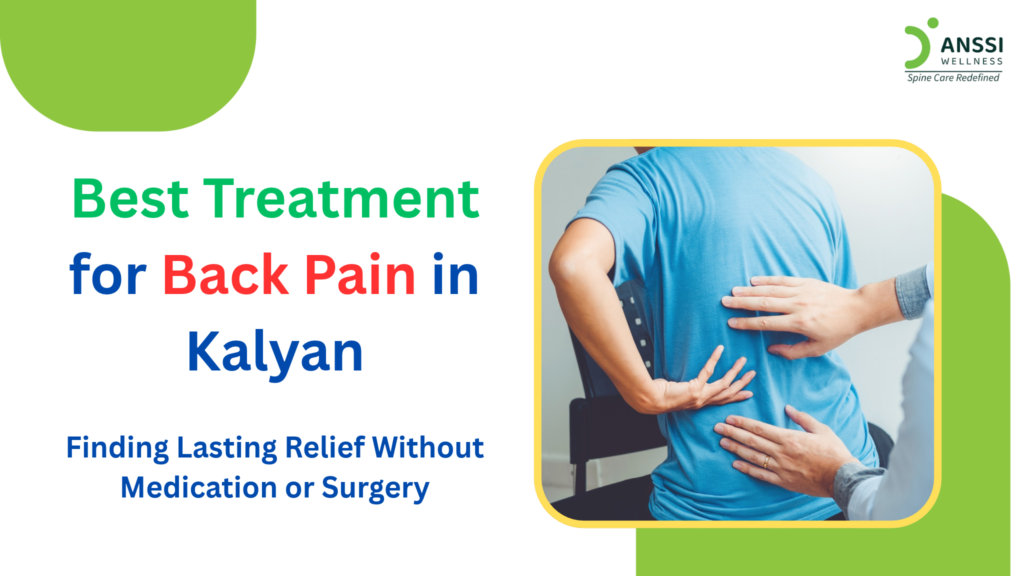
For many people in Kalyan, back pain is not a one-time problem. It may begin as occasional discomfort after a long day at work, prolonged sitting, commuting, physical activity, or an old injury. Over time, however, the pain can become recurrent and begin interfering with sleep, work, exercise, and everyday activities.
When pain returns repeatedly, many people follow the same cycle: take painkillers, rest for a few days, undergo physiotherapy, feel better temporarily, and then experience the pain again. This can leave patients wondering whether there is a way to address the underlying problem without immediately turning to surgery.
The answer begins with understanding what is actually causing the back pain.
Why Does Back Pain Keep Coming Back?
Back pain can have many causes, and not every case is related to the same spinal structure. Persistent symptoms may be associated with conditions such as:
- Disc bulge or herniation
- Degenerative disc changes
- Nerve irritation or compression
- Spinal stenosis
- Facet-joint changes
- Muscle weakness or imbalance
- Poor posture and prolonged static positions
- Previous spinal injury
For example, a disc problem may irritate a nearby nerve and cause pain that travels from the lower back into the buttock or leg. Spinal stenosis may produce leg pain, numbness, or heaviness that becomes more noticeable while standing or walking.
This is why simply treating “back pain” without identifying its possible source may not provide a satisfactory long-term strategy.
Do Painkillers Treat the Cause?
Pain-relieving medicines can have an important role in managing back pain. Depending on the medication and the individual’s condition, they may reduce pain or inflammation and make movement easier.
However, medication generally works by controlling symptoms rather than correcting an underlying structural disc or spinal problem.
For someone with a disc bulge, for example, a painkiller may make the person feel better, but it does not necessarily change the disc abnormality itself. Once the effect of the medication wears off, the symptoms may return.
Some medicines can also carry risks when used for prolonged periods or in people with particular medical conditions. Therefore, pain medication should be taken according to appropriate medical advice rather than becoming a long-term self-treatment strategy.
What If Physiotherapy Has Not Provided Lasting Relief?
Physiotherapy is an important component of conservative back-pain care. Strengthening exercises, mobility work, posture correction, ergonomic changes, and activity modification can help many people.
But persistent pain does not necessarily mean that physiotherapy is ineffective. It may indicate that the treatment needs to be reassessed according to the patient’s diagnosis.
For example, a person with significant disc-related symptoms may require a treatment plan that combines rehabilitation with an approach directed toward reducing mechanical loading on the affected spinal region.
The important question is not whether physiotherapy should be abandoned, but whether the overall treatment plan matches the underlying problem.
How Does Non-Surgical Spinal Decompression Work?
At ANSSI Wellness, Non-Surgical Spinal Decompression Treatment (NSSDT) is offered as a non-surgical approach for appropriately assessed patients with certain spinal conditions.
NSSDT uses a computer-controlled treatment table and harness system to apply controlled forces to selected spinal segments. The intended approach is to create periods of controlled spinal unloading and reduce mechanical stress on the affected area.
Changes in spinal loading are proposed to influence pressure and mechanical forces around an affected disc. The treatment is also commonly described in terms of potential changes in intradiscal pressure and fluid movement. However, these effects should not be interpreted as a guarantee that a disc will return to its original condition or that nerve compression will permanently disappear.
The suitability of spinal decompression depends on the patient’s diagnosis, symptoms, examination findings, and overall health.
A Personalised Approach at ANSSI Wellness Kalyan
At ANSSI Wellness Kalyan, the treatment process can begin with a clinical assessment rather than immediately selecting a treatment.
The patient’s symptoms, medical history, physical findings, and available imaging reports can be considered together. Where appropriate, MRI or other imaging may help evaluate disc changes, nerve involvement, degeneration, or other spinal conditions.
If a non-surgical approach is considered suitable, NSSDT may be incorporated into a broader rehabilitation program. Physiotherapy, strengthening exercises, posture correction, ergonomic guidance, and advice regarding daily activities can complement the treatment.
This is important because chronic back pain is rarely solved by one intervention alone. The goal is to develop an individualised plan based on the patient’s condition and response to treatment.
Can Non-Surgical Treatment Always Replace Surgery?
No. Avoiding unnecessary surgery and claiming that surgery is never required are two different things.
Some spinal conditions require surgical evaluation, particularly when there is progressive neurological weakness, significant spinal instability, severe nerve or spinal cord compression, or certain serious injuries and conditions.
Similarly, symptoms such as new bladder or bowel dysfunction, numbness around the saddle area, rapidly progressing weakness, or severe difficulty walking require urgent medical assessment.
For appropriately selected patients without these indications, however, non-surgical management may be considered before invasive treatment.
About ANSSI:
ANSSI Wellness focuses on improving the quality of life for patients suffering from spinal issues, aiming to provide relief where other conventional treatments have failed. Through advanced Non-Surgical Spinal Decompression Treatment, ANSSI is committed to helping patients avoid surgery and recover in a safe, effective, and compassionate environment.
Book Consultation:
Call +91 9004726844 | 9920936844
Visit www.anssiwellness.com
Connect with ANSSI Wellness on LinkedIn, Instagram, and Facebook for expert guidance.