Understanding Spinal Stenosis: When the Space Around Nerves Becomes Narrow
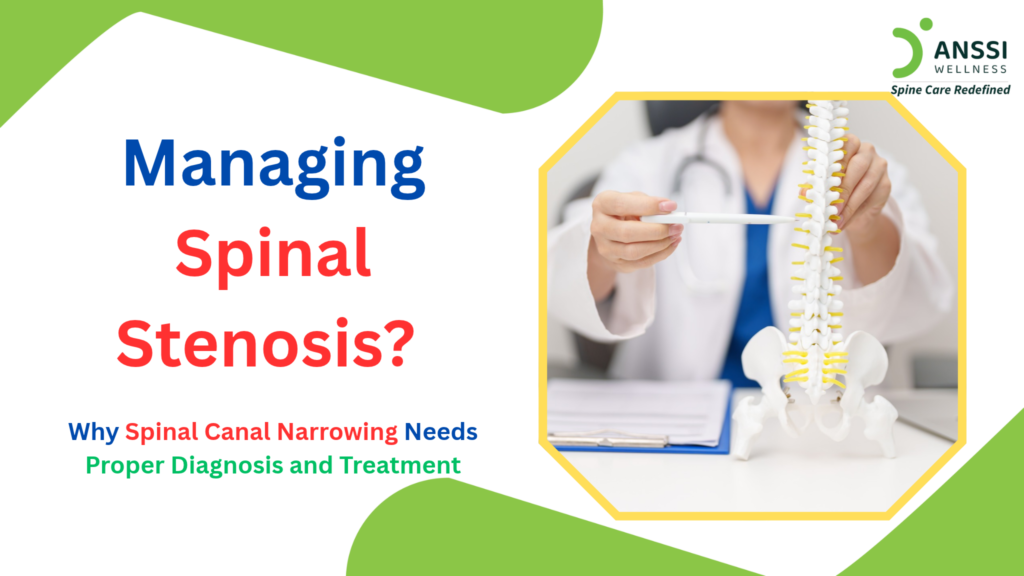
Spinal stenosis is a condition in which spaces within the spine become narrower, potentially putting pressure on the spinal cord or spinal nerve roots. This narrowing can develop in the spinal canal or in the foramina: the openings through which spinal nerves exit.
For people experiencing persistent back pain, neck stiffness, leg discomfort, or tingling in their arms, spinal stenosis may be one possible explanation. However, symptoms vary considerably. Some people have narrowing visible on an MRI without experiencing significant problems, while others develop pain, numbness, weakness, or difficulty walking.
Spinal stenosis is a structural condition, but its progression is not inevitable. Understanding what is causing the narrowing and whether it is affecting neurological function is essential for choosing appropriate treatment.
What Causes the Spinal Canal to Become Narrow?
Spinal stenosis often develops through a combination of age-related and degenerative changes. Several structures may contribute to reducing the available space for nerves.
1. Degenerative Disc Disease
Intervertebral discs act as cushions between the bones of the spine. Over time, discs may lose hydration and height, develop structural changes, or bulge beyond their usual boundaries.
These changes can contribute to narrowing around nerve roots. Reduced disc height may also affect the dimensions of the foramina through which nerves pass.
However, degenerative disc changes do not automatically lead to symptomatic spinal stenosis.
2. Osteophyte Formation
Osteophytes, commonly called bone spurs, can develop around spinal joints and vertebral edges as part of degenerative changes.
Depending on their location and size, these bony growths may reduce the space available for spinal nerves or the spinal cord.
3. Ligamentum Flavum Thickening
The ligamentum flavum is a ligament located along the back of the spinal canal. With degenerative changes, it may become thickened or buckle inward, contributing to narrowing of the canal.
This can be particularly relevant in lumbar spinal stenosis, where several structural changes may occur together.
4. Spondylolisthesis
Spondylolisthesis involves one vertebra slipping relative to the vertebra below it. Depending on the degree and direction of slippage, it may contribute to narrowing of the spinal canal or nerve exit openings.
When disc degeneration, bone spurs, ligament thickening, and vertebral slippage occur together, they may collectively reduce the space available for neural structures.
Lumbar Spinal Stenosis: How It Affects the Lower Back and Legs
Lumbar spinal stenosis occurs in the lower portion of the spine. It may affect the nerve roots that travel through the lumbar canal.
One characteristic symptom is neurogenic claudication: pain, heaviness, tingling, or weakness in the buttocks or legs that develops or worsens during standing or walking. Some people find that sitting or leaning forward reduces their symptoms.
Other symptoms may include:
- Persistent lower back pain or stiffness
- Pain spreading into the buttocks, thighs, or legs
- Numbness or tingling in the legs or feet
- Reduced walking tolerance
- Leg weakness or a feeling of heaviness
Symptoms may fluctuate depending on activity, posture, and the degree of nerve involvement. Severe or progressive symptoms require prompt medical assessment.
Cervical Spinal Stenosis: When Narrowing Affects the Neck
Cervical spinal stenosis occurs in the neck. If narrowing compresses a nerve root, it may cause neck pain, shoulder discomfort, or pain, tingling, and numbness extending into an arm or hand.
More serious cervical stenosis can compress the spinal cord and cause a condition known as cervical myelopathy.
Possible warning signs include:
- Difficulty with balance or coordination
- Changes in walking
- Hand clumsiness or difficulty with fine movements
- Weakness or altered sensation in the arms or hands
Spinal cord compression requires careful specialist assessment. New or worsening neurological symptoms should not be ignored.
Does Spinal Stenosis Always Get Worse Without Structural Treatment?
Spinal stenosis can progress as degenerative changes develop, but it does not worsen at the same rate in every person. Some people remain stable for years, while others experience increasing symptoms or changes in neurological function.
Pain management may help reduce discomfort, but pain relief alone does not necessarily change the anatomical narrowing visible on imaging. At the same time, there is no basis for assuming that medication or conservative treatment automatically accelerates structural deterioration.
The important distinction is between managing symptoms and addressing the underlying structural problem. Treatment should be selected according to the cause of stenosis, the severity of compression, and the patient’s clinical condition.
Why Early Diagnosis Matters
A proper assessment helps determine whether spinal stenosis is responsible for a patient’s symptoms and whether the spinal cord or nerve roots are affected.
A doctor may review the patient’s medical history, walking tolerance, pain patterns, strength, sensation, reflexes, and balance.
An MRI may be recommended when clinically indicated to assess the spinal canal, discs, ligaments, and neural structures. Imaging findings must be interpreted alongside symptoms and examination results. A scan showing narrowing does not, by itself, establish the need for surgery or a particular treatment.
Early diagnosis can help guide appropriate care, monitor neurological changes, and identify patients who need specialist or surgical evaluation.
Non-Surgical Treatment Options and the Role of NSSDT
Treatment for spinal stenosis depends on its location, severity, and underlying cause. For some patients, conservative management may include physiotherapy, individually selected exercises, activity modification, and medication prescribed by a doctor.
These approaches may help improve mobility, strength, and symptom management, although they do not necessarily reverse anatomical narrowing.
Non-Surgical Spinal Decompression Treatment (NSSDT) is offered as an option for selected patients with certain disc-related spinal conditions. NSSDT uses a computer-controlled table to apply regulated decompressive forces to a targeted spinal region. The treatment is intended to alter mechanical loading on the affected structures.
However, NSSDT should not be described as a proven method for reversing spinal canal stenosis, removing bone spurs, correcting ligament thickening, or preventing surgery. A qualified doctor should assess suitability before treatment.
When is Surgery Necessary?
Surgery may be considered when spinal stenosis causes significant or progressive neurological problems, severe functional limitations, or persistent symptoms despite appropriate conservative treatment.
Depending on the underlying condition, a spine specialist may discuss procedures designed to relieve pressure on neural structures or address spinal instability.
Surgery has potential risks, including infection, bleeding, nerve injury, anaesthesia-related complications, and persistent symptoms. However, when serious compression is present, delaying necessary treatment can also carry risks.
Seek urgent medical attention for new loss of bladder or bowel control, numbness around the groin or saddle area, rapidly worsening weakness, or sudden serious difficulty walking.
About ANSSI:
ANSSI Wellness focuses on improving the quality of life for patients suffering from spinal issues, aiming to provide relief where other conventional treatments have failed. Through advanced Non-Surgical Spinal Decompression Treatment, ANSSI is committed to helping patients avoid surgery and recover in a safe, effective, and compassionate environment.
Book Consultation:
Call +91 9004726844 | 9920936844
Visit www.anssiwellness.com
Connect with ANSSI Wellness on LinkedIn, Instagram, and Facebook for expert guidance.
Clinical References:
- Lurie J, Tomkins-Lane C. Management of lumbar spinal stenosis. BMJ. 2016;352:h6234.
- Rhee JM, Shamji MF, Erwin WM, et al. Nonoperative management of cervical myelopathy: a systematic review. Spine. 2013;38(22 Suppl 1):S55-S67.
- Katz JN, Harris MB. Lumbar spinal stenosis. New England Journal of Medicine. 2008;358(8):818-825.
- Beattie PF., Nelson R., Michener L., Cammarata J., Donely J.. Short And Long-Term Outcomes Following Treatment with the VAX-D Protocol for Patients with Chronic Activity Limiting Low Back Pain. Journal of Orthopaedic & Sports Physical Therapy, Volume 35, Number 1, January 2005.