Back and neck pain have become everyday complaints, especially among people with desk jobs, long commutes, and high screen time. Poor posture, prolonged sitting, stress, and lack of physical activity are putting continuous strain on the spine. What starts as mild discomfort often turns into chronic pain that affects work performance, sleep, and overall quality of life.
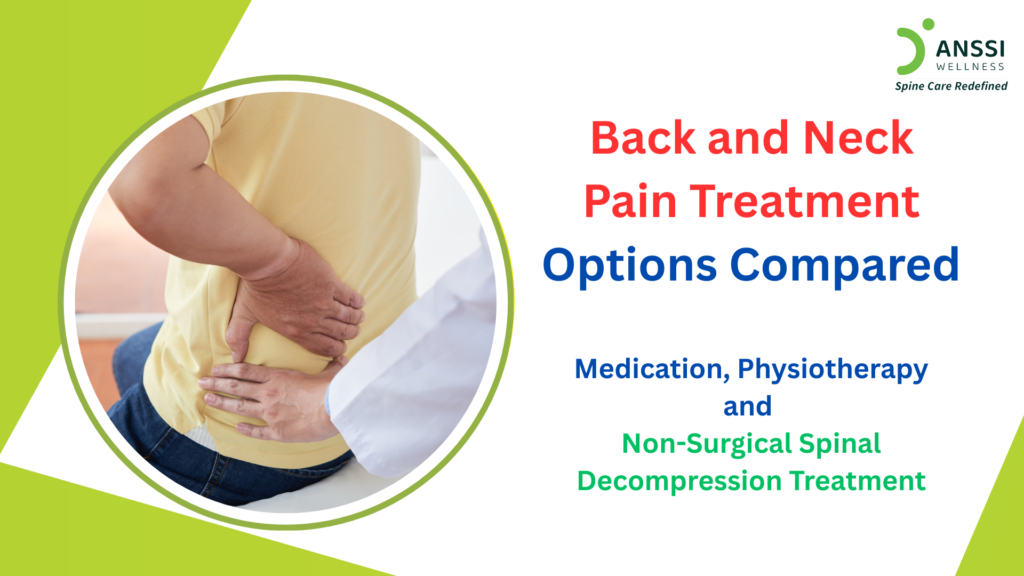
With so many treatment options available, patients are often confused about what to choose. Should you rely on medication for quick relief, start physiotherapy, or consider advanced non-surgical spine care?
Understanding how each option works and its limitations can help you make an informed decision.
Understanding the Root Cause of Pain
Back and neck pain are usually symptoms of an underlying issue rather than standalone problems. Common conditions include disc bulge, slipped disc, sciatica, and spondylosis. These conditions often involve disc degeneration, inflammation, or nerve compression.
Treating only the pain without addressing its cause may provide temporary relief but not long-term recovery. This is why accurate diagnosis through clinical evaluation and imaging tests is essential. Identifying whether the problem is muscular, disc-related, or nerve-related helps determine the most effective treatment approach.
Treatment Option 1: Medication
Medication is often the first line of treatment for back and neck pain. Painkillers, anti-inflammatory drugs, and muscle relaxants are commonly prescribed to reduce discomfort and inflammation.
- The main advantage of medication is that it provides quick relief. For acute pain or mild conditions, it can be helpful in managing symptoms and improving comfort.
- However, the biggest limitation of medication is that it does not treat the underlying cause. It only masks the pain temporarily. Once the effect wears off, the pain often returns.
Long-term use of painkillers can also lead to side effects such as digestive issues, dependency, and reduced effectiveness over time. This makes medication more suitable for short-term management rather than a long-term solution.
Treatment Option 2: Physiotherapy
Physiotherapy is a widely recommended treatment for spine-related problems. It focuses on improving strength, flexibility, and posture through guided exercises and techniques.
A trained physiotherapist designs a program that targets specific muscle groups, especially those supporting the spine. Strengthening these muscles helps reduce strain on the spine and improves overall stability.
Physiotherapy is particularly effective for muscular pain, posture correction, and rehabilitation after injury. It also plays a supportive role in long-term recovery by preventing recurrence.
However, in cases where the pain is caused by disc problems or nerve compression, physiotherapy alone may not be enough. While it can help manage symptoms and improve function, it may not directly reduce pressure on the affected disc or nerve.
Treatment Option 3: Non-Surgical Spinal Decompression Treatment
One of the most effective methods in this category is non-surgical spinal decompression treatment. This treatment uses specialised equipment to gently stretch the spine in a controlled manner.
The stretching creates negative pressure within the spinal discs, which helps reposition bulging or herniated discs and reduces pressure on compressed nerves. It also improves the flow of oxygen and nutrients to the affected area, supporting natural healing.
Non-surgical spine care is non-invasive, meaning there are no cuts, injections, or hospital stays involved. Patients can continue their daily activities with minimal disruption.
This approach is especially beneficial for chronic conditions such as slipped disc, sciatica, and spondylosis, where treating the root cause is essential for long-term relief.
Comparison: Which Option is Best?
Each treatment option has its place, depending on the severity and cause of the condition. Medication can be useful for immediate relief in the early stages of pain. Physiotherapy is effective for strengthening muscles, improving posture, and supporting recovery.
However, for chronic back and neck pain caused by disc issues or nerve compression, these options may not be sufficient on their own. In such cases, non-surgical spine care offers a more comprehensive solution by directly targeting the source of the problem.
Combining treatments is often the best approach. For example, non-surgical spinal decompression can be complemented by physiotherapy and lifestyle changes to achieve optimal results.
The key is to choose a treatment plan based on accurate diagnosis and individual needs rather than relying on a one-size-fits-all solution.
About ANSSI:
ANSSI Wellness focuses on improving the quality of life for patients suffering from spinal issues, aiming to provide relief where other conventional treatments have failed. Through advanced Non-Surgical Spinal Decompression Treatment, ANSSI is committed to helping patients avoid surgery and recover in a safe, effective, and compassionate environment.
Connect with ANSSI Wellness on LinkedIn, Instagram, and Facebook for expert guidance.
References:
- Gose EE, Naguszewski WK, Naguszewski RK. Vertebral axial decompression therapy for pain associated with herniated or degenerated discs or facet syndrome: an outcome study. Neurol Res. 1998 Apr;20(3):186-90. doi: 10.1080/01616412.1998.11740504. PMID: 9583577.
- Amjad F, Mohseni-Bandpei MA, Gilani SA, Ahmad A, Hanif A. Effects of non-surgical decompression therapy in addition to routine physical therapy on pain, range of motion, endurance, functional disability and quality of life versus routine physical therapy alone in patients with lumbar radiculopathy; a randomized controlled trial. BMC Musculoskelet Disord. 2022 Mar 16;23(1):255. doi: 10.1186/s12891-022-05196-x. PMID: 35296293; PMCID: PMC8924735.