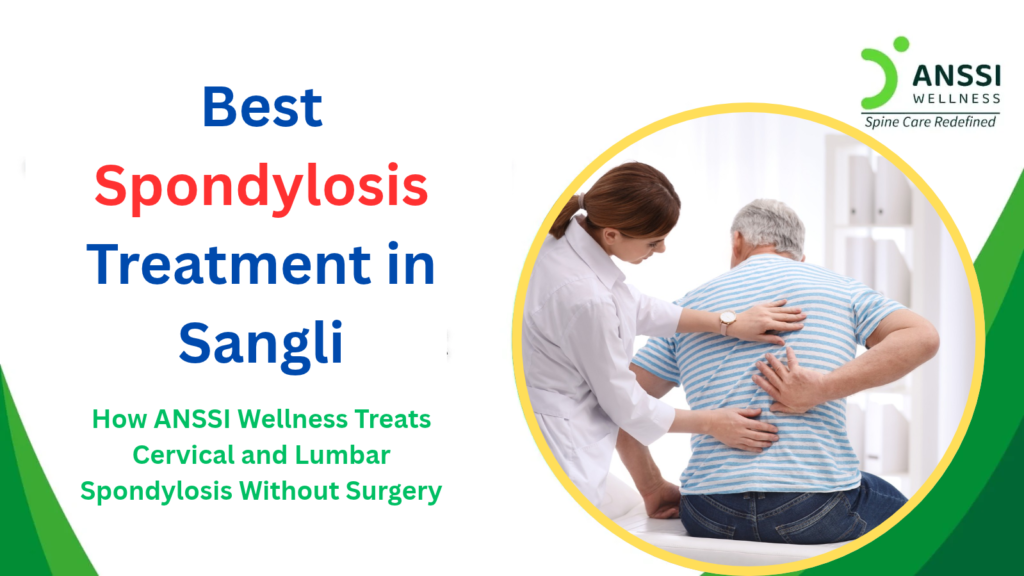
Spondylosis is a common spinal condition involving age-related changes in the intervertebral discs, joints and other structures of the spine. Although these changes may develop gradually, they can sometimes lead to persistent neck or lower back pain, stiffness and nerve-related symptoms that interfere with everyday activities. For residents of Sangli living with a spondylosis diagnosis, understanding available treatment options is essential for managing symptoms and maintaining mobility.
ANSSI Wellness Sangli offers a non-surgical approach to spine care that combines clinical assessment, Non-Surgical Spinal Decompression Treatment (NSSDT) and customised rehabilitation. The aim is to help suitable patients manage their symptoms through an individualised treatment programme.
Understanding Cervical and Lumbar Spondylosis
Spondylosis can affect different regions of the spine. Its symptoms depend on the location and extent of degenerative changes and whether nearby nerves are affected.
Cervical Spondylosis: When Degeneration Affects the Neck
Cervical spondylosis refers to degenerative changes in the cervical spine, which consists of the seven vertebrae in the neck. Disc wear, joint changes and the development of bone spurs may contribute to stiffness, discomfort and, in some cases, narrowing around the nerves or spinal cord.
Common symptoms include:
- Persistent neck pain and stiffness
- Discomfort extending towards the shoulders
- Headaches that may originate from the neck
- Pain travelling from the neck into the arms
- Tingling, numbness or weakness in the hands and fingers
- Difficulty turning or moving the neck comfortably
When nerve roots are irritated or compressed, patients may experience symptoms extending into the arms. Spinal cord involvement, known as cervical myelopathy, can cause hand clumsiness, balance problems and difficulty walking. These symptoms require prompt medical evaluation.
Lumbar Spondylosis: When Degeneration Affects the Lower Back
Lumbar spondylosis involves degenerative changes in the lower spinal region. It can affect the discs and facet joints and may sometimes contribute to narrowing of the spinal canal or nerve passageways.
Patients may experience:
- Persistent lower back pain
- Stiffness, particularly after prolonged sitting or resting
- Pain extending into the buttocks or legs
- Tingling or numbness in the lower limbs
- Reduced comfort while standing or walking
- Difficulty performing routine activities
In some cases, lumbar spondylosis may coexist with sciatica or spinal stenosis. However, not every degenerative change visible on an MRI is responsible for pain. Clinical examination and imaging findings must be considered together.
How NSSDT Supports Non-Surgical Spondylosis Management
One of the treatment options offered through ANSSI Wellness’s spine care programme is Non-Surgical Spinal Decompression Treatment (NSSDT).
- It uses a specialised, computer-controlled table and harness system to apply controlled stretching forces to selected spinal segments.
- The technique is designed to modify mechanical loading around the targeted spinal region.
- For appropriately selected patients, it may help manage certain symptoms associated with disc-related conditions.
- However, its effectiveness varies, and it does not reverse age-related degeneration, remove bone spurs or permanently correct spinal canal narrowing.
For patients with cervical or lumbar spondylosis, treatment suitability depends on the underlying condition, symptom pattern, neurological findings and general health. NSSDT should therefore be considered only after an appropriate clinical assessment.
The ANSSI Wellness Sangli Treatment Pathway
At ANSSI Wellness Sangli, the approach to spondylosis management involves more than simply identifying pain. The objective is to understand the patient’s condition and develop a treatment plan suited to their individual needs.
1. Initial Consultation and Clinical Assessment
The process begins with a discussion of symptoms, medical history, previous treatments and limitations in daily activities. The clinical team evaluates relevant spinal movements, pain distribution, mobility and neurological symptoms.
2. MRI and X-Ray Review
Existing MRI or X-ray reports and images may be reviewed to understand disc changes, joint degeneration, spinal alignment and possible nerve involvement. Further investigations may be recommended when clinically necessary. Imaging results are interpreted alongside the patient’s symptoms and examination findings.
3. Personalised NSSDT Planning
If the patient is considered suitable, the clinical team develops an individualised decompression programme. The treatment approach and progression depend on the affected spinal region, the patient’s response and any associated medical considerations.
4. Complementary Physiotherapy
Physiotherapy and customised exercises may be incorporated to improve flexibility, mobility, muscle strength and functional movement. Patients also receive guidance on posture, safe daily activities and exercises that can support spinal health.
5. Progress Monitoring and Rehabilitation
The patient’s response is monitored throughout the programme. Treatment adjustments are made when necessary, while rehabilitation focuses on maintaining functional improvements and developing healthier movement habits.
Why Consider ANSSI Wellness for Spondylosis Treatment in Sangli?
Patients searching for the best spondylosis treatment in Sangli should look beyond temporary pain relief and consider the importance of proper diagnosis, treatment suitability and rehabilitation.
ANSSI Wellness brings together spinal assessment, computer-controlled decompression technology, and patient education within a coordinated care approach. This may offer an additional non-surgical option for patients whose symptoms have not improved sufficiently with their previous treatment approach.
Some conditions, particularly significant spinal cord compression, progressive neurological weakness or serious spinal instability, may require specialist or surgical intervention. New bladder or bowel dysfunction, saddle numbness or rapidly worsening weakness requires urgent medical attention.
About ANSSI:
ANSSI Wellness focuses on improving the quality of life for patients suffering from spinal issues, aiming to provide relief where other conventional treatments have failed. Through advanced Non-Surgical Spinal Decompression Treatment, ANSSI is committed to helping patients avoid surgery and recover in a safe, effective, and compassionate environment.
Book Consultation:
Call +91 9004726844 | 9920936844
Visit www.anssiwellness.com
Connect with ANSSI Wellness on LinkedIn, Instagram, and Facebook for expert guidance.