Chronic back and neck pain affects millions of people every year. For many, the pain becomes chronic, making daily activities difficult and diminishing quality of life. While surgery and medications may seem like the only options, a modern, highly effective, and completely non-invasive solution is transforming spinal care worldwide: Non-Surgical Spinal Decompression Treatment (NSSDT).
This advanced treatment helps patients recover naturally by reducing pressure on spinal discs and nerves. This article provides a complete guide, from diagnosis to recovery, so you can understand whether NSSDT is right for you.
Understanding Non-Surgical Spinal Decompression Treatment
NSSDT is a breakthrough method designed to relieve pressure from compressed or damaged spinal discs.
It uses a computer-controlled decompression system to gently stretch the spine and create negative pressure within the discs. This pressure allows bulged or herniated discs to retract away from nerves and receive increased nutrient flow, enabling natural healing.
Unlike traditional traction techniques, NSSDT is precise, controlled, and targeted. It customises the decompression mechanism to each patient’s spinal condition, ensuring safe and effective stretch without strain or discomfort.
Who is NSSDT Intended For?
NSSDT is ideal for people experiencing chronic back or neck pain caused by disc-related issues.
It is particularly beneficial for:
- Disc Bulge or Disc Herniation
- Sciatica or Nerve Compression
- Degenerative Disc Disease
- Spondylosis (Cervical or Lumbar)
- Slipped Disc
- Chronic Radiculopathy
- Spinal Stiffness or Limited Mobility
Patients who want to avoid surgery or have not found relief through painkillers, physiotherapy, or other conservative treatments often benefit the most. NSSDT targets the root cause rather than just managing symptoms.
Conditions Successfully Treated by NSSDT
NSSDT is one of the few non-surgical treatments that can significantly improve disc health and reduce nerve compression.
It has proven successful in treating:
- Nerve root pinching leading to radiating arm or leg pain
- Lumbar and cervical disc injuries caused by wear-and-tear or sudden strain
- Spinal misalignment contributing to chronic inflammation
- Disc degeneration, where discs lose height and elasticity
- Facet joint pain aggravated by poor posture or age-related changes
Patients often report relief from sharp pain, numbness, tingling, burning sensations, muscle weakness, and stiffness after completing their treatment program.
Diagnosis: The First Step Toward Recovery
Proper diagnosis is the foundation of successful treatment. NSSDT is never performed without identifying the exact nature of the spinal issue.
The diagnostic process typically includes:
1. Initial Consultation
A spine specialist evaluates the patient’s symptoms, pain history, occupational habits, and lifestyle factors. Questions about sitting duration, sleep quality, mobility limitations, and past injuries help build a clear picture of the condition.
2. Clinical Assessment
The doctor conducts neurological exams to check reflexes, muscle strength, sensation, and nerve function. This helps determine whether nerve compression is present.
3. MRI and Diagnostic Imaging
MRI scanning is crucial because it reveals disc bulge, herniation, degeneration, nerve compression, spinal misalignment, and other structural issues.
Based on MRI findings, specialists determine:
- Which discs are affected
- The severity of compression
- Whether NSSDT is safe and advisable
4. Personalised Treatment Plan
After analysing the reports, a custom NSSDT protocol is created. This includes the number of sessions, stretching angles, decompression force, and combination therapies like physiotherapy or posture correction.
How the NSSDT Procedure Works
NSSDT is painless, gentle, and highly controlled. Here is what patients can expect:
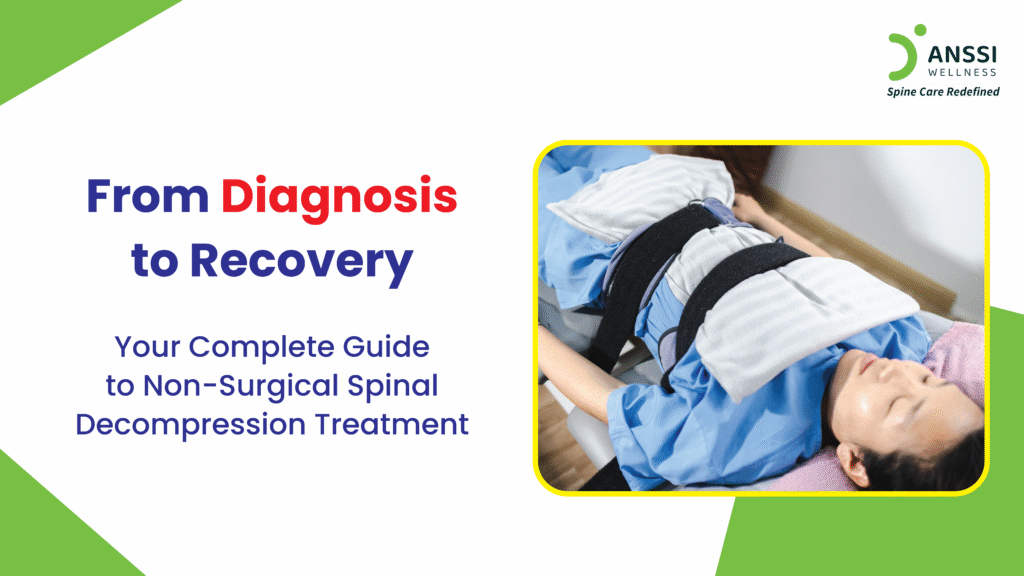
1. Patient Positioning
Patients lie comfortably on a specialised decompression table. The lower or upper body is secured using supportive harnesses.
2. Computer-Controlled Decompression
The system gently stretches the spine in cycles, pulling and relaxing at calculated intervals. This creates negative pressure inside the discs, allowing them to retract naturally and reducing pressure on irritated nerves.
3. Duration and Frequency
During the initial stages, a typical treatment session lasts approximately 30 minutes. Patients generally undergo around 20-30 sessions over a period of 4-6 weeks, although the treatment schedule may vary depending on individual requirements and progress.
As the patient progresses through the treatment programme, the duration of individual sessions may gradually increase. In the later stages, sessions may last up to 50 minutes, allowing the treatment plan to be adjusted according to the patient’s response and clinical requirements.
The objective is to provide a gradual, personalised and structured approach to non-surgical spine care rather than using the same treatment duration for every patient.
Since the process is non-invasive and gentle, there is no downtime. Following each session, patients can immediately return to their regular routines.
4. Complementary Therapies
NSSDT is often combined with:
- Physiotherapy
- Core muscle strengthening
- Lifestyle and posture correction
- Home-based stretching routines
These support long-term healing and prevent recurrence.
Who is NOT Eligible for NSSDT?
Some conditions may restrict patients from undergoing NSSDT.
These include:
- Spinal fractures
- Spinal tumours
- Spinal infections
- Severe osteoporosis
- Grade 3/Grade 4 Spondylolisthesis
- Advanced spinal instability
- Pregnancy
- Patients with metal implants or post-surgical stabilisation (in certain cases)
A thorough consultation and MRI ensure safety and help determine eligibility.
ANSSI Wellness: India’s Premier Clinics for NSSDT
ANSSI Wellness is India’s pioneer in non-surgical spine treatments and one of the country’s most trusted clinics for NSSDT. With 16 clinics across India and 2 in Dubai, ANSSI specialises in treating chronic back and neck pain through advanced, evidence-based, medicine-free treatments.
A major strength of ANSSI is its collaboration with Dr. Joseph Cammarata, one of the world’s foremost experts in spinal decompression technology and treatment protocols. His guidance ensures that ANSSI follows US-based standards of care, allowing the successful treatment of over 6000 patients so far.