
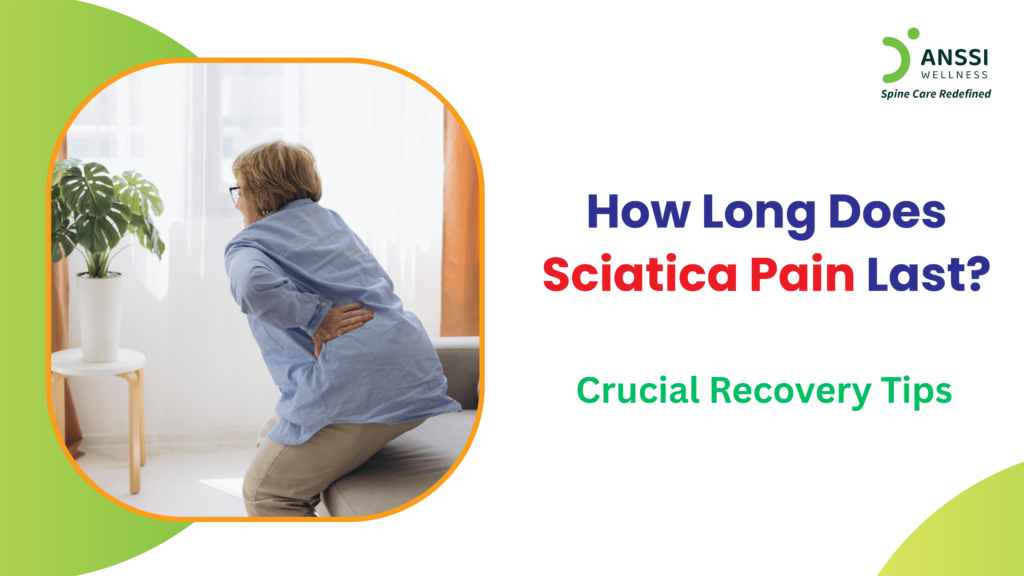
Sciatica is one of the most common causes of lower back and leg pain, affecting millions of people worldwide. It occurs when the sciatic nerve, the longest nerve in the body, gets irritated or compressed. This results in pain that travels from the lower back to the buttock, thigh, and sometimes all the way down to the foot.
While many people recover with simple care, others experience longer-lasting discomfort. So how long does sciatica pain really last? And what can you do to recover faster? Let’s take a closer look.
What Causes Sciatica?
Sciatica is not a condition by itself. It is a symptom of an underlying spinal or muscular issue.
The most common causes include:
- Herniated or Bulging Disc: When the soft inner portion of a spinal disc pushes out, it can compress the nearby sciatic nerve root.
- Spinal Stenosis: Narrowing of the spinal canal puts pressure on nerves, often causing persistent leg pain.
- Degenerative Disc Disease: Age-related disc wear and tear can irritate the nerve roots.
- Piriformis Syndrome: Tightness or spasm of the piriformis muscle can trap the sciatic nerve.
- Muscle Tightness or Injury: Weak or overly tight muscles may strain the lower back and irritate the nerve.
Regardless of the cause, the duration of sciatica depends largely on how early the condition is diagnosed and managed.
How Long Does Sciatica Pain Usually Last?
One of the most common questions patients ask is: “Will this pain go away on its own?”
The answer varies.
Acute Sciatica (Short-Term)
For many people, sciatica resolves within a few days to 4-6 weeks. With rest, stretching, and basic therapy, the inflammation around the nerve reduces.
Chronic Sciatica (Long-Term)
If symptoms persist for more than 3 months, it is classified as chronic sciatica. This often happens when the underlying cause, such as a disc bulge or stenosis, is left untreated.
Factors That Influence Recovery Time
Your activity levels
- Daily posture and ergonomics
- Age and overall spine health
- Presence of disc degeneration
- Lifestyle habits such as prolonged sitting
Understanding these factors helps set realistic expectations for recovery.
Sciatica Recovery: What to Expect
Initially, the pain is at its peak. The nerve is irritated, and activities like bending, lifting, or sitting for long periods can intensify symptoms.
However, every individual heals differently.
- With rest, ice/heat therapy, and gentle stretching, inflammation can subside. In such cases, many patients notice their leg pain slowly reducing.
- If nerve compression decreases, mobility will return. You may notice less stiffness, fewer spasms, and easier movement.
- Building strong core and back muscles helps to prevent recurrence. This may include physiotherapy, yoga, posture training, or guided exercise routines.
If recovery still does not progress within a reasonable time, it may indicate a more serious spinal issue requiring evaluation.
Tips to Speed Up Sciatica Recovery
Managing sciatica effectively requires a combination of lifestyle changes and targeted therapeutic practices. Here are some proven strategies to speed up healing:
1. Maintain Correct Posture
Avoid slouching or bending the neck and back forward for long periods. Keep your screen at eye level and sit with lumbar support.
2. Move Frequently
Prolonged sitting increases pressure on the lumbar spine. Stand up every 45-60 minutes. Even a 2-minute walk can stimulate better blood flow.
3. Gentle Stretching
Stretches like hamstring stretches, knee-to-chest stretch, and piriformis stretch help relieve pressure on the sciatic nerve.
4. Strengthen Your Core
A strong core stabilises the spine. Exercises such as bridges, planks, and bird-dog help support long-term recovery.
5. Heat and Cold Therapy
Cold therapy reduces inflammation; heat therapy relaxes tight muscles. Alternating both can provide effective relief.
6. Sleep Smart
Avoid sleeping on your stomach. Opt for a supporting pillow under your knees if sleeping on your back, or between your knees when sleeping sideways.
7. Non-Surgical Spinal Decompression Treatment
For sciatica caused by disc bulge, herniation, or nerve compression, Non-Surgical Spinal Decompression is an advanced and highly effective treatment. It works by gently stretching the spine to reduce pressure on the compressed nerve roots. As the spine elongates, nutrients flow into the discs, accelerating healing.
This treatment is completely non-invasive, free from medication, and requires no recovery time. Clinics like ANSSI Wellness specialise in delivering USA-based decompression technology, helping patients recover without surgery.
When to See a Doctor for Sciatica
While mild sciatica often improves with basic home care, certain symptoms require immediate medical evaluation:
- Pain lasting longer than 2-4 weeks
- Worsening numbness, tingling, or burning sensation
- Sudden weakness in the legs
- Difficulty standing or walking
- Loss of bowel or bladder control (a medical emergency)
- Pain after an accident or fall
If any of these appear, it is important to consult a spine specialist promptly.
About ANSSI:
ANSSI Wellness focuses on improving the quality of life for patients suffering from spinal issues, aiming to provide relief where other conventional treatments have failed. Through advanced Non-Surgical Spinal Decompression Treatment, ANSSI is committed to helping patients avoid surgery and recover in a safe, effective, and compassionate environment.
Connect with ANSSI Wellness on LinkedIn, Instagram, and Facebook for expert guidance.