Chronic back or neck pain can slowly creep into daily life, affecting work, sleep, and mobility. In many cases, the root cause lies in spinal disc problems, most commonly a bulging disc or a herniated disc.
While these terms are often used interchangeably, they are not the same condition. Understanding the difference between a bulging disc and a herniated disc is crucial for choosing the right treatment approach, especially when seeking safe, non-surgical solutions for long-term relief.
Understanding the Structure of a Spinal Disc
To understand disc problems, it helps to know how a spinal disc functions. The spine is made up of vertebrae stacked on top of each other, with a disc placed between each vertebra. These discs act as shock absorbers and allow the spine to bend, twist, and move smoothly.
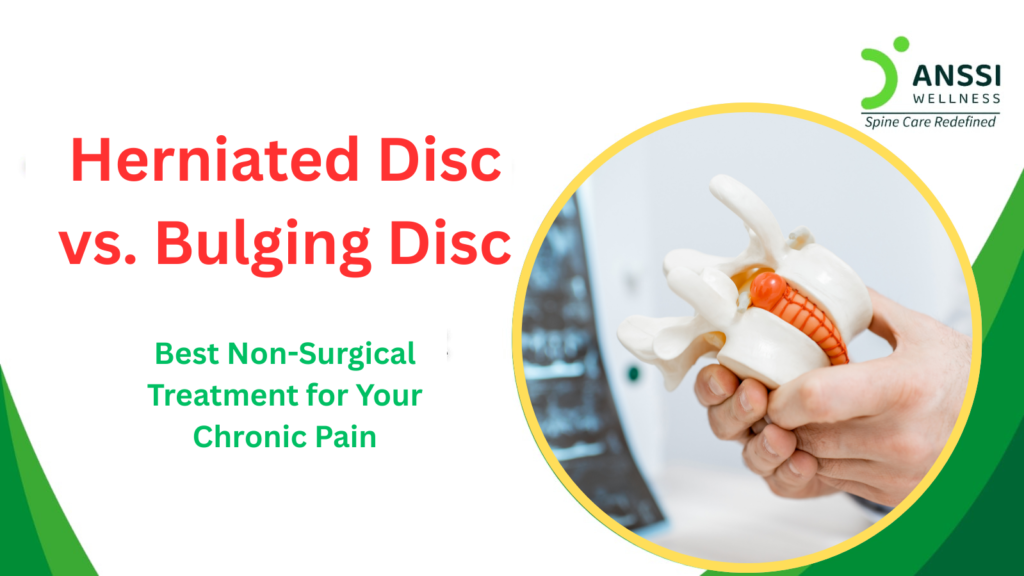
Each disc has two main parts. The outer layer, called the annulus fibrosus, is tough and fibrous, providing structure and strength. Inside is the nucleus pulposus, a soft, gel-like core that helps distribute pressure evenly during movement. When discs are healthy, they cushion the spine and protect nearby nerves. However, ageing, poor posture, repetitive stress, or injury can damage discs and lead to pain.
Bulging Disc vs. Herniated Disc: Key Differences
A bulging disc occurs when the disc extends outward beyond its normal boundary, usually evenly around its circumference. The outer layer remains intact, but the disc loses its shape due to pressure, dehydration, or degeneration. Bulging discs are common, especially with age, and may or may not cause symptoms depending on whether nearby nerves are affected.
A herniated disc, on the other hand, is more severe. It occurs when there is a tear or rupture in the annulus fibrosus, allowing the inner gel-like material to leak out. This leaked material can directly press on nearby spinal nerves, often leading to intense pain and neurological symptoms.
In simple terms, a bulging disc is like a tyre that has lost its shape, while a herniated disc is like a tyre with a puncture. Both conditions can be painful, but herniated discs typically cause more severe symptoms and functional limitations.
Impact on Spinal Health and Common Symptoms
Both bulging and herniated discs can negatively affect spinal health, especially when they compress nearby nerves. Symptoms may vary based on the location and severity of the disc damage.
- Common symptoms include localised back or neck pain, stiffness, and reduced range of motion.
- When nerve compression occurs, pain may radiate into the arms or legs, commonly seen in conditions like sciatica.
- Patients may also experience numbness, tingling sensations, burning pain, or muscle weakness.
- In advanced cases, daily activities such as walking, sitting, bending, or even sleeping become difficult.
- Over time, untreated disc problems can lead to chronic pain, postural imbalance, and reduced quality of life, making early diagnosis and proper treatment essential.
Diagnosis of Disc Problems
Accurate diagnosis is the foundation of effective treatment.
A spine specialist typically begins with a detailed medical history and physical examination to assess pain patterns, nerve involvement, and mobility limitations. Reflex testing, muscle strength evaluation, and sensory assessments help identify nerve compression.
Imaging tests, particularly MRI scans, play a critical role in diagnosing disc conditions. MRI provides detailed images of soft tissues, allowing doctors to distinguish between bulging discs, herniated discs, and other spinal issues such as spinal stenosis or degenerative disc disease.
Correct diagnosis ensures that treatment targets the root cause rather than just managing symptoms.
Non-Surgical Treatment Options for Disc-Related Pain
Contrary to popular belief, most disc-related conditions do not require surgery. In fact, surgery is usually considered only when there is severe nerve damage, loss of bladder or bowel control, or when conservative treatments fail.
Conservative non-surgical treatments include physiotherapy to strengthen supporting muscles, improve flexibility, and correct posture. Lifestyle modifications, ergonomic adjustments, weight management, and guided exercises help reduce spinal stress and prevent further disc damage. Pain management strategies may provide temporary relief but do not address the underlying issue.
One of the most advanced non-surgical approaches for disc problems is Non-Surgical Spinal Decompression Treatment. This procedure uses a controlled, computer-guided decompression mechanism to gently stretch the spine. The process creates negative pressure within the affected disc, helping to pull the bulge or herniation back toward its original position. This reduction in pressure relieves nerve compression and allows nutrients, oxygen, and fluids to flow back into the disc, promoting natural healing.
Non-Surgical Spinal Decompression Treatment is drug-free, safe, and specifically designed to target the root cause of disc-related pain rather than masking symptoms. When combined with physiotherapy and posture correction, it can significantly improve spinal function and support long-term recovery.
About ANSSI:
ANSSI Wellness focuses on improving the quality of life for patients suffering from spinal issues, aiming to provide relief where other conventional treatments have failed. Through advanced Non-Surgical Spinal Decompression Treatment, ANSSI is committed to helping patients avoid surgery and recover in a safe, effective, and compassionate environment.
Connect with ANSSI Wellness on LinkedIn, Instagram, and Facebook for expert guidance.