Back pain has become one of the most common health concerns in today’s fast-paced, sedentary lifestyle. From working professionals to elderly individuals, millions struggle with recurring discomfort that affects their daily activities and overall quality of life. In most cases, the immediate response is to rely on painkillers or injections for quick relief.
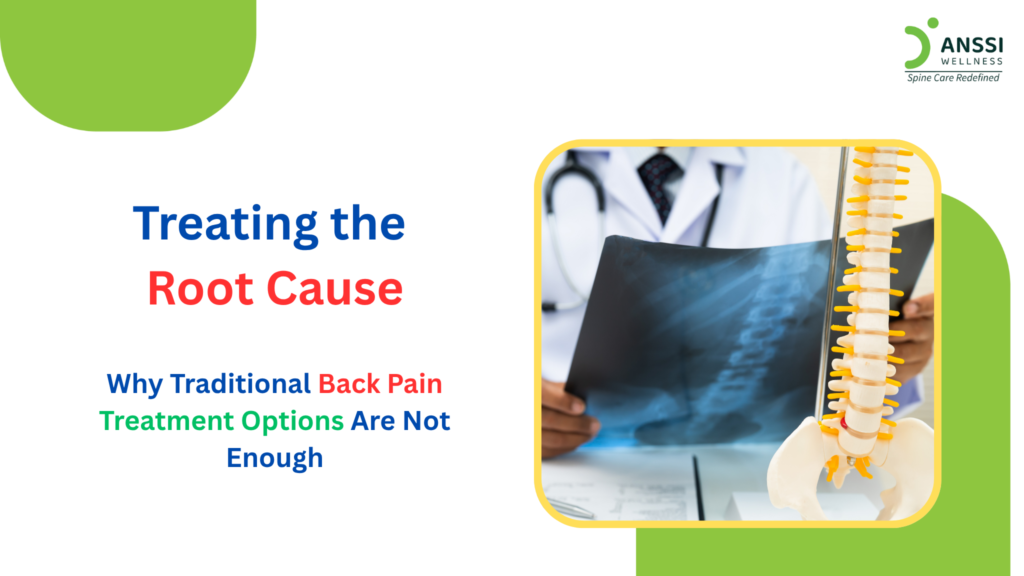
While these options may temporarily reduce discomfort, they often fail to address the real problem. To achieve lasting relief, it is essential to focus on treating the root cause rather than just the symptoms.
Traditional Back Pain Treatments: A Temporary Fix
Conventional back pain treatments primarily include painkillers, muscle relaxants, and anti-inflammatory medications. In more severe cases, doctors may recommend steroid injections to reduce inflammation and provide relief.
These treatments are widely used because they offer fast results.
- Painkillers can quickly dull the sensation of pain, allowing patients to continue their daily routines.
- Similarly, injections can provide short-term relief by targeting inflamed areas around the spine.
However, the key limitation of these approaches is that they are designed to manage symptoms, not solve the underlying issue. The source of the pain, whether it is a disc problem, nerve compression, or spinal misalignment, remains untreated. As a result, once the effect of medication or injections wears off, the pain often returns.
Limitations and Risks of Conventional Treatments
While traditional treatments may seem convenient, they come with several drawbacks that patients should carefully consider.
1. Dependency on Medications
Frequent use of painkillers can lead to dependency, where patients feel the need to take medication regularly just to function normally. This does not solve the problem but rather masks it.
2. Side Effects of Long-Term Use
Prolonged use of medications can have adverse effects on the body. Common issues include digestive problems, acidity, and potential damage to the liver or kidneys over time.
3. Temporary Relief from Injections
Steroid injections can reduce inflammation and provide relief for a limited period. However, they do not repair damaged spinal structures. Once the effect fades, the pain often resurfaces.
4. Progression of the Underlying Condition
Since the root cause is not treated, the condition may worsen over time. A minor disc issue can develop into a more serious problem, potentially requiring more invasive treatments later.
Understanding the Root Cause of Back Pain
To effectively treat back pain, it is important to understand what is causing it. In many cases, chronic back pain is linked to structural issues within the spine, such as:
- Disc bulge or herniation (slip disc)
- Nerve compression leading to conditions like sciatica
- Degenerative changes in spinal discs
- Poor posture causing spinal misalignment
These conditions create pressure on the spinal discs and nerves, leading to pain, stiffness, and reduced mobility. Simply masking the pain does not correct these underlying problems.
Advanced Root-Cause Treatments: A Better Approach
Modern healthcare has introduced advanced non-surgical treatments that focus on addressing the root cause of back pain rather than just the symptoms.
One such innovative solution is non-surgical spinal decompression treatment. This treatment works by gently stretching the spine in a controlled manner, creating space between the vertebrae. This helps reduce pressure on the discs and nerves, allowing the body to heal naturally.
This advanced treatment is used to treat conditions like slip disc, sciatica, and chronic back pain without the need for surgery, injections, or long-term medication.
How Spinal Decompression Helps:
- Relieves pressure on compressed discs and nerves
- Promotes the retraction of bulging or herniated discs
- Improves blood flow and nutrient supply to affected areas
- Supports natural healing of spinal structures
Benefits of Treating the Root Cause
Choosing a root-cause approach offers several long-term advantages over traditional treatments:
- Sustainable Relief: Addresses the actual problem, reducing the chances of recurring pain
- Non-Invasive: No surgery, injections, or hospitalisation required
- Drug-Free: Eliminates the risks associated with long-term medication use
- Improved Mobility: Restores normal function and flexibility
- Better Quality of Life: Enables patients to return to their daily activities without constant discomfort
Unlike temporary solutions, these treatments aim to correct the underlying issue and provide lasting results. By combining advanced technology with expert guidance, patients can achieve effective relief without undergoing invasive procedures.
About ANSSI:
ANSSI Wellness focuses on improving the quality of life for patients suffering from spinal issues, aiming to provide relief where other conventional treatments have failed. Through advanced Non-Surgical Spinal Decompression Treatment, ANSSI is committed to helping patients avoid surgery and recover in a safe, effective, and compassionate environment.
Connect with ANSSI Wellness on LinkedIn, Instagram, and Facebook for expert guidance.