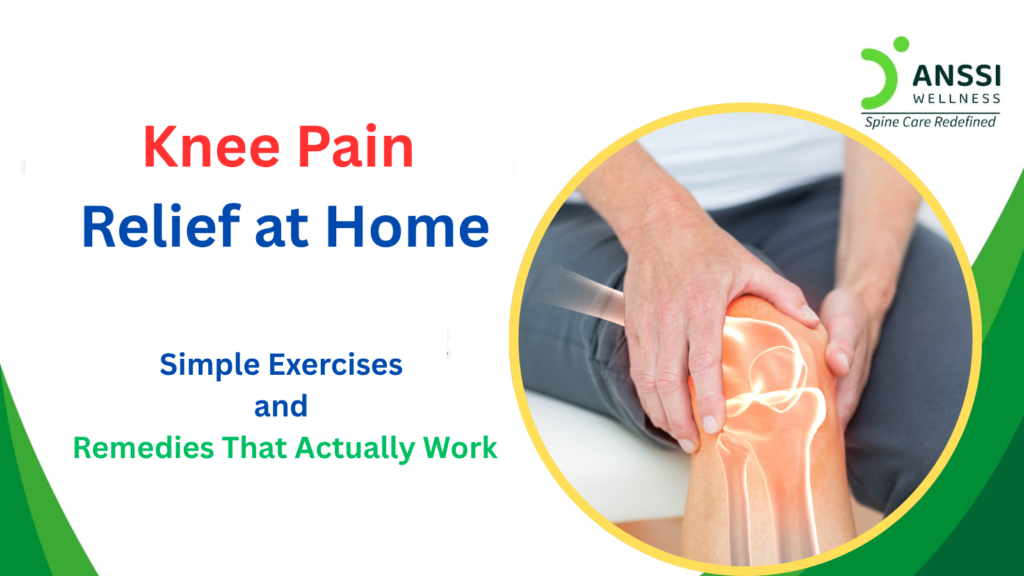
Whether it is caused by long hours of sitting, standing for extended periods, excess weight, ageing, or overuse, knee pain can interfere with your daily life and reduce mobility. Many people immediately assume that knee pain requires medication or surgery, but mild to moderate knee pain can often be managed effectively at home.
With the right combination of simple exercises, stretches, and daily care habits, it is possible to reduce pain, improve flexibility, and support long-term knee health. Let’s explore practical home remedies that actually work.
Common Causes of Knee Pain
Understanding the cause of knee pain is the first step toward relief. Several everyday factors can contribute to knee discomfort.
- One of the most common causes is early osteoarthritis, where the cartilage inside the knee gradually wears down. This creates friction between the bones, leading to pain and stiffness.
- Muscle weakness around the knee is another major reason. Weak thigh and leg muscles fail to properly support the knee joint, increasing stress on it.
- Overuse from excessive walking, climbing stairs, gym workouts, or sports can also lead to inflammation and strain.
- Poor posture, especially during long sitting hours, can affect joint alignment and increase discomfort.
- Additionally, weight gain puts extra pressure on the knees, making pain worse over time.
Home Remedies for Quick Relief
For mild knee pain, several simple home remedies can provide fast and effective relief.
Warm Water Soaking with Epsom Salt
Soaking the knee in warm water mixed with Epsom salt helps reduce stiffness and relax tight muscles. Warm water improves blood circulation, while Epsom salt can help soothe soreness and discomfort. This is especially useful for morning stiffness or pain after a long day.
Ice Packs for Swelling
If the knee feels swollen or inflamed, applying an ice pack for 15-20 minutes can help reduce swelling and numb pain. Ice therapy is particularly helpful after physical activity or prolonged walking.
Rest and Avoiding Excessive Strain
Sometimes the best treatment is simply giving the knee enough rest. Avoid activities that worsen the pain, such as heavy lifting, repeated stair climbing, or prolonged standing.
Knee Support or Braces
Using a knee support or brace can provide stability and reduce pressure on the joint. It also helps maintain proper alignment during movement.
Proper Sitting and Sleeping Posture
Bad posture can worsen knee pain. Avoid sitting with crossed legs for long periods, and use a pillow under the knees while sleeping if needed for added comfort.
Simple Exercises and Stretches
Regular gentle exercises can strengthen the muscles around the knee and improve flexibility. These should be done slowly and consistently.
Straight Leg Raises
This exercise helps strengthen the thigh muscles without putting pressure on the knee joint.
- Lie flat on your back.
- Keep one leg bent and the other straight.
- Slowly raise the straight leg to the level of the bent knee.
- Hold for a few seconds and lower it slowly.
- Repeat 10-15 times for each leg.
Hamstring Stretches
Tight hamstrings can increase knee stress.
- Sit with one leg extended.
- Slowly lean forward while keeping the back straight.
- Hold the stretch for 20 seconds.
This improves flexibility and reduces joint strain.
Heel Slides
Heel slides help improve knee movement and flexibility.
- Lie on your back.
- Slowly slide your heel toward your hips.
- Bend the knee as much as comfortable.
- Slide it back to the starting position.
- Repeat 10-15 times.
Quad Sets
This simple exercise improves knee stability.
- Sit or lie with your leg straight.
- Tighten the thigh muscles by pressing the back of the knee downward.
- Hold for 5-10 seconds and relax.
- Repeat several times daily.
Gentle Walking
Short walks on flat surfaces improve blood circulation and keep the joint active. Avoid overexertion and focus on slow, comfortable movement.
Daily Habits That Help Long-Term
Home treatment works best when supported by healthy daily habits.
Weight Management
The knee joints are less stressed when a healthy weight is maintained. Even small weight loss can significantly improve pain and mobility.
Avoid Prolonged Sitting or Standing
Take regular breaks if your work requires long hours of sitting or standing. Small movements throughout the day help prevent stiffness.
Wear Supportive Footwear
Shoes with proper cushioning and support reduce pressure on the knees and improve posture while walking.
Regular Stretching and Posture Correction
Daily stretching improves flexibility, while good posture protects the knees from unnecessary strain.
When Home Remedies Are Not Enough
While home remedies are helpful for mild pain, some symptoms should not be ignored.
If you experience persistent pain, swelling, locking of the knee, difficulty walking, or pain that keeps worsening, it is important to consult an orthopaedic specialist.
In such cases, advanced non-surgical treatments like physiotherapy or Knee Decompression Treatment may be needed. Knee Decompression Treatment uses gentle, controlled stretching to reduce pressure between the knee bones, improve alignment, and provide longer-lasting relief, especially for patients with early arthritis or chronic knee pain.
Early treatment can prevent further joint damage and help avoid surgery in many cases.
About ANSSI:
ANSSI Wellness focuses on improving the quality of life for patients suffering from knee issues, aiming to provide relief where other conventional treatments have failed. Through Advanced Knee Rehabilitation Treatment, ANSSI is committed to helping patients avoid surgery and recover in a safe, effective, and compassionate environment.
Connect with ANSSI Wellness on LinkedIn, Instagram, and Facebook for expert guidance.