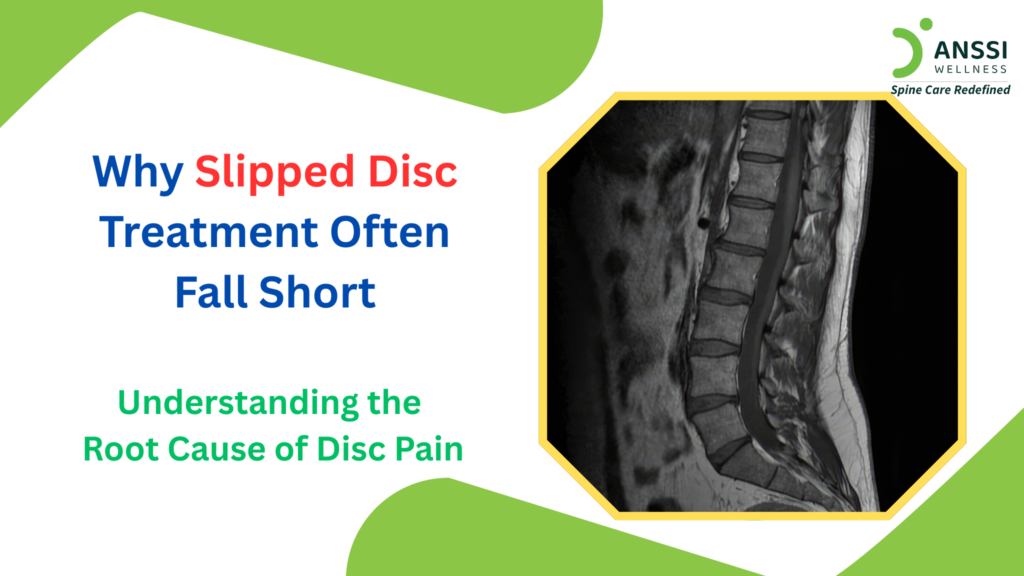
A slipped disc is one of the most common causes of chronic back and neck pain affecting people of all age groups. Many individuals suffering from a slipped disc experience persistent discomfort, difficulty walking, tingling sensations, numbness, and even weakness in their arms or legs. While some patients recover with basic care, others continue to struggle with recurring pain despite medications, physiotherapy, or even surgery.
This often leaves patients wondering why their treatment failed to provide long-term relief.
The answer frequently lies in the fact that many treatment approaches focus only on controlling symptoms rather than addressing the actual root cause of spinal disc pain. To understand why slipped disc treatment sometimes fails, it is important to first understand how the spine and spinal discs function.
Understanding the Spine and Spinal Discs
The human spine is made up of a series of bones called vertebrae. Between these vertebrae are soft spinal discs that act as cushions or shock absorbers. These discs help the spine remain flexible while absorbing pressure generated during movement, walking, bending, lifting, and sitting.
Each spinal disc contains:
- A soft gel-like centre
- A tougher outer layer that holds the disc together
Healthy discs allow smooth movement and help maintain proper spacing between vertebrae and spinal nerves.
A slipped disc, also known as a herniated or prolapsed disc, occurs when the inner portion of the disc pushes through a weakened or damaged outer layer. This displaced disc material may then press against nearby spinal nerves.
The resulting nerve compression can produce symptoms such as:
- Lower back or neck pain
- Sciatica
- Tingling and numbness
- Burning pain
- Muscle weakness
- Difficulty sitting, standing, or walking
In many cases, the pain does not come only from the damaged disc itself but from the pressure placed on surrounding nerves and tissues.
Why Conservative Treatments Often Fail
Conservative treatments are usually the first line of management for slipped disc patients. These commonly include medications, rest, physiotherapy, and lifestyle changes. While these methods may help some individuals temporarily, they do not always solve the underlying spinal problem.
Medications Provide Temporary Relief
Painkillers, anti-inflammatory drugs, and muscle relaxants are frequently prescribed to reduce pain and inflammation. These medicines can provide short-term comfort during acute flare-ups.
However, medications mainly work by suppressing pain signals or reducing inflammation temporarily. They do not repair the damaged disc or remove the mechanical pressure affecting the spinal nerves.
Once the medication effect wears off, symptoms often return because the root cause of nerve compression remains unchanged.
Long-term medication use may also lead to side effects such as:
- Stomach irritation
- Drowsiness
- Kidney problems
- Dependency risks
Physiotherapy Has Limitations
Physiotherapy plays an important role in improving posture, flexibility, and muscle strength. Exercises may help stabilise the spine and reduce strain on surrounding tissues.
However, physiotherapy may not always be sufficient when severe disc bulging or nerve compression exists.
In some cases:
Exercises may not adequately reduce disc pressure
Symptoms may return after therapy ends
Certain movements may aggravate nerve irritation
While physiotherapy supports rehabilitation, it may not fully address the structural problem within the spinal disc itself.
Why Surgery Does Not Always Guarantee Relief
When conservative methods fail, surgery is often considered. Surgical procedures may involve removing or trimming part of the damaged disc to reduce nerve compression.
Although surgery may help some patients, it does not guarantee complete or permanent relief.
Surgery Does Not Restore Disc Health
Removing part of a disc may reduce immediate pressure, but it does not fully restore the disc’s natural structure or function.
The spine may still remain vulnerable to degeneration or biomechanical stress.
Recovery Challenges
Surgery involves:
- Hospitalisation
- Recovery time
- Physical rehabilitation
- Restrictions on movement during healing
Some patients may require months before returning to normal activities.
Scar Tissue and Recurring Pain
In certain cases, scar tissue formation after surgery may contribute to ongoing pain or nerve irritation.
Additionally, stress on nearby spinal segments may increase after surgery, potentially leading to future spinal problems.
Persistent Symptoms
Some patients continue experiencing pain, numbness, or weakness even after surgical intervention because spinal degeneration and inflammation may still persist.
This is why surgery is often viewed as a last option rather than the first solution for many slipped disc cases.
The Importance of Treating the Root Cause
One of the main reasons slipped disc treatment fails is because many therapies focus only on symptom management rather than correcting the underlying mechanical problem within the spine.
Lasting relief usually requires:
- Reducing disc pressure
- Relieving nerve compression
- Supporting spinal alignment
- Improving disc nutrition and healing
The spinal discs depend on proper movement and pressure balance to remain healthy. When excessive pressure continues within the spine, inflammation and nerve irritation may persist regardless of temporary symptom relief.
Treating the root cause means addressing the actual spinal compression responsible for pain rather than simply masking discomfort.
Non-Surgical Spinal Decompression Treatment
Advanced Non-Surgical Spinal Decompression Treatment is designed specifically to target the root cause of slipped disc pain in a non-invasive manner.
This modern procedure uses a specialised decompression system that gently stretches the spine in a controlled and precise way. The process creates negative pressure within the affected spinal discs.
This negative pressure may help pull bulging disc material away from compressed nerves, reducing irritation and inflammation.
The spinal decompression process also improves the movement of oxygen, water, and nutrients into damaged discs, supporting natural healing.
Benefits of Non-Surgical Spinal Decompression
- Targets the Root Cause: The treatment focuses directly on reducing spinal disc and nerve pressure.
- Drug-Free and Surgery-Free: Patients can avoid prolonged medication use and surgical risks.
- Supports Natural Healing: Improved nutrient flow helps damaged discs recover more effectively.
- Comfortable and Non-Invasive: Treatment sessions are generally comfortable and do not require hospitalisation or recovery downtime.
- Long-Term Relief Potential: By addressing mechanical spinal compression, many patients experience more sustainable improvement.
References:
- Onesti, Stephen T. MD. Failed Back Syndrome. The Neurologist 10(5):p 259-264, September 2004.
- Effects of Vertebral Axial Decompression On Intradiscal Pressure. Ramos G., MD, Martin W., MD. Journal of Neurosurgery 81: 350-353, 1994
- A Prospective Randomized Controlled Study of VAX-D and TENS for the Treatment of Chronic Low Back Pain. Sherry E., MD FRACS, Kitchener P., MB, BS FRANZCR, Smart R., MB, Ch.B. Journal of Neurological Research Volume 23, No 7, October 2001.
About ANSSI:
ANSSI Wellness focuses on improving the quality of life for patients suffering from spinal issues, aiming to provide relief where other conventional treatments have failed. Through advanced Non-Surgical Spinal Decompression Treatment, ANSSI is committed to helping patients avoid surgery and recover in a safe, effective, and compassionate environment.
Book Consultation:
Call +91 9004726844 | 9920936844
Visit www.anssiwellness.com
Connect with ANSSI Wellness on LinkedIn, Instagram, and Facebook for expert guidance.