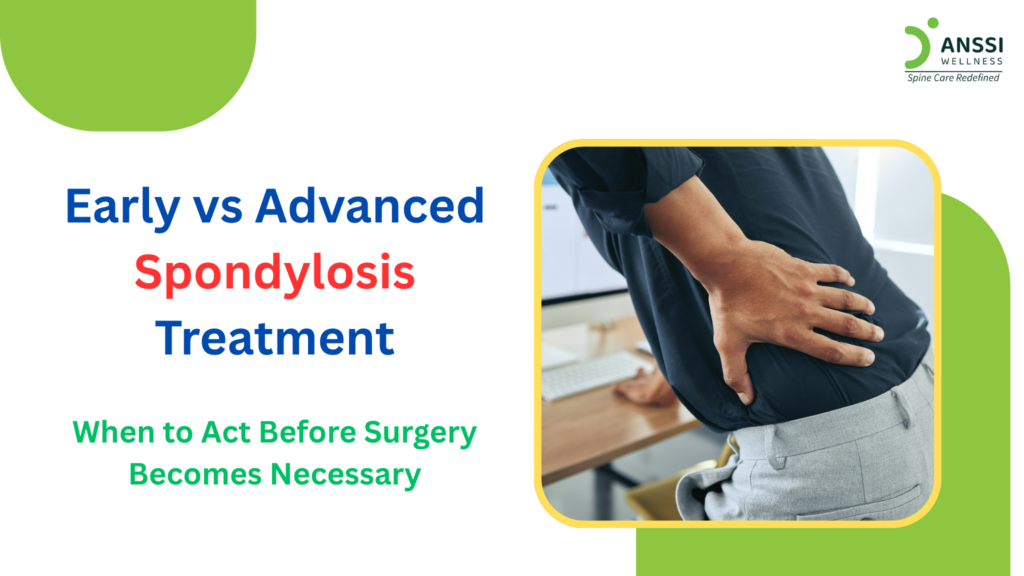
Spondylosis is one of the most common spine conditions affecting adults today. It develops gradually due to age-related wear and tear of the spinal discs, joints, ligaments, and vertebrae. While ageing naturally contributes to spinal degeneration, modern lifestyle habits such as prolonged sitting, poor posture, obesity, lack of exercise, and repetitive strain can accelerate the condition significantly.
Many people initially ignore mild neck or lower back pain, assuming it is caused by fatigue or stress. However, untreated spondylosis can worsen over time and eventually lead to severe pain, nerve compression, mobility problems, and reduced quality of life. Understanding the difference between early and advanced spondylosis is important because timely treatment may help patients avoid surgery and maintain better spinal health.
Understanding Spondylosis
Spondylosis refers to degenerative changes affecting the spine. Over time, spinal discs lose hydration and flexibility, reducing their ability to cushion the vertebrae properly. As degeneration progresses:
- Disc height may decrease
- Bone spurs may form
- Spinal joints may stiffen
- Nearby nerves may become compressed
Spondylosis can affect different areas of the spine:
- Cervical spondylosis affects the neck region
- Lumbar spondylosis affects the lower back
Both conditions may gradually interfere with movement, posture, and nerve function if not managed properly.
Early Spondylosis: Symptoms and Warning Signs
In the early stage, spondylosis symptoms are often mild and may appear occasionally. Many patients continue their routine without seeking medical attention because the discomfort is not constant.
Common early symptoms include:
- Mild but recurring neck or back pain
- Morning stiffness
- Reduced flexibility
- Discomfort after prolonged sitting
- Occasional tingling or numbness
- Pain during physical activity or poor posture
Although these symptoms may seem minor, they should not be ignored. Early spinal degeneration often progresses slowly, meaning that delaying treatment may allow further disc damage and nerve irritation to develop.
At this stage, the spine may still respond very well to non-surgical treatment approaches that aim to reduce spinal stress and improve function naturally.
Advanced Spondylosis: Serious Symptoms
When spondylosis progresses without proper treatment, symptoms may become more severe and persistent.
Advanced spondylosis may lead to:
- Chronic neck or lower back pain
- Pain radiating into the arms or legs
- Severe stiffness
- Muscle weakness
- Tingling or numbness
- Difficulty walking or maintaining balance
- Reduced ability to perform daily activities
In advanced cases, severe nerve compression may affect coordination and mobility significantly.
One of the most serious warning signs is loss of bladder or bowel control, which may indicate severe spinal nerve involvement and requires immediate medical attention.
At this stage, spinal degeneration is often more advanced, making treatment more challenging and increasing the possibility of surgical intervention.
Why Early Treatment Matters
Early diagnosis and treatment play a major role in preventing spondylosis from progressing into a severe spinal condition.
Medical evaluation may include:
- Physical examination
- Posture assessment
- Mobility testing
- X-rays
- MRI scans
- Neurological examination
Identifying the condition early allows doctors to understand:
- The severity of degeneration
- The location of nerve compression
- The most suitable treatment plan
Early treatment may help:
- Reduce inflammation
- Improve spinal mobility
- Prevent worsening nerve compression
- Slow spinal degeneration
- Reduce the risk of surgery
The earlier spinal stress and disc compression are addressed, the better the chances of achieving long-term symptom control.
Non-Surgical Treatments for Spondylosis
Modern spine care increasingly focuses on non-surgical treatments designed to target the root cause of pain while improving spinal function naturally.
Physiotherapy and Rehabilitation
Physiotherapy helps strengthen spinal muscles, improve posture, and support spinal stability.
Treatment programs may include:
- Stretching exercises
- Core strengthening
- Mobility training
- Postural correction
These exercises help reduce excessive pressure on the spine.
Posture Correction and Ergonomic Modifications
Poor posture is one of the biggest contributors to spinal degeneration. Ergonomic improvements in sitting position, workstation setup, and sleeping posture may help reduce ongoing spinal strain.
Lifestyle Changes
Weight management, regular exercise, avoiding prolonged sitting, and proper lifting techniques can support long-term spinal health.
Pain Management Therapies
Doctors may temporarily use medications or supportive therapies to help control pain and inflammation during recovery.
However, lasting relief often requires addressing the underlying spinal compression.
Advanced Non-Surgical Spinal Decompression Treatment
One of the advanced non-invasive treatment options available for spondylosis is Non-Surgical Spinal Decompression Treatment.
This treatment uses a specialised decompression system that gently stretches the spine in a controlled and precise manner. The process creates negative pressure within the spinal discs.
This negative pressure may help:
- Reduce disc pressure
- Relieve nerve compression
- Improve nutrient and oxygen flow into spinal discs
- Support natural healing
Unlike surgery, spinal decompression is non-invasive and generally does not require hospitalisation or prolonged recovery time.
When Surgery May Become Necessary
Although many spondylosis patients improve with non-surgical treatment, surgery may become necessary in certain advanced situations.
Doctors may consider surgery when:
- Severe spinal instability develops
- Progressive muscle weakness occurs
- Significant nerve compression affects daily function
- Walking becomes extremely difficult
- Loss of bladder or bowel control occurs
- Conservative treatments fail to control symptoms
Surgery may involve:
- Disc removal
- Spinal fusion
- Nerve decompression procedures
However, surgery also carries potential risks such as:
- Recovery time
- Infection
- Scar tissue formation
- Persistent or recurring pain
This is why early intervention is so important. Treating spinal problems before severe degeneration develops may help many patients avoid surgery altogether.
References:
- Gun Woo Lee, Sun-Mi Lee, Myun-Whan Ahn, Ho-Joong Kim, Jin S. Yeom. Comparison of surgical treatment with direct repair versus conservative treatment in young patients with spondylolysis: a prospective, comparative, clinical trial. The Spine Journal, 2015; 15, 1545-1553.
- Ramos G., MD, Martin W., MD. Effects of Vertebral Axial Decompression On Intradiscal Pressure. Journal of Neurosurgery 81: 350-353, 1994.
- Tilaro F., MD, Miskovich D. MD. The Effects of Vertebral Axial Decompression On Sensory Nerve Dysfunction In Patients with Low Back Pain and Radiculopathy. Canadian Journal of Clinical Medicine Vol. 6, No 1, January 1999.
About ANSSI:
ANSSI Wellness focuses on improving the quality of life for patients suffering from spinal issues, aiming to provide relief where other conventional treatments have failed. Through advanced Non-Surgical Spinal Decompression Treatment, ANSSI is committed to helping patients avoid surgery and recover in a safe, effective, and compassionate environment.
Book Consultation:
Call +91 9004726844 | 9920936844
Visit www.anssiwellness.com
Connect with ANSSI Wellness on LinkedIn, Instagram, and Facebook for expert guidance.