
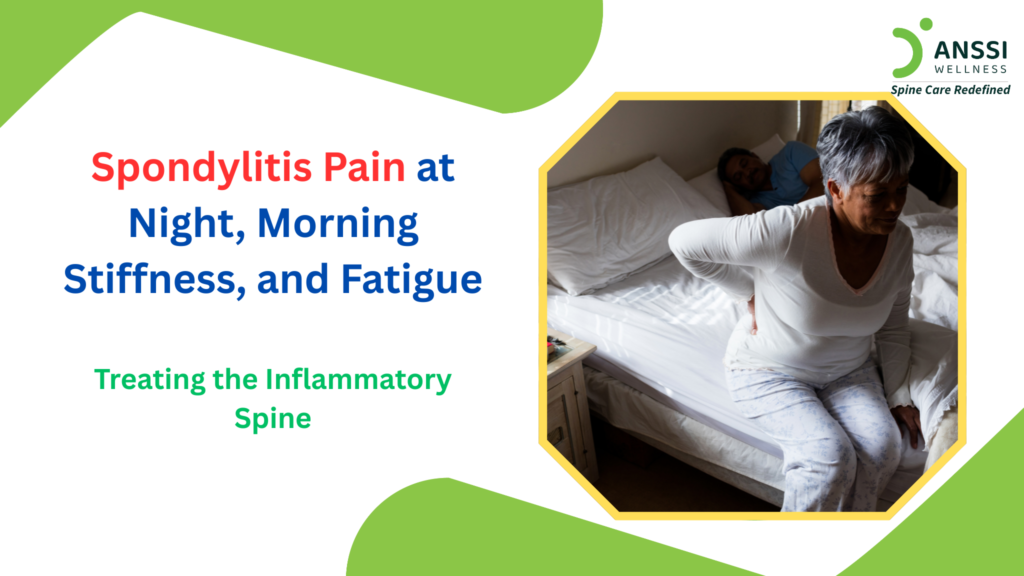
For many people living with spondylitis, the condition is far more than occasional back pain. It is a daily struggle that affects sleep, mobility, energy levels, work performance, and emotional well-being. The pain often seems to have its own schedule that includes waking you in the middle of the night, making mornings extremely difficult, and leaving you exhausted throughout the day.
Many patients describe waking at 3 a.m. with deep spinal pain, spending hours trying to loosen a stiff back, and feeling tired even after a full night’s sleep. Over time, these symptoms can become physically and emotionally draining. Understanding why these symptoms occur and how they can be managed is an important step toward improving quality of life.
Understanding Inflammatory Spondylitis
Spondylitis is a chronic inflammatory condition that primarily affects the spine and sacroiliac joints. Unlike mechanical back pain caused by injury or muscle strain, spondylitis is driven by ongoing inflammation within spinal tissues.
Over time, chronic inflammation can affect:
- Spinal joints
- Ligaments
- Intervertebral discs
- Supporting muscles
- Nerve structures
As inflammation continues, patients may experience increasing stiffness, pain, restricted movement, and changes in spinal mechanics. In some cases, prolonged inflammation can contribute to nerve irritation and structural changes within the spine.
This is why early diagnosis and comprehensive treatment are essential.
Why Spondylitis Pain Becomes Worse at Night
One of the most frustrating symptoms of spondylitis is pain that worsens during the night. Unlike many forms of back pain that improve with rest, inflammatory spinal pain often becomes more noticeable during periods of inactivity.
Reduced Movement Increases Stiffness
During sleep, the body remains relatively still for several hours. This lack of movement may allow inflammatory processes within the joints and spinal tissues to become more pronounced.
As a result, patients often wake with:
- Deep aching pain
- Spinal stiffness
- Difficulty changing positions in bed
Interrupted Sleep
Frequent awakenings caused by pain can prevent restorative sleep.
Many patients report:
- Waking multiple times during the night
- Difficulty finding a comfortable sleeping position
- Feeling unrefreshed in the morning
Over time, poor sleep quality contributes to fatigue, mood changes, and reduced ability to cope with chronic pain.
Morning Stiffness: The Symptom Patients Fear Most
For many people with spondylitis, mornings are the most challenging part of the day. After hours of inactivity during sleep, inflammation within the spine often causes significant stiffness.
Patients may experience:
- Difficulty getting out of bed
- Reduced flexibility
- Pain when bending or twisting
- Slower movement during the first few hours of the day
Unlike ordinary muscle stiffness, inflammatory stiffness may last for an hour or more and sometimes persists throughout the morning.
This can affect:
- Getting ready for work
- Household responsibilities
- Exercise routines
- Daily independence
Many patients find themselves planning their entire morning around the time needed to loosen their spine and regain mobility.
Understanding Chronic Fatigue in Spondylitis
Fatigue is one of the most misunderstood symptoms of spondylitis. Many people assume that tiredness is simply the result of poor sleep. While sleep disruption certainly contributes, the underlying inflammation itself also plays a major role.
The Effect of Inflammation on Energy Levels
Chronic inflammation places continuous demands on the body.
This may lead to:
- Persistent exhaustion
- Reduced concentration
- Mental fog
- Lack of motivation
Patients often describe feeling tired even after sleeping for several hours.
Emotional Impact
Living with ongoing pain and fatigue can affect emotional well-being.
Patients may experience:
- Frustration
- Anxiety
- Reduced confidence
- Social withdrawal
The combination of pain, stiffness, and exhaustion can make even simple daily activities feel overwhelming.
The Progressive Restriction of Movement
As spondylitis progresses, inflammation may gradually reduce spinal flexibility.
Patients may notice increasing difficulty with:
- Bending forward
- Twisting the body
- Driving
- Exercising
- Lifting objects
- Prolonged sitting or standing
Reduced spinal mobility often affects independence and quality of life. Many patients begin avoiding activities they once enjoyed because movement becomes uncomfortable or unpredictable.
Without appropriate treatment, the cycle of pain, stiffness, inactivity, and reduced function may continue to worsen.
Why Conventional Pain Management Often Falls Short
Pain medications and anti-inflammatory drugs are commonly prescribed for spondylitis.
While these treatments may help reduce symptoms, they often have limitations.
Temporary Symptom Control
Medications may reduce pain and inflammation for a period of time, but do not necessarily address the structural consequences that develop within the spine.
Ongoing Dependence
Many patients find themselves repeatedly relying on medication whenever symptoms flare up. As spinal stiffness, disc stress, and nerve irritation continue, symptom relief may become increasingly difficult to maintain through medication alone.
This is why comprehensive management often requires a broader treatment approach.
Treating the Structural Consequences of Inflammation
Chronic inflammation can alter spinal mechanics and contribute to disc degeneration, joint stress, and nerve irritation. Addressing these structural issues may help improve long-term comfort and mobility.
The Role of Non-Surgical Spinal Decompression Treatment (NSSDT)
Non-Surgical Spinal Decompression Treatment is designed to gently reduce pressure within the spine using advanced decompression technology.
For selected patients, NSSDT may help:
- Reduce pressure on irritated nerve roots
- Improve disc space and spinal alignment
- Enhance spinal mobility
- Promote improved nutrient exchange within spinal discs
- Support natural healing processes
By addressing mechanical stress within the spine, decompression treatment may complement other aspects of spondylitis management.
The ANSSI Wellness Approach
At ANSSI Wellness, treatment focuses on understanding the unique challenges faced by individuals living with chronic spinal conditions. Every patient undergoes a comprehensive assessment to identify the factors contributing to pain, stiffness, and reduced mobility.
Treatment programs may include:
- Non-Surgical Spinal Decompression Treatment
- Personalised rehabilitation programs
- Physiotherapy
- Posture correction strategies
- Lifestyle and ergonomic guidance
Using advanced USA protocol-based decompression technology, ANSSI Wellness aims to improve function, mobility, and quality of life while helping patients manage the long-term effects of spinal inflammation.
References:
- Ramos G., MD, Martin W., MD. Effects of Vertebral Axial Decompression On Intradiscal Pressure. Journal of Neurosurgery 81: 350-353, 1994
- Sherry E., MD FRACS, Kitchener P., MB, BS FRANZCR, Smart R., MB, Ch.B. A Prospective Randomized Controlled Study of VAX-D and TENS for the Treatment of Chronic Low Back Pain. Journal of Neurological Research Volume 23, No 7, October 2001.
- Tilaro F., MD. An Overview of Vertebral Axial Decompression. Canadian Journal of Clinical Medicine Vol. 5, No 1, January 1998
About ANSSI:
ANSSI Wellness focuses on improving the quality of life for patients suffering from spinal issues, aiming to provide relief where other conventional treatments have failed. Through advanced Non-Surgical Spinal Decompression Treatment, ANSSI is committed to helping patients avoid surgery and recover in a safe, effective, and compassionate environment.
Book Consultation:
Call +91 9004726844 | 9920936844
Visit www.anssiwellness.com
Connect with ANSSI Wellness on LinkedIn, Instagram, and Facebook for expert guidance.