One of the most frequent reasons for persistent lower back pain and leg discomfort is sciatica. For many people, the condition goes beyond simple back pain and includes symptoms such as radiating leg pain, tingling sensations, numbness, and even muscle weakness. These symptoms can make everyday activities like walking, sitting, driving, or sleeping extremely uncomfortable.
While effective treatment begins with identifying and addressing the underlying cause of nerve compression, specific exercises can play an important role in recovery. When performed correctly and as part of a comprehensive rehabilitation program, sciatica exercises can improve mobility, reduce muscle tension, and support long-term spinal health.
Understanding Sciatica and Its Causes
Sciatica is not a disease itself but a collection of symptoms that occur when the sciatic nerve becomes irritated or compressed.
The sciatic nerve is the largest nerve in the human body. It originates in the lower spine and travels through the buttocks, thighs, and legs, extending all the way to the feet.
Several spinal conditions can place pressure on the nerve roots that form the sciatic nerve, including:
Slipped Disc (Herniated Disc)
A herniated disc can press directly on nearby spinal nerves, causing pain and neurological symptoms.
Bulging Disc
A protruding disc may cause irritation by constricting the area surrounding the nerves.
Degenerative Disc Disease
Age-related disc degeneration can reduce disc height and increase the likelihood of nerve compression.
Lumbar Spondylosis
Wear and tear in the lower spine can affect joints, discs, and nerves.
Spinal Stenosis
Narrowing of the spinal canal can place pressure on nerve structures.
When nerve compression occurs, symptoms may extend far beyond the lower back.
Common Symptoms of Sciatica
Sciatica symptoms vary from person to person, but commonly include:
- Lower back pain
- Pain radiating into the buttocks and legs
- Tingling or pins-and-needles sensations
- Numbness in the leg or foot
- Burning sensations
- Muscle weakness
- Difficulty walking or standing for long periods
The severity of symptoms often depends on the degree of nerve compression and the underlying spinal condition.
Why Exercise Helps Sciatica Recovery
Many individuals believe that the best way to treat sciatica is to completely rest. While short periods of rest may be helpful during severe flare-ups, prolonged inactivity can actually contribute to stiffness and muscle weakness.
Appropriate exercises can provide several benefits:
- Improved Flexibility: Gentle stretching helps reduce tightness in muscles that may be contributing to spinal stress.
- Better Mobility: Regular movement helps maintain healthy joint and spinal function.
- Stronger Support Muscles: Strengthening exercises improve support for the spine and reduce strain on affected areas.
- Reduced Muscle Tension: Tight muscles can worsen pain and limit movement. Stretching can help relieve this tension.
- Enhanced Posture and Stability: Core strengthening exercises help improve posture and support long-term spinal health.
Best Sciatica Treatment Exercises
When combined with appropriate medical treatment, exercise can become an important part of recovery.
McKenzie Extension Exercise
The McKenzie Extension Exercise is commonly recommended for disc-related lower back problems.
Benefits may include:
- Encouraging spinal extension
- Reducing pressure on affected discs
- Improving lower back mobility
When done correctly, this exercise is especially beneficial for many people with sciatica connected to their discs.
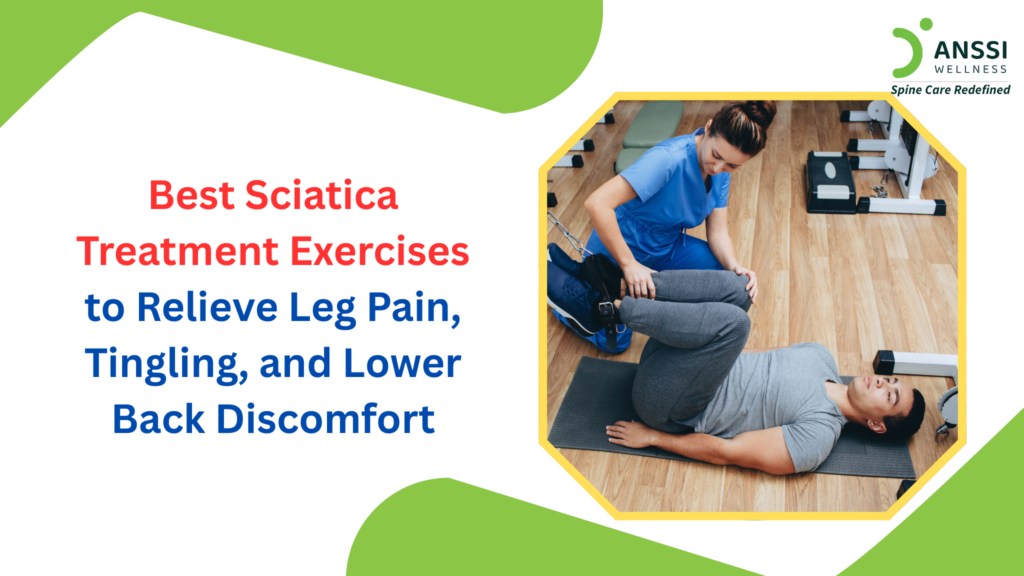
Knee-to-Chest Stretch
This mild stretching practice helps increase lower back flexibility.
Benefits include:
- Reduced lower back tension
- Improved mobility
- Gentle stretching of spinal structures
It is often suitable for beginners and can be performed at home.
Pelvic Tilt Exercise
The muscles supporting the lower spine are strengthened through pelvic tilts.
Benefits include:
- Improved core stability
- Better spinal support
- Reduced strain on the lower back
This exercise is commonly included in rehabilitation programs for sciatica patients.
Hamstring Stretch
Tight hamstring muscles can place additional stress on the lower back and pelvis.
Regular stretching may:
- Improve flexibility
- Reduce tension in the back of the legs
- Support healthier movement patterns
Piriformis Stretch
The piriformis muscle is located deep within the buttock region and lies close to the sciatic nerve.
Stretching this muscle may help:
- Reduce tension around the nerve
- Improve hip flexibility
- Decrease discomfort in some patients
Cat-Camel Stretch
This gentle movement exercise improves spinal mobility.
Benefits include:
- Increased flexibility
- Improved spinal movement
- Reduced stiffness
Many people recuperating from back discomfort can benefit from the slow, controlled motion.
Walking
Walking remains one of the safest and most effective low-impact exercises for many sciatica sufferers.
Benefits include:
- Improved circulation
- Gentle spinal movement
- Better overall fitness
- Enhanced mobility
Short, comfortable walks can gradually be increased as symptoms improve.
Core Strengthening Exercises
Strong core muscles provide essential support for the spine.
Core strengthening may help:
- Improve spinal stability
- Reduce recurring episodes of pain
- Support long-term recovery
A rehabilitation professional can recommend appropriate exercises based on individual needs.
Important Exercise Precautions
Although exercise is beneficial, certain precautions should always be followed.
Stop If Symptoms Worsen
Exercises should not significantly increase leg pain, numbness, or weakness.
Focus on Proper Technique
Poor form can place unnecessary stress on the spine and reduce the effectiveness of the exercise.
Progress Gradually
Avoid attempting advanced exercises too quickly.
Seek Professional Guidance
Patients with severe symptoms should consult a healthcare professional before beginning an exercise program.
A personalised approach often provides the best results.
Combining Exercise with Comprehensive Treatment
While exercises can help improve flexibility, strength, and mobility, they may not fully address significant nerve compression caused by conditions such as slipped discs or severe degeneration.
This is why accurate diagnosis is essential.
Many treatment programs combine exercise with non-surgical interventions designed to address the root cause of nerve irritation. One such approach is Non-Surgical Spinal Decompression Treatment, which aims to reduce pressure within spinal discs and relieve compression on affected nerves.
When combined with rehabilitation exercises, spinal decompression treatment may help improve outcomes and support long-term recovery.
References:
National Guideline Alliance (UK). Physical interventions for people with complex rehabilitations needs after traumatic injury: Rehabilitation after traumatic injury: Evidence review B.1. London: National Institute for Health and Care Excellence (NICE); 2022 Jan.
Beattie PF., Nelson R., Michener L., Cammarata J., Donely J. Short And Long-Term Outcomes Following Treatment with the VAX-D Protocol for Patients with Chronic, Activity Limiting Low Back Pain. Journal of Orthopaedic & Sports Physical Therapy, Volume 35, Number 1, January 2005.
Tilaro F., MD, Miskovich D. MD. The Effects of Vertebral Axial Decompression On Sensory Nerve Dysfunction In Patients with Low Back Pain and Radiculopathy.
About ANSSI:
ANSSI Wellness focuses on improving the quality of life for patients suffering from spinal issues, aiming to provide relief where other conventional treatments have failed. Through advanced Non-Surgical Spinal Decompression Treatment, ANSSI is committed to helping patients avoid surgery and recover in a safe, effective, and compassionate environment.
Book Consultation:
Call +91 9004726844 | 9920936844
Visit www.anssiwellness.com
Connect with ANSSI Wellness on LinkedIn, Instagram, and Facebook for expert guidance.