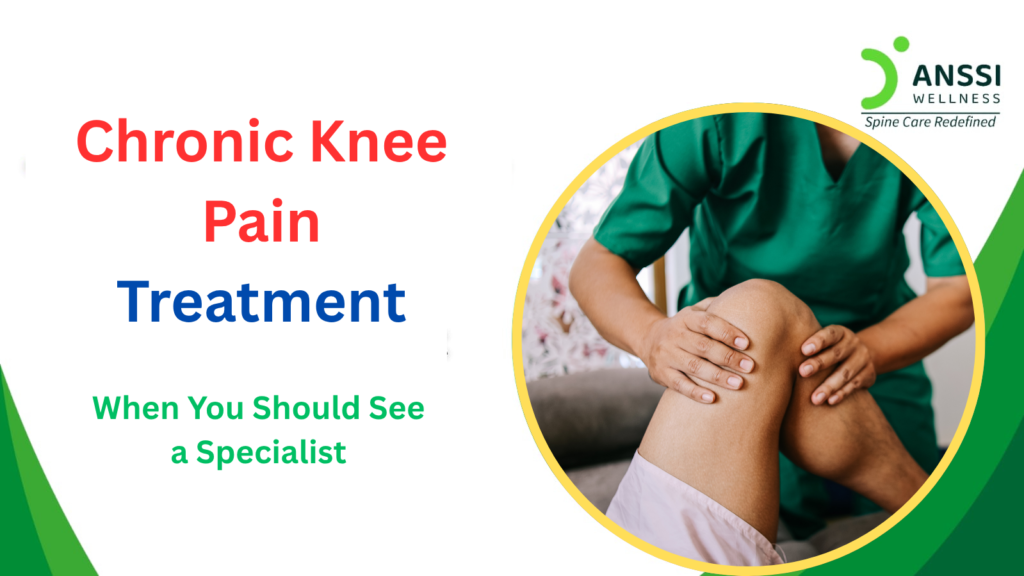
Knee pain is one of the most common musculoskeletal complaints among adults. Whether you are a working professional who spends long hours on your feet, a fitness enthusiast, an older adult experiencing age-related joint changes, or someone recovering from a previous injury, chronic knee pain can significantly affect your daily life. Activities that once seemed simple, walking, climbing stairs, sitting for long periods, or exercising, can become uncomfortable and challenging.
While occasional knee pain after strenuous activity often improves with rest, pain that persists for weeks or repeatedly returns should not be ignored. Chronic knee pain is usually a sign of an underlying joint problem that requires proper evaluation and treatment. Early diagnosis not only helps relieve pain but also reduces the risk of progressive joint damage and long-term disability.
What is Chronic Knee Pain?
Chronic knee pain is generally defined as pain that lasts for more than 12 weeks or keeps recurring despite initial treatment. Unlike temporary discomfort caused by muscle fatigue or a minor strain, chronic pain often indicates changes within the knee joint or surrounding structures.
The severity of pain varies from person to person. Some individuals experience mild discomfort during physical activity, while others struggle with pain even during routine daily tasks.
Common Causes of Chronic Knee Pain
Several conditions can contribute to persistent knee pain. Understanding the underlying cause is the first step toward effective treatment.
Early Osteoarthritis
One of the most common causes of chronic knee pain is early-stage osteoarthritis (Grade 1 and Grade 2). Gradual wear of the joint cartilage may lead to pain, stiffness, and reduced mobility, particularly during weight-bearing activities.
Cartilage Degeneration
Damage or thinning of the cartilage that cushions the knee joint can increase friction between the bones, resulting in pain and inflammation.
Meniscal Injuries
The meniscus acts as a shock absorber within the knee. Tears may occur due to sports injuries, twisting movements, or age-related degeneration, causing pain, swelling, and occasional locking of the joint.
Ligament Injuries
Partial injuries to ligaments such as the anterior cruciate ligament (ACL) or medial collateral ligament (MCL) can contribute to ongoing instability and discomfort if not properly rehabilitated.
Patellofemoral Pain Syndrome
Often called “runner’s knee,” this condition causes pain around the kneecap and is frequently associated with muscle imbalance, overuse, or abnormal movement patterns.
Tendinitis
Inflammation of the tendons surrounding the knee commonly affects athletes and physically active individuals, especially those involved in running or jumping sports.
Other Contributing Factors
Additional factors include:
- Previous sports injuries
- Excess body weight
- Poor lower-limb biomechanics
- Muscle weakness
- Sedentary lifestyle
- Age-related joint degeneration
Symptoms That Should Not Be Ignored
Although mild knee discomfort may settle with rest, certain symptoms require evaluation by a specialist.
Seek medical attention if you experience:
- Persistent knee pain lasting several weeks
- Swelling that repeatedly returns
- Difficulty walking or climbing stairs
- Knee stiffness after sitting for prolonged periods
- Locking or catching sensations
- Knee instability or giving way
- Reduced range of motion
- Pain affecting sleep or daily activities
Ignoring these symptoms may allow the underlying condition to worsen over time.
Why Early Diagnosis is Important
Successful treatment depends on identifying the precise cause of knee pain rather than simply treating the symptoms.
A comprehensive assessment may include:
- Detailed medical history
- Physical examination
- Functional movement assessment
- Gait analysis
- X-rays or MRI when clinically indicated
Combining clinical findings with imaging studies allows specialists to develop an individualised treatment plan tailored to each patient’s condition and activity level.
Treatment Options for Chronic Knee Pain
The most appropriate treatment depends on the diagnosis, severity of symptoms, and the patient’s functional goals.
Conservative Management
Many patients benefit from non-surgical treatment, particularly during the early stages of joint degeneration or soft tissue injury.
Conservative treatment may include:
- Activity modification
- Weight management
- Physiotherapy
- Muscle strengthening exercises
- Flexibility and mobility training
- Pain management under medical supervision
These approaches aim to reduce pain while improving knee stability and overall function.
When Surgery May Be Necessary
Although many patients can be managed without surgery, some conditions require surgical intervention.
Examples include:
- Advanced osteoarthritis
- Severe ligament rupture
- Complex meniscal tears
- Major cartilage injuries
- Significant structural instability
The decision to proceed with surgery should always be based on clinical examination, imaging findings, and the patient’s individual needs.
Modern Knee Rehabilitation Programs
Advances in rehabilitation have expanded the options available for patients seeking non-surgical treatment. Rather than focusing solely on pain relief, modern rehabilitation programs aim to restore normal joint function and improve long-term mobility.
A comprehensive rehabilitation program may include:
- Personalised physiotherapy
- Muscle strengthening
- Balance and neuromuscular training
- Functional movement retraining
- Gait correction
- Flexibility exercises
- Lifestyle modification
These interventions help improve knee mechanics while reducing stress on the joint during daily activities.
The Role of Knee Decompression Technology
Modern knee rehabilitation programs may also incorporate knee decompression technology for appropriately selected patients.
This technology is designed to reduce compressive forces across the knee joint during treatment. By improving joint mechanics and reducing pressure on affected structures, knee decompression may help relieve discomfort and support rehabilitation when combined with exercise therapy and physiotherapy.
Its suitability depends on the individual’s diagnosis and should be determined after a comprehensive clinical assessment.
Benefits of Early Rehabilitation
Beginning treatment early offers several important advantages.
Patients may experience:
- Better pain control
- Improved walking ability
- Increased muscle strength
- Enhanced knee stability
- Improved flexibility
- Reduced dependence on long-term pain medication
- Better quality of life
- Potential delay or avoidance of surgery in appropriately selected patients
Early intervention also helps patients remain active and independent for longer.
About ANSSI:
ANSSI Wellness focuses on improving the quality of life for patients suffering from knee issues, aiming to provide relief where other conventional treatments have failed. Through Advanced Knee Rehabilitation Treatment, ANSSI is committed to helping patients avoid surgery and recover in a safe, effective, and compassionate environment.
Connect with ANSSI Wellness on LinkedIn, Instagram, and Facebook for expert guidance.
Clinical References:
- Sancheti et al. Management of Knee Pain and Early Osteoarthritis in India. Clinics in Orthopedic Surgery. Vol. 9, No. 3, 2017.
- Hazra, S., Mondal, K., Bhattacharya, D. et al. Prevalence of Knee Osteoarthritis in India: A Systematic Review and Meta-Analysis of Population-Based Studies. JOIO 59, 1785–1796 (2025).
- Vanneste T, Belba A, Oei GTML, Emans P, Fonkoue L, Kallewaard JW, et al. 9. Chronic knee pain. Pain Pract. 2025;25:e13408.