Spondylosis is one of the most common spinal conditions affecting adults, particularly those over the age of 40. It is a gradual, age-related degeneration of the spine that can lead to chronic neck pain, lower back pain, stiffness, reduced flexibility, and, in some cases, nerve-related symptoms. Because the pain often develops slowly, many people rely on painkillers for quick relief and continue taking them whenever symptoms return.
While pain medication may temporarily reduce discomfort, it does not treat the underlying changes occurring within the spine. As a result, the condition may continue to progress while the symptoms are only being masked. Understanding why painkillers alone are not a long-term solution is essential for anyone seeking lasting relief from spondylosis.
Understanding Spondylosis
Spondylosis refers to the gradual wear and tear of the spine that occurs with ageing. It commonly affects the cervical spine (neck) and lumbar spine (lower back), although it can occur anywhere along the spine.
The condition develops as the intervertebral discs gradually lose water content and elasticity. Over time, the discs become thinner, reducing their ability to absorb shock. At the same time, the facet joints undergo degenerative changes, and the body may form bone spurs (osteophytes) as part of the ageing process.
Several factors can contribute to the development or progression of spondylosis, including:
- Age-related degeneration
- Poor posture
- Sedentary lifestyle
- Repetitive spinal strain
- Obesity
- Previous spinal injuries
- Occupations involving prolonged sitting or heavy lifting
As these structural changes progress, nearby nerves may become irritated or compressed, contributing to chronic pain and neurological symptoms.
Common Symptoms of Spondylosis
The symptoms vary depending on the severity and location of the degeneration.
Common complaints include:
- Persistent neck or lower back pain
- Morning stiffness
- Reduced flexibility
- Difficulty turning the neck or bending the back
- Pain radiating into the shoulders, arms, buttocks, or legs
- Tingling or numbness
- Muscle weakness in more advanced cases
- Pain that worsens after prolonged sitting or standing
Although symptoms may initially come and go, they often become more frequent if the underlying condition continues to progress.
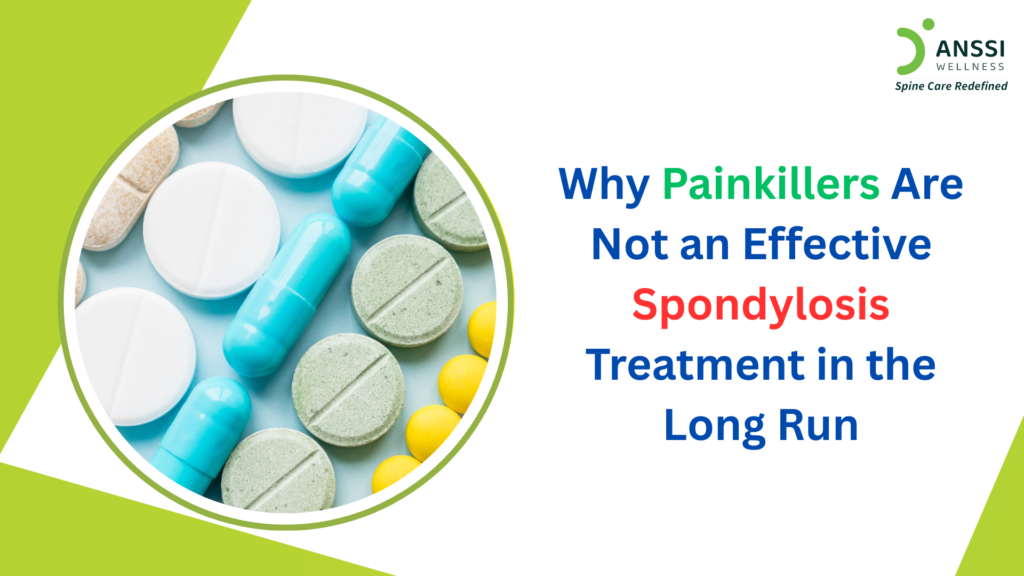
Why Painkillers Are Not a Long-Term Solution
Many people consider painkillers the easiest way to manage chronic spinal pain. While these medications may reduce discomfort temporarily, they have important limitations.
They Only Treat Symptoms
Painkillers work by reducing pain perception or controlling inflammation. However, they do not repair damaged spinal discs, reverse degeneration, remove bone spurs, or correct nerve compression.
As a result, the structural changes responsible for spondylosis remain unchanged even if the pain temporarily improves.
Symptoms Often Return
Because the underlying condition has not been addressed, pain frequently returns once the medication wears off or is discontinued.
Many patients find themselves trapped in a cycle of recurring pain followed by repeated use of medication without experiencing lasting improvement.
Risks of Long-Term Medication
Prolonged use of certain pain medications may increase the risk of:
- Stomach irritation and ulcers
- Kidney problems
- Liver damage
- Cardiovascular complications
- Dependence on medication in some cases
For this reason, long-term medication should always be taken under appropriate medical supervision rather than becoming the sole treatment strategy.
The Importance of Early Specialist Evaluation
Persistent neck or back pain should be evaluated by a qualified spine specialist rather than managed indefinitely with painkillers.
A comprehensive assessment typically includes:
- Medical history
- Physical examination
- Neurological evaluation
- MRI or other imaging where clinically indicated
This evaluation helps determine whether symptoms are caused by disc degeneration, nerve compression, spinal stenosis, or another spinal disorder. Identifying the precise cause allows treatment to be directed toward the underlying problem rather than simply relieving symptoms.
Comprehensive Non-Surgical Treatment
Many patients with spondylosis can be managed successfully through conservative treatment.
A comprehensive rehabilitation programme may include:
- Physiotherapy
- Posture correction
- Core strengthening exercises
- Stretching programmes
- Ergonomic advice
- Activity modification
- Lifestyle changes
- Weight management where appropriate
These approaches aim to improve spinal function, strengthen supporting muscles, reduce mechanical stress on the spine, and improve mobility.
The Role of Non-Surgical Spinal Decompression Treatment
For appropriately selected patients with disc-related degenerative spinal conditions, Non-Surgical Spinal Decompression Treatment (NSSDT) may form part of a personalised rehabilitation programme.
NSSDT uses a computer-controlled decompression system to gently apply controlled distraction forces to affected spinal segments.
The treatment is designed to:
- Reduce pressure within the intervertebral discs
- Create negative intradiscal pressure
- Support disc hydration
- Reduce mechanical stress on affected spinal nerves
- Improve spinal function when combined with physiotherapy and rehabilitation
It is important to understand that NSSDT is recommended only after careful evaluation by an orthopaedic specialist. Not every patient with spinal pain is a suitable candidate, and treatment recommendations depend on the individual’s diagnosis and overall clinical condition.
Benefits of Treating the Root Cause
Focusing on the underlying spinal condition rather than masking symptoms offers several advantages.
Appropriate non-surgical treatment may help:
- Improve long-term pain management
- Restore mobility
- Reduce nerve irritation
- Improve daily function
- Reduce dependence on prolonged pain medication
- Improve quality of life
- Delay or avoid surgery in appropriately selected patients
Patients who receive early diagnosis and structured rehabilitation often achieve better functional outcomes than those who rely solely on repeated medication.
About ANSSI:
ANSSI Wellness focuses on improving the quality of life for patients suffering from spinal issues, aiming to provide relief where other conventional treatments have failed. Through advanced Non-Surgical Spinal Decompression Treatment, ANSSI is committed to helping patients avoid surgery and recover in a safe, effective, and compassionate environment.
Book Consultation:
Call +91 9004726844 | 9920936844
Visit www.anssiwellness.com
Connect with ANSSI Wellness on LinkedIn, Instagram, and Facebook for expert guidance.
Clinical References:
- Manchikanti L, Abdi S, Atluri S, et al. An update of comprehensive evidence-based guidelines for interventional techniques in chronic spinal pain. Pain Physician. 2013;16(2 Suppl):S49-S283.
- Wehling M. Non-steroidal anti-inflammatory drug use in chronic pain conditions with special emphasis on the elderly and patients with relevant comorbidities: management and mitigation of risks and adverse effects. European Journal of Clinical Pharmacology. 2014;70(10):1159-1172.
- Brinjikji W, Luetmer PH, Comstock B, et al. Systematic literature review of imaging features of spinal degeneration in asymptomatic populations. American Journal of Neuroradiology. 2015;36(4):811-816.
- Beattie PF., Nelson R., Michener L., Cammarata J., Donely J. Short And Long-Term Outcomes Following Treatment with the VAX-D Protocol for Patients with Chronic, Activity Limiting Low Back Pain. Journal of Orthopaedic & Sports Physical Therapy, Volume 35, Number 1, January 2005.