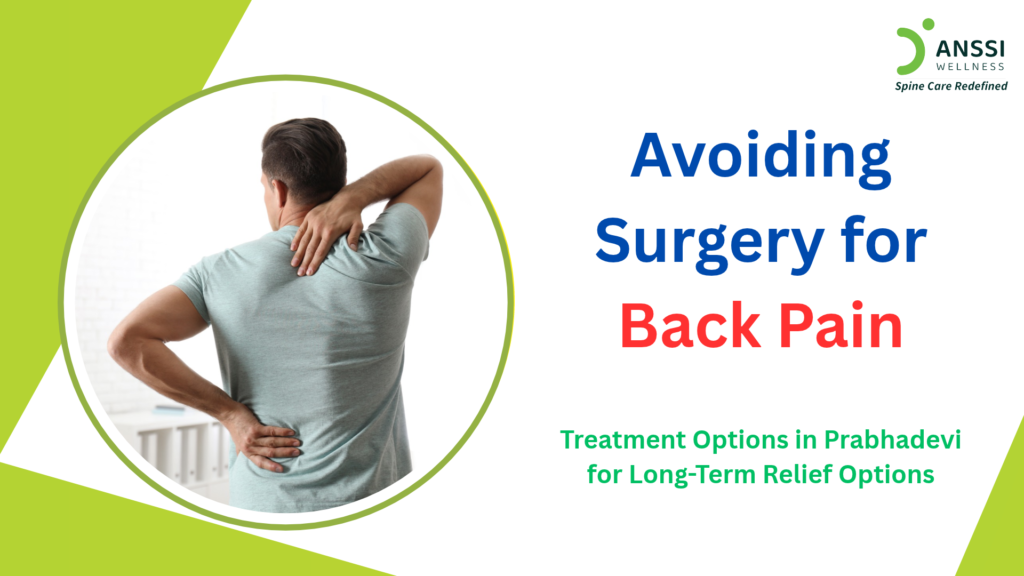
Chronic back pain can affect almost every aspect of daily life, from sitting comfortably at work to travelling, exercising, and completing household activities. For many residents of Prabhadevi, Mumbai, long working hours, prolonged sitting, daily commuting, and limited physical activity can contribute to recurring back discomfort. When the pain persists despite medication or physiotherapy, patients may begin considering spine surgery.
However, surgery is not the only treatment approach for every back pain condition. Depending on the underlying cause, certain patients may benefit from conservative treatment options, including physiotherapy and Non-Surgical Spinal Decompression Treatment (NSSDT). Understanding the available options can help patients make informed decisions about managing chronic back pain.
Understanding Chronic Back Pain Among Prabhadevi Residents
Prabhadevi is a busy Mumbai neighbourhood where professionals, business owners, commuters, and older adults follow demanding daily routines. Spending several hours sitting at a desk, working on computers, driving, or travelling in crowded public transport can make it difficult to maintain regular physical activity.
Several factors may contribute to chronic back pain, including:
- Prolonged sitting: Remaining seated for extended periods without movement breaks can aggravate existing back discomfort.
- Poor posture: Repeatedly working in unsupported positions may increase muscular strain.
- Age-related spinal changes: Disc degeneration and changes in spinal joints can contribute to pain in some individuals.
- Disc bulge or herniation: Changes in an intervertebral disc may irritate nearby nerves and cause lower back pain or radiating leg pain.
- Muscle weakness: Reduced strength and endurance in the abdominal, back, and hip muscles may affect spinal support.
Chronic back pain is generally defined as pain lasting for three months or longer. Symptoms may include persistent lower back discomfort, stiffness, difficulty bending, and pain that travels into the buttocks or legs. When nerve roots are irritated, patients may also experience tingling, numbness, or weakness.
Identifying the underlying cause is essential because different spinal conditions require different treatment approaches.
Why Are Patients Reluctant to Choose Spine Surgery?
Spine surgery may be recommended for specific conditions, particularly when there is significant nerve compression, spinal instability, progressive neurological weakness, or other serious complications. However, many patients feel anxious about undergoing an operation.
Some of the concerns associated with spine surgery include:
- Risk of complications: Like other major procedures, spine surgery can involve risks such as infection, bleeding, blood clots, nerve injury, and complications related to anaesthesia.
- Recovery and rehabilitation: Depending on the procedure and the patient’s condition, recovery may require hospitalisation, restricted activities, physiotherapy, and time away from work.
- Persistent or recurring pain: Surgery may address a particular structural problem, but it does not guarantee complete pain relief. Some patients may continue experiencing symptoms after the procedure.
- Financial considerations: Surgical procedures, hospitalisation, diagnostic investigations, and rehabilitation can involve substantial expenses.
- Fear of further procedures: Certain patients worry about the possibility of additional surgery if symptoms persist or new spinal problems develop.
These concerns can make patients reluctant to consider surgery. Nevertheless, avoiding surgery should not become the only objective. The priority should be selecting the treatment that is medically appropriate for the diagnosed condition.
Non-Surgical Spinal Decompression: An Alternative Treatment Approach
Non-Surgical Spinal Decompression Treatment (NSSDT) is a non-invasive treatment approach that may be considered for selected patients experiencing disc-related chronic back pain.
The treatment uses a specialised computer-controlled decompression table and harness system. The equipment applies carefully regulated stretching forces to targeted spinal segments according to an individual’s treatment plan.
The objective is to modify mechanical loading around the affected spinal region. Controlled traction may help reduce pressure-related symptoms in some patients, although individual responses vary and scientific evidence regarding its effectiveness remains mixed.
How Does the Treatment Work?
The treatment generally involves the following steps:
- Initial assessment: Orthopaedic evaluation, symptom history, physical examination, and review of relevant MRI or X-ray reports help determine the possible cause of back pain.
- Personalised treatment planning: The patient’s condition, symptoms, medical history, and treatment suitability are considered before beginning decompression.
- Controlled spinal stretching: A specialised table and harness system apply regulated traction to selected spinal segments.
- Progress monitoring: Physiotherapists monitor the patient’s response and adjust the programme when clinically appropriate.
- Rehabilitation guidance: Exercises, activity modifications, and posture-related recommendations may support overall recovery and functional improvement.
NSSDT may be considered for certain patients with disc-related conditions, such as lumbar disc bulges or herniation associated with back pain and radiating symptoms.
Other Non-Surgical Approaches for Managing Chronic Back Pain
Spinal decompression is not the only conservative treatment option. A comprehensive management plan may include:
- Physiotherapy: Guided exercises can improve flexibility, muscle strength, endurance, and movement control.
- Posture correction: Improving workstation ergonomics and avoiding prolonged unsupported sitting may help reduce discomfort.
- Regular physical activity: Walking and other suitable low-impact activities can support mobility and general fitness.
- Weight management: Maintaining a healthy body weight may reduce mechanical stress on the lower back.
- Medical management: Appropriate medication may help control pain and inflammation when prescribed by a qualified healthcare professional.
Combining suitable approaches can help patients manage symptoms and improve their ability to perform everyday activities.
Exploring Non-Surgical Back Pain Treatment at ANSSI Wellness, Prabhadevi
Residents experiencing persistent back pain can consider a professional assessment at ANSSI Wellness, Prabhadevi, to understand their condition and explore suitable treatment options.
- The approach may include an evaluation of spinal symptoms, review of available diagnostic reports, physiotherapy, and Non-Surgical Spinal Decompression Treatment for patients who meet the clinical suitability criteria.
- The objective is to develop an individualised care plan rather than recommending the same treatment to every patient. Patients should also understand the expected benefits, limitations, and alternatives before beginning any programme.
Importantly, new bladder or bowel dysfunction, numbness around the groin, or rapidly worsening leg weakness requires urgent medical evaluation. Patients with progressive neurological symptoms or other serious spinal conditions may need prompt specialist or surgical care.
About ANSSI:
ANSSI Wellness focuses on improving the quality of life for patients suffering from spinal issues, aiming to provide relief where other conventional treatments have failed. Through advanced Non-Surgical Spinal Decompression Treatment, ANSSI is committed to helping patients avoid surgery and recover in a safe, effective, and compassionate environment.
Book Consultation:
Call +91 9004726844 | 9920936844
Visit www.anssiwellness.com
Connect with ANSSI Wellness on LinkedIn, Instagram, and Facebook for expert guidance.