
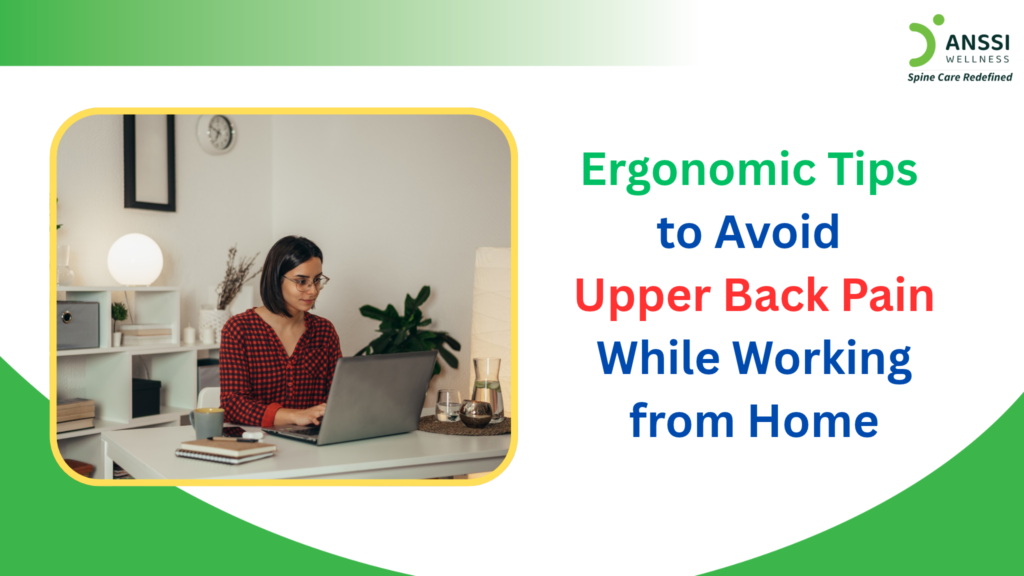
Working from home offers flexibility and convenience, but spending long hours at an improperly arranged workstation can take a toll on your spine. Many remote professionals experience stiffness, muscle tension, and discomfort in the upper back, particularly around the shoulders and the area between the shoulder blades.
Prolonged sitting, working on laptops placed too low, hunching over a desk, and taking very few movement breaks can contribute to these problems. The good news is that a few practical ergonomic adjustments, combined with regular stretching and exercise, can help reduce unnecessary strain and support better spinal health.
Why Working from Home Can Trigger Upper Back Pain
The upper back, or thoracic spine, consists of 12 vertebrae and supports the rib cage while allowing movement of the trunk. Muscles around the shoulders, neck, and shoulder blades help maintain posture and control upper-body movement.
A dining table, sofa, or bed may seem convenient for occasional work, but these surfaces often lack the support and positioning required for prolonged computer use.
- When you work for several hours without changing positions, these muscles may become fatigued.
- Sitting with rounded shoulders, leaning towards a laptop screen, or keeping your head forward can increase the mechanical demands on the neck and upper back.
Over time, poor workstation arrangements and limited movement may contribute to recurring discomfort.
6 Tips to Create a Spine-Friendly Home Office
A comfortable workstation does not need expensive furniture. The objective is to arrange your chair, desk, and computer so that you can work without constantly straining your neck, shoulders, and back.
1. Choose a Chair With Proper Back Support
Use a chair that supports your back and allows you to sit comfortably. Your lower back should be supported, while your upper back and shoulders remain relaxed. Keep both feet flat on the floor or use a footrest if necessary.
Avoid sitting on soft sofas or beds for extended periods because they make it difficult to maintain a comfortable working position.
2. Position Your Monitor at Eye Level
One common mistake among remote workers is placing a laptop directly on the desk. This often requires looking down continuously, encouraging a forward-head posture.
Raise your laptop or monitor so that the top of the screen is approximately at eye level. If you use a laptop stand, connect a separate keyboard and mouse to maintain comfortable arm positioning.
3. Maintain a Comfortable Desk Height
Your desk should allow your elbows to remain close to your body and approximately at a right angle while typing. Keep your shoulders relaxed instead of raising or rounding them.
Position the keyboard and mouse close enough to avoid repeatedly reaching forward. These small adjustments can reduce unnecessary tension around the shoulders and upper back.
4. Avoid Working With Your Neck Bent Forward
Looking down at a laptop or mobile phone for long periods can increase the mechanical load on the neck and surrounding muscles.
Keep frequently used devices at a comfortable viewing height. When reading documents, use a stand rather than placing them flat on the desk whenever possible.
5. Change Your Sitting Position Regularly
Maintaining one posture throughout the working day can cause discomfort, even when your workstation is ergonomically arranged.
Change positions periodically, stand while taking phone calls, and walk around between tasks. A comfortable posture is not necessarily one rigid position; regular movement is equally important.
6. Take Short Movement Breaks
Set a reminder to stand, stretch, or walk for a few minutes every 30–60 minutes. Short breaks can help reduce prolonged static loading and give your muscles an opportunity to move.
Avoid waiting until your back begins to hurt before changing positions.
Stretching and Exercise Tips to Prevent Upper Back Problems
Ergonomic changes are important, but they work best when combined with regular physical activity. Gentle mobility exercises and strengthening routines can help maintain movement and support the muscles around the spine.
Consider including these exercises in your daily routine:
- Shoulder Rolls: Slowly move your shoulders upwards, backwards, and downwards. Repeat several times to encourage shoulder movement and reduce stiffness.
- Scapular Squeezes: Sit or stand upright and gently draw your shoulder blades towards each other. Hold briefly, relax, and repeat. This exercise helps activate muscles around the shoulder blades.
- Chest Stretch: Stand near a doorway, place your forearms against the frame, and gently move your body forward until you feel a comfortable stretch across your chest. Avoid forcing the movement.
- Thoracic Extensions: Sit on a supportive chair and gently extend your upper back over the chair’s backrest while keeping the movement controlled. Avoid excessive arching of the lower back.
- Neck Mobility Exercises: Slowly turn your head from side to side within a comfortable range. Avoid forceful neck rotations or movements that trigger pain.
- Walking and Core Strengthening: Regular walking supports overall physical fitness. Appropriate core and upper-back strengthening exercises can also improve muscular endurance and movement control.
Start gently and increase repetitions gradually. Stop any exercise that causes sharp pain, tingling, numbness, or pain spreading into your arms.
Daily Habits That Support a Healthier Spine
Apart from workstation ergonomics and exercise, everyday habits also influence spinal comfort.
- Maintain a regular physical activity routine.
- Avoid spending long periods looking down at your mobile phone.
- Stay hydrated and follow a balanced diet.
- Get adequate sleep and use a comfortable sleeping arrangement.
- Avoid carrying heavy bags on one shoulder for prolonged periods.
- Balance working hours with regular movement and relaxation.
These habits support general health and may help reduce factors that contribute to recurring muscular discomfort.
When Should You Seek Professional Help?
Occasional stiffness after a long working day may improve with movement and rest. However, persistent or worsening upper back pain should not be ignored.
- Seek medical assessment if you experience pain that repeatedly returns, discomfort spreading towards the arms, numbness, tingling, weakness, or restricted movement.
- Upper back pain can sometimes be associated with cervical or thoracic spine conditions, including disc-related problems and joint disorders.
- A doctor can evaluate the symptoms and recommend appropriate treatment.
- Seek urgent medical attention if upper back discomfort occurs with chest pressure, breathlessness, sweating, fainting, or sudden severe pain, as these symptoms may indicate a non-spinal medical emergency.
About ANSSI:
ANSSI Wellness focuses on improving the quality of life for patients suffering from spinal issues, aiming to provide relief where other conventional treatments have failed. Through advanced Non-Surgical Spinal Decompression Treatment, ANSSI is committed to helping patients avoid surgery and recover in a safe, effective, and compassionate environment.
Book Consultation:
Call +91 9004726844 | 9920936844
Visit www.anssiwellness.com
Connect with ANSSI Wellness on LinkedIn, Instagram, and Facebook for expert guidance.