Slip disc or slipped disc has become an increasingly common spinal condition among residents of Bengaluru. As one of India’s busiest technology and business hubs, Bengaluru is home to thousands of professionals who spend prolonged hours sitting at desks, working on computers, commuting through traffic, and leading sedentary lifestyles. Over time, these daily habits place significant stress on the spine and increase the risk of developing disc-related problems.
When patients are diagnosed with a slipped disc, many immediately worry that surgery is inevitable. Fortunately, this is not always the case. Today, several advanced non-surgical treatment options are available that can effectively address the underlying cause of the condition and help patients achieve long-term relief.
Understanding Slipped Disc
A slipped disc, also known as a herniated disc, occurs when the soft inner material of a spinal disc pushes through a weakened outer layer.
The spinal discs act as cushions between the vertebrae and help absorb shock during movement. When a disc becomes damaged, it may protrude outward and place pressure on nearby nerves.
This nerve compression often leads to various symptoms that can interfere with daily life.
Common Symptoms of a Slipped Disc
The location and severity of the illness can affect the symptoms.
Common symptoms include:
- Chronic lower back pain
- Neck pain
- Sciatica or pain radiating down the legs
- Tingling sensations
- Numbness
- Muscle weakness
- Reduced mobility and flexibility
If left untreated, symptoms may gradually worsen over time.
Why Many Patients Are Reluctant to Undergo Spine Surgery
One of the biggest concerns patients have after receiving a slipped disc diagnosis is the possibility of surgery.
Many people are understandably hesitant due to several reasons.
Common Concerns About Surgery
Patients often worry about:
- Surgical complications
- Extended recovery periods
- Time away from work
- Physical restrictions during recovery
- Rehabilitation requirements
In a busy city like Bengaluru, taking weeks or months away from professional and personal responsibilities can be challenging.
Surgery is Not Always Necessary
Fortunately, surgery is not required for every patient.
Many mild-to-moderate slipped disc cases can be effectively managed through conservative and advanced non-surgical treatment approaches.
Surgery is generally reserved for patients with severe neurological deficits, significant spinal instability, or progressive symptoms that do not respond to comprehensive treatment.
Conventional Non-Surgical Treatments and Their Limitations
Most patients initially try medications or physiotherapy to control symptoms.
While these treatments can be beneficial, they also have limitations.
Medication
Painkillers and anti-inflammatory medications may help reduce pain and inflammation temporarily.
However, they do not:
- Repair damaged discs
- Reverse degeneration
- Relieve structural nerve compression
- Restore disc health
As a result, symptoms often return when medication is discontinued.
Physiotherapy
Physiotherapy can improve flexibility, strengthen supporting muscles, and promote better posture.
However, if significant disc pressure and nerve compression remain present, physiotherapy alone may not fully resolve the problem.
This is why some patients continue to experience recurring pain despite months of treatment.
The Importance of Root-Cause Treatment
Finding and treating the real cause of pain is essential for long-term alleviation.
Accurate Diagnosis
Effective treatment begins with a comprehensive evaluation that may include:
- Medical history assessment
- Physical examination
- Neurological evaluation
- Postural assessment
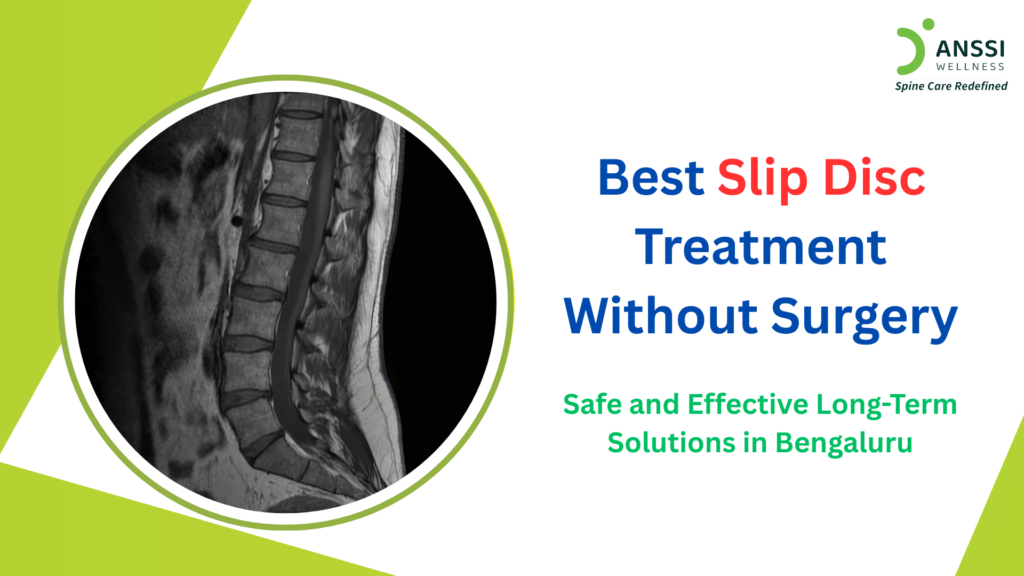
- MRI imaging
MRI scans can help identify:
- Disc herniation severity
- Nerve compression
- Disc degeneration
- Associated spinal abnormalities
An accurate diagnosis allows clinicians to create a personalised treatment strategy.
Early Intervention Matters
Seeking treatment early may help:
- Prevent progression of the condition
- Reduce nerve irritation
- Preserve spinal function
- Improve long-term outcomes
Early intervention often reduces the likelihood of requiring surgery later.
Non-Surgical Spinal Decompression Treatment (NSSDT)
One of the advanced treatment options available for slipped disc patients is Non-Surgical Spinal Decompression Treatment (NSSDT).
How NSSDT Works
NSSDT uses specialised computer-controlled technology to gently stretch the spine in a precise and controlled manner.
The treatment aims to:
- Reduce intradiscal pressure
- Relieve nerve compression
- Promote nutrient exchange
- Support disc hydration and recovery
By targeting the structural source of pain, NSSDT addresses the root cause rather than simply managing symptoms.
Benefits for Slipped Disc Patients
Potential benefits include:
- Reduced back and neck pain
- Relief from sciatica symptoms
- Improved mobility
- Enhanced spinal function
- Better quality of life
- Non-invasive alternative to surgery
Because the procedure is non-surgical, there are no incisions or lengthy recovery periods associated with traditional spine surgery.
ANSSI Wellness Bengaluru: Personalised Non-Surgical Spine Care
At ANSSI Wellness Bengaluru, treatment programs are designed around each patient’s unique condition and lifestyle needs.
Comprehensive Assessment
The evaluation process includes:
- Clinical examination
- Functional assessment
- MRI review
- Postural analysis
This helps identify the precise source of pain and nerve compression.
Personalised Treatment Programs
Treatment plans are customised according to:
- Diagnosis
- Symptom severity
- Functional limitations
- Occupation and lifestyle
Programs may integrate:
- Non-Surgical Spinal Decompression Treatment
- Physiotherapy
- Posture correction
- Strengthening exercises
- Ergonomic guidance
Focus on Long-Term Relief
The primary objective is to improve spinal health and reduce the risk of recurring symptoms by addressing the underlying structural problem.
About ANSSI:
ANSSI Wellness focuses on improving the quality of life for patients suffering from spinal issues, aiming to provide relief where other conventional treatments have failed. Through advanced Non-Surgical Spinal Decompression Treatment, ANSSI is committed to helping patients avoid surgery and recover in a safe, effective, and compassionate environment.
Book Consultation:
Call +91 9004726844 | 9920936844
Visit www.anssiwellness.com
Connect with ANSSI Wellness on LinkedIn, Instagram, and Facebook for expert guidance.
Clinical References:
- Kreiner DS et al. North American Spine Society. An evidence-based clinical guideline for the diagnosis and treatment of lumbar disc herniation with radiculopathy. Spine J. 2014 Jan;14(1):180-91.
- El Melhat AM, Youssef ASA, Zebdawi MR, Hafez MA, Khalil LH, Harrison DE. Non-Surgical Approaches to the Management of Lumbar Disc Herniation Associated with Radiculopathy: A Narrative Review. J Clin Med. 2024 Feb 8;13(4):974.
- Gose E., Ph.D, Naguszewski W., MD, Naguszewski R., MD. Vertebral Axial Decompression Therapy for Pain Associated with Herniated or Degenerated Discs or Facet Syndrome: An Outcome Study. Journal of Neurological Research, Volume 20, No 3, April 1998.
- Tilaro F., MD, Miskovich D. MD. The Effects of Vertebral Axial Decompression On Sensory Nerve Dysfunction In Patients with Low Back Pain and Radiculopathy. Canadian Journal of Clinical Medicine Vol. 6, No 1, January 1999.