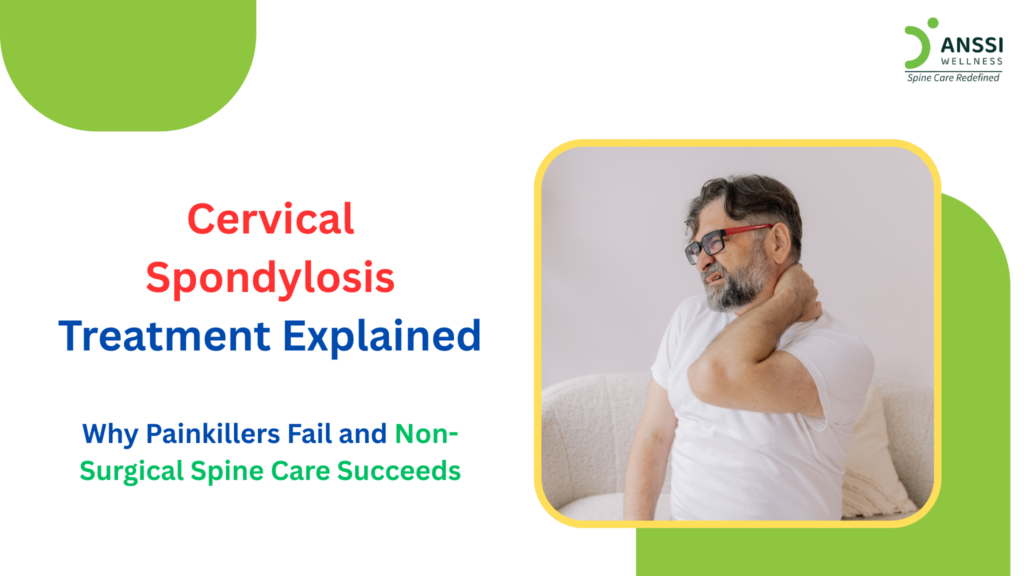
While painkillers are frequently used to manage the symptoms of cervical spondylosis, they usually provide only temporary relief. In many cases, patients continue to experience recurring pain because medications do not address the underlying cause of the problem. Today, modern non-surgical spine care treatments offer safer and more effective ways to manage cervical spondylosis and achieve long-term relief.
Understanding Cervical Spondylosis
Cervical spondylosis is a degenerative condition that affects the cervical spine, which is the upper portion of the spine located in the neck. The spine contains small bones called vertebrae separated by soft discs that act as shock absorbers. These discs allow the neck to move freely while supporting the weight of the head.
Over time, these discs can lose their flexibility and hydration due to ageing or prolonged strain. As the discs wear down, they may begin to bulge or shrink, reducing the space between the vertebrae. This process can place pressure on nearby nerves and lead to pain, stiffness, and reduced mobility.
Although cervical spondylosis is commonly associated with ageing, it is increasingly affecting younger individuals due to sedentary lifestyles and poor posture.
Why Cervical Spondylosis Develops
Cervical spondylosis is caused by a number of reasons. One of the most common causes is poor posture, especially among individuals who spend long hours sitting at desks or working on computers.
Constantly bending the neck forward while using smartphones or laptops places extra stress on the cervical spine. Over time, this repeated strain can accelerate disc degeneration.
Other contributing factors include:
- Age-related wear and tear of spinal discs
- Weak neck and shoulder muscles
- Sedentary lifestyle with limited physical activity
- Repetitive movements or long periods of sitting
- Previous neck injuries or trauma
As these factors combine, they gradually affect the health of the cervical spine and increase the risk of chronic neck pain.
Symptoms That Affect Daily Life
The symptoms of cervical spondylosis may develop slowly and worsen over time. In the early stages, individuals may experience occasional stiffness or mild discomfort in the neck.
However, as the condition progresses, the symptoms can become more persistent and disruptive.
Common symptoms include:
- Chronic neck pain and stiffness
- Headaches that originate from the neck region
- Pain that spreads to the shoulders or upper back
- Numbness or tingling in the arms and hands
- Muscle weakness in the upper limbs
- Reduced ability to turn or move the neck comfortably
In some cases, nerve compression in the cervical spine may lead to more severe symptoms such as dizziness or difficulty performing routine tasks.
If these symptoms persist for a prolonged period, it is important to seek proper medical evaluation.
Why Painkillers Often Fail in the Long Run
Painkillers are commonly prescribed to manage neck pain caused by cervical spondylosis. These medicines function by lowering inflammation and obstructing the body’s pain signals. While they may provide temporary relief, they do not address the underlying cause of the condition.
The root problem in cervical spondylosis often involves disc degeneration and nerve compression in the cervical spine. Painkillers cannot correct these structural changes in the spine.
Relying on long-term medication can also lead to additional concerns, including:
- Reduced effectiveness over time
- Potential side effects on the stomach, liver, or kidneys
- Dependence on medication for pain control
As a result, many patients continue to experience recurring symptoms despite regular use of pain relief medications.
This is why many spine specialists recommend focusing on treatments that address the root cause rather than simply masking the symptoms.
Effective Non-Surgical Treatment Options
Modern spine care has evolved significantly, and several non-surgical treatments are now available to help patients manage cervical spondylosis more effectively.
Physiotherapy and Posture Correction
Physiotherapy plays an important role in improving spinal stability and mobility. Guided exercises can strengthen the muscles that support the neck and improve flexibility.
Physiotherapists also help patients correct posture and adopt ergonomic habits that reduce stress on the cervical spine.
Lifestyle and Ergonomic Changes
Simple adjustments in daily routines can significantly reduce strain on the neck. These may include:
- Maintaining proper posture while sitting and working
- Using ergonomic chairs and workstations
- Taking regular breaks during long periods of computer use
- Performing stretching exercises for the neck and shoulders
These changes help prevent further degeneration and support spinal health.
Non-Surgical Spinal Decompression Treatment
One of the advanced treatment options available today is Non-Surgical Spinal Decompression Treatment. This treatment is designed to gently relieve pressure on the spinal discs and nerves.
The procedure uses specialised equipment to apply controlled stretching to the spine. This process increases the space between vertebrae and helps reduce pressure on the affected discs. As the pressure decreases, the discs can begin to rehydrate and heal naturally.
Many patients prefer this treatment because it is:
- Non-invasive
- Drug-free
- Surgery-free
- Designed to address the root cause of spinal pain
When combined with physiotherapy and supportive therapies, spinal decompression can significantly improve mobility and reduce chronic neck pain.
About ANSSI:
ANSSI Wellness focuses on improving the quality of life for patients suffering from spinal issues, aiming to provide relief where other conventional treatments have failed. Through advanced Non-Surgical Spinal Decompression Treatment, ANSSI is committed to helping patients avoid surgery and recover in a safe, effective, and compassionate environment.
Connect with ANSSI Wellness on LinkedIn, Instagram, and Facebook for expert guidance.