Chronic back pain is no longer limited to elderly individuals. Today, it affects people across age groups, especially working professionals who spend long hours sitting, commuting, or working under stress. What begins as occasional discomfort often progresses into persistent pain that interferes with daily life. In many cases, the underlying cause is not muscle strain but disc-related spinal damage that goes undiagnosed and untreated.
Ignoring chronic back pain or relying solely on temporary solutions can allow the condition to worsen. Understanding the role of spinal discs and choosing the right, non-surgical treatment at the right time is crucial for lasting recovery.
How Disc Damage Leads to Chronic Back Pain
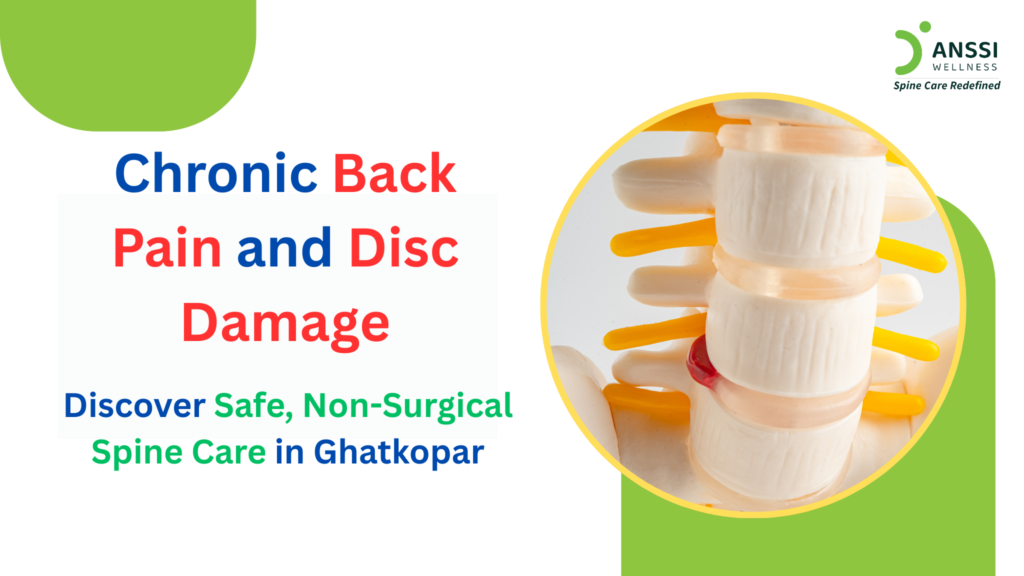
Spinal discs are soft, gel-like cushions located between the vertebrae. They act as shock absorbers, allowing smooth movement and flexibility of the spine. However, due to ageing, poor posture, prolonged sitting, lack of physical activity, or repetitive stress, these discs can lose hydration and strength.
As disc health deteriorates, conditions such as disc bulge, slipped disc, or degenerative disc disease may develop. When a damaged disc bulges or herniates, it can press against nearby spinal nerves. This nerve compression is a major cause of chronic back pain and related symptoms.
If disc-related issues are not addressed early, the continuous pressure on nerves can lead to inflammation, reduced blood flow, and worsening pain over time. What starts as mild discomfort can gradually become constant, limiting movement and daily functioning.
Symptoms and Impact on Daily Life
Chronic back pain caused by disc damage often presents with more than just localised discomfort.
- Common symptoms include persistent lower or upper back pain, stiffness, reduced flexibility, and difficulty bending or standing for long periods. Many patients also experience radiating pain into the legs, commonly known as sciatica, along with numbness or tingling sensations.
- As the condition progresses, muscle weakness may develop, making simple activities such as walking, sitting, or lifting objects increasingly difficult. Sleep disturbances are common, as pain may worsen at night or while changing positions.
- Beyond physical limitations, chronic back pain can significantly impact emotional well-being. Constant discomfort often leads to frustration, stress, anxiety, and reduced productivity at work. Dependence on painkillers becomes common, yet these medications only mask symptoms rather than treating the root cause.
Diagnosis: Identifying the Root Cause
Effective treatment begins with an accurate diagnosis. Chronic back pain can arise from multiple causes, but disc-related problems require specific evaluation. A detailed clinical assessment, combined with imaging studies such as MRI scans, helps identify disc bulges, herniations, degeneration, and nerve compression.
Understanding the exact cause of pain is essential. Treating symptoms without addressing disc damage often leads to temporary relief followed by recurrence. At specialised spine care centres, diagnosis focuses on identifying the root cause so that treatment can be tailored to the patient’s condition rather than following a one-size-fits-all approach.
Surgery vs Non-Surgical Treatment
Many patients believe that surgery is the only option for chronic back pain caused by disc damage. However, surgery is usually recommended only in severe cases involving progressive neurological deficits or emergency conditions. Surgical procedures carry risks such as infection, nerve injury, long recovery periods, and uncertain long-term outcomes.
Similarly, long-term use of painkillers and muscle relaxants can lead to side effects, dependency, and gastrointestinal or kidney-related issues. While these medications may offer temporary relief, they do not repair damaged discs or relieve nerve compression permanently.
Non-surgical treatments, on the other hand, aim to reduce nerve pressure, improve disc health, restore spinal function, and prevent recurrence without invasive procedures. For most patients, conservative, non-invasive care provides effective and lasting relief.
Non-Surgical Spine Care at ANSSI Wellness Ghatkopar
ANSSI Wellness Ghatkopar specialises in advanced non-surgical spine care designed to treat the root cause of chronic back pain. One of the key treatments offered is Non-Surgical Spinal Decompression Treatment.
This procedure uses a specialised decompression system to gently stretch the spine in a controlled manner. By creating negative pressure within the affected discs, spinal decompression helps retract bulging or herniated discs, reduce pressure on compressed nerves, and improve blood circulation to the injured area. This environment supports natural disc healing and pain reduction.
The treatment is completely non-invasive, drug-free, and does not require hospitalisation. Each patient undergoes a thorough evaluation, including MRI review, to design a personalised treatment program based on their condition, severity, and lifestyle.
In addition to spinal decompression, ANSSI Wellness Ghatkopar integrates supportive therapies such as physiotherapy, posture correction, ergonomic guidance, and strengthening exercises. This holistic approach not only relieves pain but also improves spinal stability and prevents future episodes.