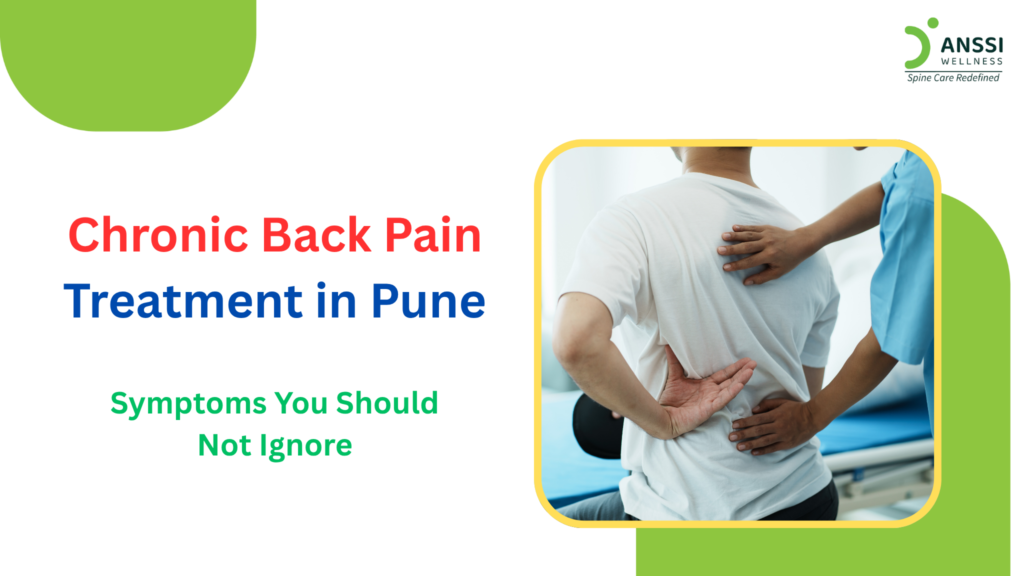
Chronic back pain has become a growing health concern among people living in rapidly developing urban cities like Pune. Known for its expanding IT industry, educational institutions, corporate offices, and fast-paced lifestyle, Pune has witnessed a significant rise in spinal health problems among working professionals, students, and elderly individuals alike.
Long sitting hours, work-from-home culture, poor posture, traffic-related travel stress, sedentary routines, and lack of physical activity are placing tremendous pressure on the spine.
While many people initially ignore mild discomfort or stiffness, untreated spinal problems can gradually progress into chronic pain conditions that affect mobility, productivity, sleep, and overall quality of life.
Recognising the warning signs early and seeking timely medical attention can help prevent worsening spinal damage and improve long-term recovery outcomes.
Understanding Chronic Back Pain
Back pain is generally considered chronic when it lasts for more than 12 weeks, even after initial rest or treatment. Unlike temporary muscle strain, chronic back pain often indicates an underlying spinal issue that requires proper diagnosis and management.
Several spinal conditions may contribute to chronic back pain, including:
- Slipped disc
- Sciatica
- Degenerative disc disease
- Spondylosis
- Spinal stenosis
- Muscle or ligament strain
In many cases, these conditions develop gradually due to continuous spinal stress, poor posture, repetitive strain, or ageing-related degeneration.
The spine contains vertebrae separated by spinal discs that act as cushions and shock absorbers. When these discs become damaged or compressed, they may irritate nearby spinal nerves, resulting in persistent pain and neurological symptoms.
Without proper treatment, chronic spinal problems may worsen over time and significantly reduce a person’s ability to perform daily activities comfortably.
Symptoms You Should Not Ignore
Many people living in busy cities like Pune delay medical consultation because they assume their pain is caused by stress or overwork. However, certain symptoms should never be ignored.
Persistent Lower Back or Neck Pain
Pain that continues for several weeks or keeps returning frequently may indicate an underlying spinal problem rather than a temporary strain.
Pain Radiating into the Arms or Legs
Pain travelling from the neck into the shoulders and arms or from the lower back into the legs may suggest nerve compression caused by spinal disc issues.
Tingling or Numbness
Burning sensations, tingling, or numbness in the hands, fingers, legs, or feet can indicate irritation or compression of spinal nerves.
Muscle Weakness
Weakness in the arms or legs may interfere with walking, lifting objects, climbing stairs, or maintaining balance.
Pain That Worsens During Sitting or Standing
Many spinal conditions become more painful during prolonged sitting, bending, lifting, or standing because these positions increase pressure on spinal discs.
Reduced Flexibility and Stiffness
Difficulty bending, twisting, or moving comfortably may indicate spinal degeneration or muscle imbalance.
Sleep Disturbances Due to Pain
Chronic back pain that affects sleep quality can gradually impact mental health, concentration, and energy levels.
Loss of Bladder or Bowel Control
Sudden loss of bladder or bowel control is considered a medical emergency and requires immediate medical attention because it may indicate severe nerve compression.
Why Early Medical Attention Matters
Ignoring chronic back pain may allow spinal problems to progress further. What begins as mild disc degeneration or muscle strain may eventually develop into severe nerve compression or mobility limitations.
Early medical evaluation helps identify:
- The exact source of pain
- The severity of spinal damage
- Nerve involvement
- Suitable treatment options
Doctors may recommend:
- Physical examination
- Postural assessment
- X-rays
- MRI scans
- Neurological evaluation
Timely diagnosis increases the chances of successful non-surgical treatment and may help patients avoid surgery in many cases.
Non-Surgical Treatment Options for Chronic Back Pain
Modern spine care focuses increasingly on non-surgical approaches that address the root cause of pain while helping patients regain mobility safely.
Physiotherapy and Rehabilitation
Physiotherapy programs aim to strengthen spinal muscles, improve flexibility, correct posture, and support spinal stability.
Therapists may recommend:
- Stretching exercises
- Core strengthening
- Mobility training
- Postural correction exercises
Posture Correction and Ergonomic Guidance
Improving workstation ergonomics, sitting posture, sleeping position, and lifting techniques can significantly reduce spinal stress.
This is especially important for IT professionals and office workers in Pune who spend long hours sitting.
Lifestyle Modifications
Healthy lifestyle changes may include:
- Weight management
- Regular physical activity
- Avoiding prolonged sitting
- Stress management
- Smoking cessation
These changes help improve overall spinal health and reduce future injury risk.
Pain Management Therapies
Doctors may recommend temporary pain management strategies such as manual therapy or heat/cold therapy to help reduce inflammation and discomfort during recovery.
However, long-term reliance on medications alone may not address the actual spinal problem.
Non-Surgical Spinal Decompression Treatment
One of the advanced non-invasive treatments available today is Non-Surgical Spinal Decompression Treatment.
This treatment uses a specialised decompression system that gently stretches the spine in a controlled and precise manner. The process creates negative pressure within spinal discs.
This negative pressure may help:
- Reduce disc pressure
- Relieve nerve compression
- Improve nutrient flow into damaged discs
- Support natural spinal healing
Unlike surgery, spinal decompression is non-invasive and does not require hospitalisation or prolonged recovery time.
Benefits of Non-Surgical Spinal Decompression
Many chronic back pain patients prefer spinal decompression because of its potential long-term benefits.
- Drug-Free and Surgery-Free: The treatment avoids surgical risks and prolonged medication dependency.
- Reduced Nerve Irritation: Relieving spinal pressure may help decrease inflammation and nerve-related symptoms such as sciatica or numbness.
- Improved Mobility and Function: Patients often experience better flexibility, movement, and daily comfort.
- Root-Cause-Focused Treatment: Rather than simply masking symptoms, spinal decompression targets the underlying mechanical compression contributing to chronic pain.
Book Consultation:
Call +91 9004726844 | 9920936844
Visit www.anssiwellness.com
References:
- Outcomes After a Prone Lumbar Traction Protocol for Patients With Activity-Limiting Low Back Pain: A Prospective Case Series Study. Paul F. Beattie, PhD, PT, OCS, Roger M. Nelson, PhD, PT, Lori A. Michener, PhD, PT, ATC, SCS, Joseph Cammarata, DC, Jonathan Donley, DPT. Archives of Physical Medicine And Rehabilitation, Volume 89, February 2008.
- Short And Long-Term Outcomes Following Treatment with the VAX-D Protocol for Patients with Chronic, Activity Limiting Low Back Pain. Beattie PF., Nelson R., Michener L., Cammarata J., Donely J. Journal of Orthopaedic & Sports Physical Therapy, Volume 35, Number 1, January 2005.
About ANSSI:
ANSSI Wellness focuses on improving the quality of life for patients suffering from spinal issues, aiming to provide relief where other conventional treatments have failed. Through advanced Non-Surgical Spinal Decompression Treatment, ANSSI is committed to helping patients avoid surgery and recover in a safe, effective, and compassionate environment.
Connect with ANSSI Wellness on LinkedIn, Instagram, and Facebook for expert guidance.