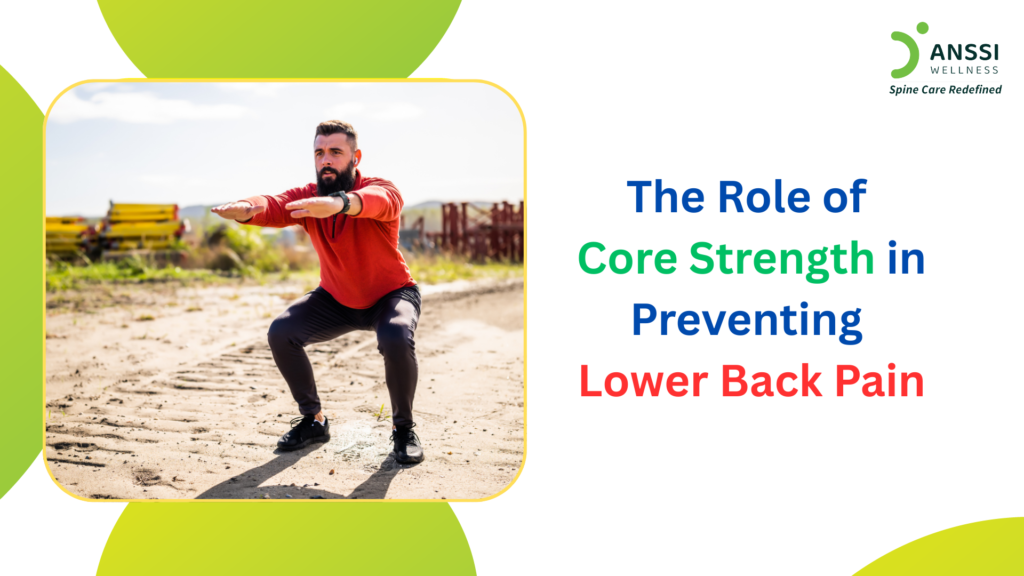
One of the most prevalent musculoskeletal conditions that affects people of all ages is lower back pain. Long hours of sitting, poor posture, lack of physical activity, and improper movement patterns place continuous strain on the spine.
While many people focus only on treating pain after it appears, one of the most effective ways to prevent lower back pain is by strengthening the core muscles. A strong core acts as the body’s natural support system, reducing stress on the spine and protecting spinal discs from compression and injury.
Understanding the Core Muscles
The visible abdominal muscles are not the only part of the core. It is a group of deep and superficial muscles that include the abdominal muscles, lower back muscles, pelvic floor, hips, and gluteal muscles. Together, these muscles form a stabilising unit that supports the spine during movement and at rest.
Whenever you sit, stand, bend, lift, or twist, your core muscles activate to keep the spine aligned.
-
- When the core is strong and balanced, it distributes forces evenly across the spine.
- When it is weak, the spine absorbs excessive load, increasing the risk of pain and injury.
How Weak Core Muscles Lead to Lower Back Pain
A weak core fails to provide adequate spinal stability. As a result, the lower back muscles are forced to work harder to maintain posture and balance. Over time, this overload leads to muscle fatigue, stiffness, and pain.
Poor core strength also contributes to faulty posture, such as excessive arching of the lower back or slouching while sitting. These postural imbalances increase pressure on the intervertebral discs, which act as shock absorbers between the vertebrae. Continuous disc compression can eventually lead to disc bulge, herniation, or nerve compression, causing persistent lower back pain and radiating symptoms.
Simple daily activities such as lifting objects, bending forward, or sitting for long periods become risky when the core lacks strength and control.
Benefits of Strong Core Muscles for Spine Health
Strengthening the core offers multiple benefits for spinal health and pain prevention. A strong core reduces pressure on spinal discs by sharing the load during movement. This lowers the risk of disc degeneration and nerve compression.
Improved core strength also enhances posture, keeping the spine in a neutral and balanced position. This alignment minimises strain on muscles, ligaments, and joints. Additionally, strong core muscles act as shock absorbers, protecting the spine during sudden movements or physical activity.
For individuals recovering from lower back pain, core strengthening helps prevent recurrence by stabilising the spine and improving movement efficiency.
Yoga Poses to Strengthen the Core
Yoga is an effective and gentle way to build core strength while maintaining flexibility and balance. It emphasises controlled movements, proper alignment, and breath awareness, all of which are essential for spinal health.
Regular practice of the following poses improves core endurance and helps protect the spine during daily activities.
Plank Pose
Plank pose activates the entire core, including the abdominal muscles, lower back, and shoulders. Holding this pose builds endurance and stability while teaching proper spinal alignment.
Boat Pose
Boat pose targets the deep abdominal muscles and improves balance. It strengthens the core without placing excessive strain on the lower back when performed correctly.
Bridge Pose
Bridge pose strengthens the lower back, gluteal muscles, and core while opening the hips and improving posture. It is particularly beneficial for those with prolonged sitting habits.
Gentle Stretches for Core Stability
Along with strengthening, stretching plays a crucial role in maintaining core balance. Tight muscles around the hips and lower back can inhibit proper core activation and increase spinal stress.
Incorporating the following stretches into your daily routine supports spinal flexibility and reduces the risk of muscle imbalances.
Pelvic Tilts
Pelvic tilts gently activate the deep core muscles while improving awareness of spinal positioning. They are especially helpful for beginners and those with existing discomfort.
Knee-to-Chest Stretch
This stretch relieves tension in the lower back and improves flexibility, allowing the core muscles to function more efficiently.
Cat-Cow Stretch
Cat-cow improves spinal mobility and coordination between the core and back muscles. It also helps release stiffness caused by prolonged sitting.
Lifestyle Habits That Support Core Strength
Building core strength requires consistency and supportive lifestyle habits.
- Avoid long periods of inactivity by taking regular movement breaks during the day.
- Maintain correct posture while sitting, standing, and lifting to reduce unnecessary strain on the spine.
- Gradually progress exercises rather than pushing through pain. Overexertion can weaken muscles further and increase injury risk.
- Adequate hydration, balanced nutrition, and proper sleep also play important roles in muscle recovery and spinal health.
When Core Strengthening is Not Enough
While core strengthening is highly effective for prevention and recovery, some individuals experience lower back pain due to underlying spinal conditions such as disc bulge, herniation, or nerve compression. In such cases, exercise alone may not fully address the root cause.
Non-surgical treatment options such as physiotherapy, posture correction, and non-surgical spinal decompression can help relieve disc pressure and support healing. Early evaluation ensures that the right combination of treatment and exercise is used for safe recovery.
About ANSSI:
ANSSI Wellness focuses on improving the quality of life for patients suffering from spinal issues, aiming to provide relief where other conventional treatments have failed. Through advanced Non-Surgical Spinal Decompression Treatment, ANSSI is committed to helping patients avoid surgery and recover in a safe, effective, and compassionate environment.
Connect with ANSSI Wellness on LinkedIn, Instagram, and Facebook for expert guidance.