
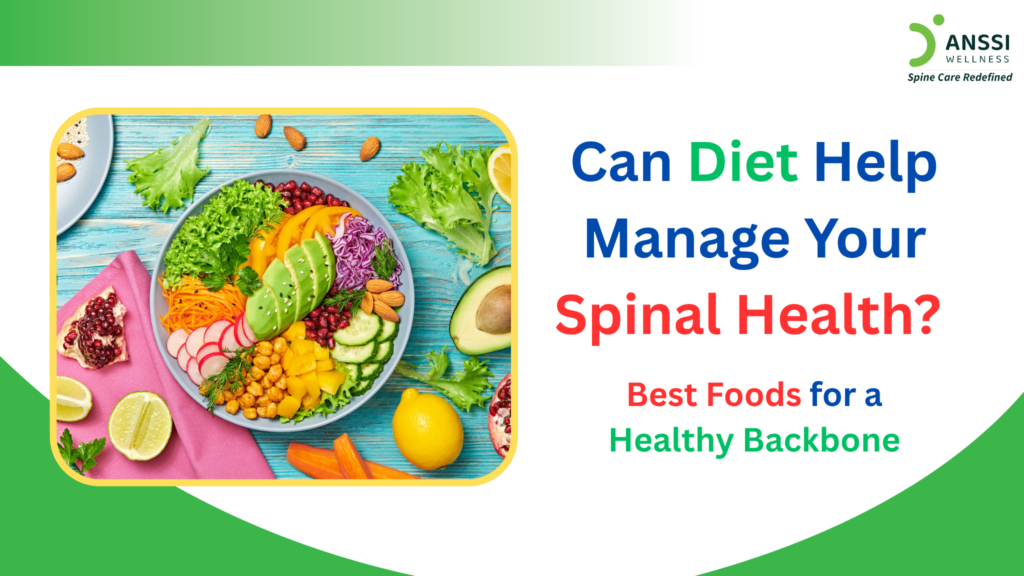
Your spine works tirelessly every day. It supports your body, protects the spinal cord, allows movement, and helps you maintain balance and posture. Yet, spinal health is often overlooked until chronic back pain or neck pain begins to interfere with daily life. While many people focus on exercises and posture, nutrition is another important factor that contributes to maintaining a healthy spine.
Although no food can cure a slipped disc, reverse spinal degeneration, or eliminate chronic back pain on its own, a balanced diet provides the nutrients needed to keep bones, muscles, ligaments, and other supporting tissues healthy. Combined with an active lifestyle, good posture, and appropriate medical care, healthy eating can play a valuable role in supporting long-term spinal wellness.
Common Spine and Disc Problems
Several conditions can affect the spine and its supporting structures. Some of the most common include:
- Degenerative disc disease
- Disc bulge
- Herniated (slipped) disc
- Cervical spondylosis
- Lumbar spondylosis
- Osteoporosis affecting the vertebrae
- Chronic muscle strain
- Ligament weakness
These conditions may develop due to a combination of factors such as ageing, poor posture, obesity, prolonged sitting, smoking, repetitive strain, lack of physical activity, or previous injuries.
When the spine is repeatedly exposed to excessive stress, the intervertebral discs and surrounding structures gradually lose their ability to function efficiently, leading to pain and reduced mobility.
Can Diet Improve Spinal Health?
Nutrition provides the body with essential building blocks needed to maintain healthy bones, muscles, and connective tissues.
A well-balanced diet supports:
- Bone strength
- Muscle function
- Collagen production
- Tissue repair
- Healthy body weight
- Reduced inflammation through overall healthy eating patterns
However, it is important to understand that diet cannot reverse structural spinal conditions such as a significant disc prolapse, severe spinal stenosis, or advanced degenerative changes.
Best Foods for a Healthy Backbone
Good nutrition supports spinal health and recovery but should be viewed as one component of a comprehensive spine care programme.
Calcium-Rich Foods
Calcium is essential for maintaining strong vertebrae and reducing the risk of bone loss.
Good sources include:
- Milk
- Yoghurt
- Cheese
- Ragi (finger millet)
- Sesame seeds
These foods help maintain bone density and support overall skeletal health.
Vitamin D Sources
Vitamin D helps the body absorb calcium efficiently.
Useful sources include:
- Safe sunlight exposure
- Fortified dairy products
- Eggs
- Fatty fish such as Rawas and Sardine
Maintaining adequate vitamin D levels supports healthy bones and muscles.
Protein for Muscle Support
Strong muscles help stabilise the spine and reduce excessive stress on spinal structures.
Healthy protein sources include:
- Fish
- Eggs
- Lean poultry
- Lentils
- Beans
- Soy products
- Pulses
Adequate protein intake is especially important during rehabilitation from spinal injuries.
Omega-3 Fatty Acids
Omega-3 fatty acids are found in:
- Bangda
- Rawas
- Rohu
- Walnuts
- Flaxseeds
These healthy fats form part of a balanced diet that supports overall health.
Fruits and Vegetables
Colourful fruits and vegetables provide vitamins, minerals, antioxidants, and vitamin C, which contribute to collagen production and tissue maintenance.
Include:
- Citrus fruits
- Berries
- Palak
- Broccoli
- Carrots
- Tomatoes
- Capsicum
Eating a variety of fresh produce supports overall musculoskeletal health.
Magnesium and Potassium
These minerals help maintain normal muscle and nerve function.
Good sources include:
- Bananas
- Nuts
- Seeds
- Leafy green vegetables
- Whole grains
Stay Hydrated
Intervertebral discs naturally contain a high percentage of water. While drinking more water does not directly “rehydrate” damaged discs, adequate hydration is important for overall
health and normal disc function. Staying well hydrated also supports healthy muscles and tissues.
Lifestyle Habits That Protect the Spine
Diet works best when combined with healthy lifestyle habits.
Some important strategies include:
- Maintain a healthy body weight to reduce stress on the spine.
- Exercise regularly to strengthen the back and core muscles.
- Practise proper posture while sitting, standing, and walking.
- Lift heavy objects correctly using your legs rather than your back.
- Avoid smoking, which is associated with poorer spinal health.
- Take regular movement breaks if your work involves prolonged sitting.
These habits help reduce the risk of developing chronic back and neck problems.
When Diet Alone is Not Enough
Although healthy eating supports spinal wellness, persistent symptoms require professional evaluation.
Consult a spine specialist if you experience:
- Back or neck pain lasting several weeks
- Pain radiating into the arms or legs
- Tingling or numbness
- Progressive muscle weakness
- Difficulty performing daily activities
These symptoms may indicate disc-related conditions or nerve compression that require medical assessment.
Non-Surgical Treatment Options
Many patients with chronic spinal pain benefit from conservative treatment.
Depending on the diagnosis, treatment may include:
- Physiotherapy
- Guided exercise programmes
- Posture correction
- Ergonomic advice
- Activity modification
- Medications when clinically appropriate
These treatments aim to improve spinal function, strengthen supporting muscles, and reduce mechanical stress on the affected area.
For appropriately selected patients with disc-related chronic back or neck pain, Non-Surgical Spinal Decompression Treatment (NSSDT) may be incorporated into a personalised rehabilitation programme.
About ANSSI:
ANSSI Wellness focuses on improving the quality of life for patients suffering from spinal issues, aiming to provide relief where other conventional treatments have failed. Through advanced Non-Surgical Spinal Decompression Treatment, ANSSI is committed to helping patients avoid surgery and recover in a safe, effective, and compassionate environment.
Book Consultation:
Call +91 9004726844 | 9920936844
Visit www.anssiwellness.com
Connect with ANSSI Wellness on LinkedIn, Instagram, and Facebook for expert guidance.
Clinical References:
- Rubin DI. Epidemiology and risk factors for spine pain. Neurologic Clinics. 2007;25(2):353-371.
- Calder PC. Omega-3 fatty acids and inflammatory processes: nutrition or pharmacology? British Journal of Clinical Pharmacology. 2013;75(3):645-662.
- Urban JP, Roberts S. Degeneration of the intervertebral disc. Arthritis Research & Therapy. 2003;5(3):120-130.