
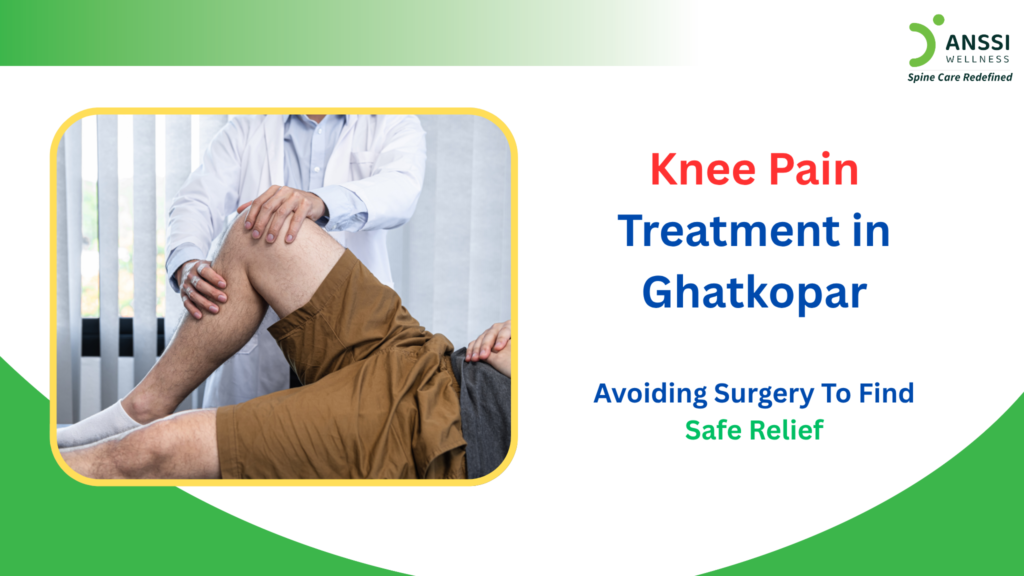
Chronic knee pain is one of the most common musculoskeletal problems affecting residents of Ghatkopar. Whether you are a young professional, an active sportsperson, or an older adult, persistent knee pain can make even simple daily activities challenging. Walking, climbing stairs, getting up from a chair, exercising, or standing for long periods can become difficult and painful.
When knee pain persists, many patients begin to wonder whether they need surgery. However, surgery is not always the first or the only solution. In many cases, especially during the early stages of joint degeneration, advanced rehabilitation treatments can provide significant relief while helping patients avoid the risks and recovery challenges associated with surgery.
Understanding the cause and severity of your knee condition is the key to choosing the right treatment option.
Understanding Chronic Knee Pain
Chronic knee pain is generally defined as knee discomfort that lasts for several weeks or months and affects normal daily activities.
Common symptoms include:
- Pain during walking or movement
- Knee stiffness, especially after rest
- Swelling around the joint
- Reduced flexibility and range of motion
- Difficulty climbing stairs
- Weakness or instability in the knee
- Discomfort during prolonged standing
While these symptoms may appear similar across different conditions, the underlying cause of knee pain can vary significantly. Therefore, obtaining an accurate diagnosis is essential before deciding on treatment.
Common Causes of Chronic Knee Pain
Any of the following causes could be behind your knee pain.
Osteoarthritis
Osteoarthritis is the most common cause of chronic knee pain.
It occurs when the protective cartilage that cushions the knee joint gradually wears away. As cartilage deteriorates, friction between the bones increases, leading to pain, stiffness, and reduced mobility.
Osteoarthritis is typically classified into different grades, with Grade 1 and Grade 2 representing early stages and Grade 3 and Grade 4 indicating more advanced joint degeneration.
Meniscus Injuries
The meniscus acts as a shock absorber within the knee joint.
Meniscal tears can occur due to sports injuries, sudden twisting movements, or age-related degeneration. Depending on the severity and location of the tear, symptoms may range from mild discomfort to significant pain and locking of the knee.
Ligament Injuries
Ligaments provide stability to the knee joint.
Injuries involving structures such as the Anterior Cruciate Ligament (ACL) or Posterior Cruciate Ligament (PCL) can cause instability, swelling, and functional limitations.
Patellofemoral Pain Syndrome
This condition affects the area around the kneecap and is often associated with abnormal movement patterns, muscle imbalances, or repetitive stress on the joint.
Patients commonly experience pain while climbing stairs, squatting, or sitting for extended periods.
When is Knee Surgery Necessary?
Although many knee conditions can be managed conservatively, there are situations where surgery may be necessary.
Advanced Osteoarthritis (Grade 3 and Grade 4)
When cartilage loss becomes severe and significant joint damage occurs, rehabilitation treatments may provide only limited relief.
In advanced cases, joint replacement surgery may be considered to restore function and reduce pain.
Major Ligament Tears
Complete ligament ruptures, particularly in highly active individuals, may require surgical reconstruction to restore knee stability and prevent further damage.
Complex Meniscus Tears and Structural Damage
Certain meniscal injuries, especially those causing mechanical locking or severe dysfunction, may require surgical intervention.
Failure of Conservative Treatment
If a patient continues to experience severe pain and functional limitations despite comprehensive rehabilitation treatment, surgery may be considered.
Risks and Limitations of Knee Surgery
While surgery can be beneficial in appropriate cases, it is important to understand that it is not without risks.
Potential considerations include:
- Surgical complications
- Infection risk
- Blood clots
- Extended recovery periods
- Rehabilitation requirements
- Persistent discomfort in some patients
Even after successful surgery, recovery often requires months of rehabilitation and lifestyle adjustments.
This is why many specialists recommend exploring effective rehabilitation options whenever appropriate.
When Knee Rehabilitation Treatment May Be the Better Option
For many patients, particularly those with early-to-moderate knee degeneration, rehabilitation treatment can be highly effective.
Osteoarthritis Grade 1 and Grade 2
Patients with early-stage osteoarthritis often retain a significant amount of healthy cartilage and joint function.
At this stage, interventions aimed at reducing joint stress, improving mobility, and strengthening supporting muscles may help manage symptoms and slow progression.
Mild-to-Moderate Degenerative Changes
Patients experiencing early degenerative changes often respond well to structured rehabilitation programs designed to improve knee mechanics and joint function.
Patients Seeking to Delay or Avoid Surgery
Many individuals prefer to avoid surgery if possible due to concerns about risks, recovery time, and cost.
Early intervention with comprehensive rehabilitation treatment may help patients maintain an active lifestyle while delaying or preventing the need for surgical procedures.
Advanced Knee Rehabilitation Program in Ghatkopar
Modern knee rehabilitation treatment has evolved significantly in recent years.
The Advanced Knee Rehabilitation Program at the ANSSI Wellness’s Ghatkopar clinic combines multiple therapies to address both symptoms and underlying joint dysfunction.
Comprehensive Assessment
The process begins with a detailed evaluation of:
- Pain patterns
- Joint function
- Mobility limitations
- Muscle strength
- Imaging findings
This allows doctors to develop a personalised treatment strategy.
Modern Knee Decompression Technology
One of the key components of advanced rehabilitation programs is knee decompression technology.
This approach aims to:
- Reduce pressure within the knee joint
- Improve joint mechanics
- Enhance mobility
- Support more comfortable movement
By decreasing excessive loading on affected structures, decompression may contribute to pain relief and improved function.
Physiotherapy and Strengthening
Targeted physiotherapy focuses on:
- Strengthening muscles around the knee
- Improving joint stability
- Enhancing flexibility
- Correcting movement patterns
Stronger supporting muscles can help reduce stress on the knee joint.
Mobility and Functional Rehabilitation
Rehabilitation also emphasises restoring daily function.
Patients are guided through exercises and activities designed to improve:
- Walking ability
- Stair climbing
- Balance
- Functional movement
Benefits of Advanced Knee Rehabilitation
For suitable patients, an Advanced Knee Rehabilitation Program may provide several benefits:
- Reduced pain and inflammation
- Improved mobility and flexibility
- Increased muscle strength
- Better joint stability
- Enhanced quality of life
- Potential delay or avoidance of surgery
Most importantly, it allows patients to pursue treatment without the risks associated with surgical procedures.
About ANSSI:
ANSSI Wellness focuses on improving the quality of life for patients suffering from spinal issues, aiming to provide relief where other conventional treatments have failed. Through advanced Non-Surgical Spinal Decompression Treatment, ANSSI is committed to helping patients avoid surgery and recover in a safe, effective, and compassionate environment.
Book Consultation:
Call +91 9004726844 | 9920936844
Visit www.anssiwellness.com
Connect with ANSSI Wellness on LinkedIn, Instagram, and Facebook for expert guidance.
Clinical References:
- Peat G, McCarney R, Croft PKnee pain and osteoarthritis in older adults: a review of community burden and current use of primary health careAnnals of the Rheumatic Diseases 2001;60:91-97.
- Thorlund J B, Juhl C B, Roos E M, Lohmander L S. Arthroscopic surgery for degenerative knee: systematic review and meta-analysis of benefits and harms BMJ 2015; 350 :h2747 doi:10.1136/bmj.h2747.
- Duong V, Oo WM, Ding C, Culvenor AG, Hunter DJ. Evaluation and Treatment of Knee Pain: A Review. JAMA. 2023;330(16):1568–1580.
- Hurley, M.V., Walsh, N.E., Mitchell, H., Nicholas, J. and Patel, A. (2012), Long-term outcomes and costs of an integrated rehabilitation program for chronic knee pain: A pragmatic, cluster randomized, controlled trial. Arthritis Care Res, 64: 238-247.
- Hurley, M.V., Walsh, N.E., Mitchell, H.L., Pimm, T.J., Patel, A., Williamson, E., Jones, R.H., Dieppe, P.A. and Reeves, B.C. (2007), Clinical effectiveness of a rehabilitation program integrating exercise, self-management, and active coping strategies for chronic knee pain: A cluster randomized trial. Arthritis & Rheumatism, 57: 1211-1219.