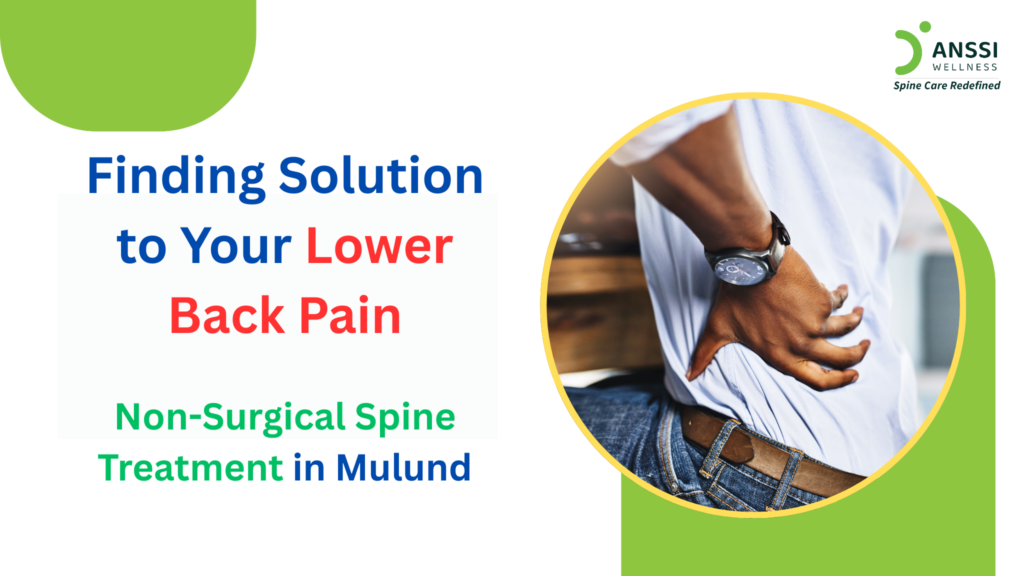
Lower back pain is one of the most common reasons people seek medical care today. From young professionals to older adults, this condition affects individuals across age groups and lifestyles. What often starts as mild discomfort can gradually develop into persistent or chronic pain, interfering with work, mobility, sleep, and overall quality of life.
To manage lower back pain effectively, it is essential to understand its underlying causes, identify them accurately through proper diagnosis, and choose the right non-surgical treatment approach.
Why Lower Back Pain is So Common
The lower back, or lumbar spine, plays a crucial role in supporting body weight and enabling movement.
- Daily activities such as sitting, standing, bending, lifting, and twisting constantly stress this region.
- Poor posture, sedentary habits, long sitting hours, and lack of physical conditioning make the lower back especially vulnerable.
- Age-related spinal changes further increase the risk, making lower back pain a widespread and growing health concern.
Common Causes of Lower Back Pain
Lower back pain can arise from a variety of causes.
- Muscle strain and ligament sprain are among the most frequent reasons, often resulting from sudden movements, improper lifting, or overuse.
- Poor posture and prolonged sitting can also lead to muscular imbalance and spinal stress.
- Structural spine-related causes include disc bulge or slipped disc, where spinal discs lose their normal position and press on nearby nerves.
- Compression of the sciatic nerve results in sciatica, which is pain that travels from the lower back to the legs.
- Degenerative disc disease, spondylosis, and spinal stenosis are age-related conditions that gradually wear down spinal structures.
- Certain anatomical variations, such as lumbarisation or sacralisation, can also alter spinal mechanics and contribute to chronic pain.
- Lifestyle factors like obesity, weak core muscles, lack of physical activity, and ongoing stress further accelerate spinal wear and tear, increasing pain severity.
Symptoms That Indicate an Underlying Spine Issue
Not all lower back pain is harmless.
Persistent or recurring pain lasting weeks or months often indicates an underlying problem. Warning signs include stiffness, reduced flexibility, pain radiating to the hips or legs, numbness, tingling, muscle weakness, and difficulty sitting or standing for long periods.
These symptoms suggest nerve involvement and require medical evaluation rather than self-treatment.
Diagnostic Methods to Identify the Cause
Accurate diagnosis is the foundation of effective lower back pain treatment.
- The process usually begins with a detailed clinical evaluation, where the doctor assesses posture, spinal alignment, range of motion, and pain patterns.
- X-rays are commonly used to evaluate spinal alignment, bone structure, degenerative changes, and abnormalities such as spondylosis.
- MRI scans provide detailed images of spinal discs, nerves, and soft tissues, helping identify disc bulges, herniations, nerve compression, and other internal spine issues.
Together, these diagnostic tools help pinpoint the exact cause of pain and guide a targeted treatment plan.
Non-Surgical Treatment Options for Lower Back Pain
In many cases, lower back pain can be managed effectively without surgery.
- Physiotherapy helps improve flexibility, strengthen core muscles, and restore movement.
- Posture correction and ergonomic adjustments reduce repetitive strain on the spine, especially for office professionals.
- Lifestyle modifications such as weight management, regular exercise, and stress control also play an important role in long-term recovery.
- While painkillers may offer temporary relief, non-surgical approaches aim to treat the underlying cause rather than masking symptoms.
Non-Surgical Spinal Decompression Treatment (NSSDT)
Non-Surgical Spinal Decompression Treatment (NSSDT) is an advanced, USA protocol-based treatment designed specifically to address disc-related lower back pain. This non-invasive treatment uses a computer-controlled system to gently decompress the spine.
By creating negative pressure within the spinal discs, NSSDT helps bulging or herniated discs retract, relieving pressure on compressed nerves. Improved blood circulation and nutrient flow support the natural healing of spinal tissues.
The treatment is drug-free, injection-free, and does not require hospitalisation, making it a safe and effective option for patients seeking long-term relief without surgery.
NSSDT at ANSSI Wellness Mulund Clinic
For individuals seeking reliable non-surgical spine care, ANSSI Wellness Mulund stands out as a trusted destination for lower back pain treatment. The clinic is equipped with advanced spinal decompression technology and follows globally accepted treatment protocols.
At ANSSI Wellness Mulund, each patient undergoes a thorough assessment, including MRI analysis, to accurately diagnose the cause of pain. Based on this evaluation, a personalised treatment plan is designed to ensure safe and effective recovery. The clinic is supported by experienced spine specialists and trained physiotherapy professionals focused on patient comfort, education, and long-term outcomes.
Thousands of patients have benefited from ANSSI Wellness’s non-surgical approach, successfully avoiding surgery and regaining mobility.
The Path to Long-Term Relief
Lower back pain does not have to become a lifelong condition. With accurate diagnosis and the right non-surgical treatment, lasting relief is achievable. Non-Surgical Spinal Decompression Treatment at ANSSI Wellness Mulund offers a proven solution that addresses the root cause of pain and promotes natural healing.
If you are experiencing persistent lower back pain, consulting experts at ANSSI Wellness Mulund can help you take the first step toward a healthier spine, improved mobility, and a pain-free life, without surgery.