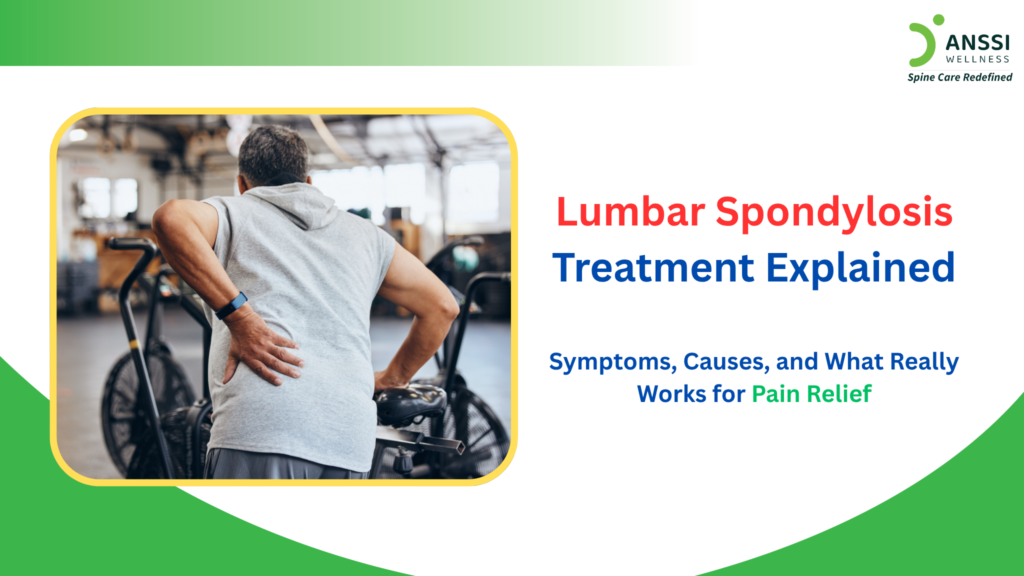
Lower back pain is one of the most common health concerns today, especially among working professionals and older adults. A frequent cause behind this discomfort is Lumbar Spondylosis. For many first-time sufferers, the term may sound complicated, but understanding the condition is the first step toward effective treatment and long-term relief.
Let’s discuss lumbar spondylosis in simple terms – its causes, symptoms, diagnosis, and the treatment options that actually work.
What is Lumbar Spondylosis?
Lumbar spondylosis refers to the gradual wear and tear of the spinal discs and joints in the lower back (lumbar spine). The spine is made up of vertebrae separated by soft discs that act as cushions and allow smooth movement.
Over time, these discs lose their flexibility and hydration. This can lead to reduced cushioning, disc bulging, or even narrowing of the spaces where nerves pass. As a result, individuals may experience pain, stiffness, and reduced mobility.
Although it is commonly associated with ageing, lumbar spondylosis is increasingly seen in younger individuals due to poor posture and sedentary lifestyles.
Causes of Lumbar Spondylosis
Lumbar spondylosis is caused by a number of reasons. One of the main causes is age-related degeneration, where spinal discs naturally weaken over time.
However, lifestyle habits also play a major role. Poor posture, especially during long hours of sitting, can place continuous stress on the lower back. This is common among office workers and individuals who use computers extensively.
Other contributing factors include:
- Weak core muscles that fail to support the spine
- Lack of regular physical activity
- Repetitive strain from lifting heavy objects
- Obesity, which increases pressure on the spine
- Improper body mechanics during daily activities
These factors can accelerate the degeneration of spinal structures, leading to chronic lower back pain.
Symptoms to Watch For
The symptoms of lumbar spondylosis may develop gradually and can vary from person to person. In the early stages, individuals may notice mild discomfort or stiffness in the lower back.
As the condition progresses, symptoms may include:
- Persistent lower back pain
- Stiffness, especially after long periods of sitting or rest
- Pain that radiates to the hips, buttocks, or legs
- Numbness or tingling sensations
- Muscle weakness in the lower body
- Difficulty standing, walking, or bending
These symptoms can affect daily activities and reduce overall mobility. If left untreated, the condition may worsen over time.
How Lumbar Spondylosis is Diagnosed
Diagnosing lumbar spondylosis typically begins with a clinical evaluation by a healthcare professional. The doctor will assess symptoms, medical history, and physical movement.
A physical examination may include checking flexibility, range of motion, and areas of tenderness. In some cases, imaging tests such as X-rays or MRI scans may be recommended to get a detailed view of the spine.
These tests help identify issues such as disc degeneration, nerve compression, or joint changes. Accurate diagnosis is essential for selecting the most effective treatment plan.
Treatment Options: What Really Works
When it comes to treating lumbar spondylosis, the goal is not just to reduce pain but to address the underlying cause and improve spinal health. Several treatment options are available, ranging from temporary relief methods to long-term solutions.
Medications: Short-Term Relief
Painkillers and anti-inflammatory medications are often prescribed to manage symptoms. They can help reduce pain and swelling, making it easier to perform daily activities.
However, medications only provide temporary relief. They do not correct structural problems in the spine, and long-term use may lead to side effects.
Physiotherapy and Rehabilitation
Physiotherapy is one of the most effective treatments for lumbar spondylosis. A structured exercise program can strengthen the muscles that support the spine, particularly the core and lower back.
Stronger muscles reduce the load on the spine and help improve stability. Physiotherapy also enhances flexibility, posture, and movement patterns, which can prevent further strain on the spine.
Lifestyle Changes
Simple lifestyle modifications can make a significant difference in managing lower back pain. Maintaining proper posture while sitting and standing is essential for reducing stress on the spine.
Other helpful changes include:
- Using ergonomic furniture
- Taking regular breaks during prolonged sitting
- Engaging in regular physical activity
- Maintaining a healthy body weight
These changes help protect the spine and prevent the condition from worsening.
Non-Surgical Spinal Decompression Treatment
One of the most advanced and effective treatments available today is Non-Surgical Spinal Decompression Treatment. This procedure is designed to relieve pressure on spinal discs and nerves.
It works by gently stretching the spine using specialised equipment. This controlled stretching creates negative pressure within the discs, which may help reposition bulging discs and improve nutrient flow.
As pressure on the nerves decreases, patients often experience:
- Reduced pain and inflammation
- Improved mobility
- Enhanced healing of spinal tissues
Because it targets the root cause of the problem, spinal decompression treatment offers a more sustainable solution compared to temporary treatments.
About ANSSI:
ANSSI Wellness focuses on improving the quality of life for patients suffering from spinal issues, aiming to provide relief where other conventional treatments have failed. Through advanced Non-Surgical Spinal Decompression Treatment, ANSSI is committed to helping patients avoid surgery and recover in a safe, effective, and compassionate environment.
Connect with ANSSI Wellness on LinkedIn, Instagram, and Facebook for expert guidance.