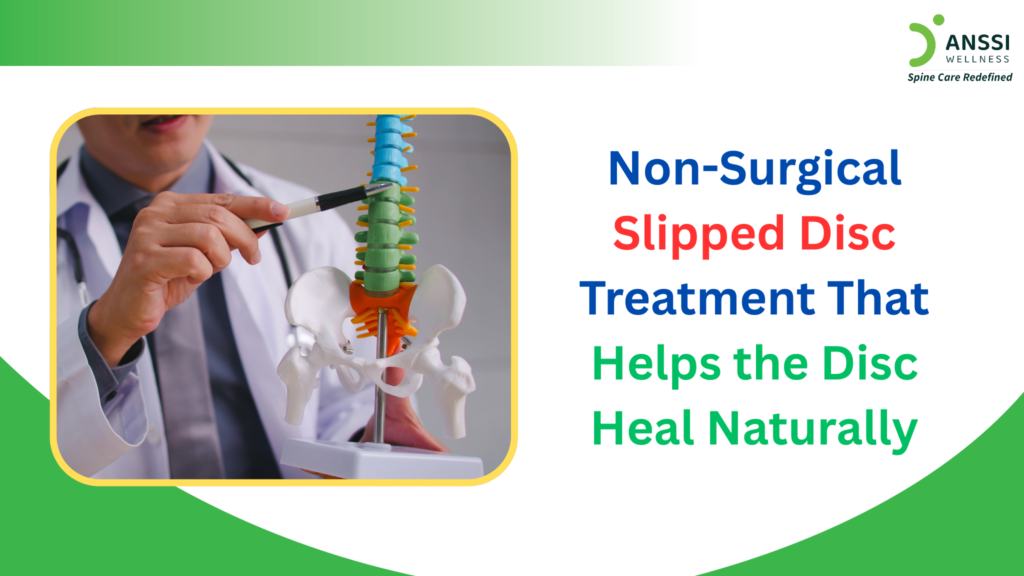
A slipped disc, also known as a herniated disc, is one of the most common causes of chronic back pain, sciatica, and mobility issues today. With increasing screen time, sedentary work lifestyles, and poor posture habits, disc-related spinal problems are affecting people at younger ages than ever before.
While surgery and painkillers are often suggested, many patients are now seeking non-surgical slipped disc treatment options that help the disc heal naturally and provide long-term relief.
What is a Slipped Disc and How Does It Occur?
The spine is made up of vertebrae separated by intervertebral discs that act as shock absorbers. Each disc has a gel-like core called the nucleus pulposus and a strong outer layer called the annulus fibrosus.
A slipped disc occurs when the outer layer weakens and tears, allowing the inner material to leak out. This material can press against nearby spinal nerves, leading to pain, numbness, or weakness.
Slipped discs commonly occur in the lower back (lumbar spine) and neck (cervical spine), areas that bear the most stress during daily movements.
Root Causes Behind Slipped Disc Problems
A slipped disc rarely happens overnight. In most cases, it develops due to ongoing stress and degeneration of the spine. Poor posture, caused especially by prolonged sitting with inadequate back support, is one of the leading contributors. Repetitive bending, heavy lifting, and incorrect movement patterns further increase disc strain.
Additionally, as people age, their spinal discs gradually lose their suppleness and moisture, which increases their vulnerability to damage. Excess body weight adds pressure to the spine, accelerating disc wear and tear. Weak core muscles, lack of physical activity, and smoking, which reduces blood supply to spinal tissues, can further impair disc health.
Understanding these root causes is crucial, as treating only the pain without addressing the underlying disc stress often leads to recurring symptoms.
Common Symptoms That Indicate Disc Damage
Symptoms of a slipped disc vary depending on the location and severity of nerve compression.
Common signs include persistent lower back or neck pain, sharp or radiating pain down the arms or legs, tingling or numbness, muscle weakness, and stiffness. Many patients experience worsening pain while sitting, bending, or lifting, with temporary relief while lying down.
If left untreated, disc-related nerve compression can interfere with daily activities, sleep quality, and overall quality of life.
Why Surgery and Painkillers Are Not Long-Term Solutions
Painkillers and anti-inflammatory medications are often the first line of treatment for slipped disc pain. While they may offer short-term symptom relief, they do not address the underlying disc damage or nerve compression. Long-term medication use may also lead to side effects such as gastric issues, dependency, and reduced effectiveness over time.
Surgery, though sometimes necessary in severe cases, carries risks such as infection, nerve injury, and long recovery periods. Importantly, surgery does not prevent future disc degeneration and may not guarantee complete pain relief.
This is why many patients prefer non-surgical slipped disc treatment options that focus on healing rather than symptom suppression.
Non-Surgical Treatments That Support Natural Disc Healing
Non-surgical treatments aim to reduce pressure on the affected disc, improve spinal alignment, and restore normal movement.
- Physiotherapy plays a vital role by strengthening core muscles, improving flexibility, and correcting faulty movement patterns.
- Posture correction and ergonomic adjustments help minimise daily stress on the spine.
- Lifestyle modifications such as weight management, regular low-impact exercise, and activity modification further support recovery.
However, one of the most advanced non-invasive approaches for disc-related problems is Non-Surgical Spinal Decompression Treatment.
How Non-Surgical Spinal Decompression Helps the Disc Heal
Non-Surgical Spinal Decompression Treatment is a specialised, computer-controlled treatment designed to gently stretch the spine in a precise manner. This controlled decompression creates negative pressure within the affected disc, allowing bulging or herniated disc material to retract away from compressed nerves.
The negative pressure also enhances the flow of oxygen, water, and nutrients into the disc, supporting natural healing and disc rehydration. Unlike traction, spinal decompression is customised to the patient’s condition, targeting specific spinal levels without causing muscle guarding.
Over a series of sessions, patients often experience reduced pain, improved mobility, and gradual restoration of disc health without surgery, injections, or medication.
Who Can Benefit from Non-Surgical Slipped Disc Treatment?
Non-surgical slipped disc treatment is suitable for patients suffering from disc bulge, herniated disc, degenerative disc disease, and sciatica. It is especially beneficial for individuals who want to avoid surgery or have not found lasting relief with conventional treatments.
However, proper evaluation is essential to determine suitability, as certain spinal conditions may require alternative approaches.
About ANSSI:
ANSSI Wellness focuses on improving the quality of life for patients suffering from spinal issues, aiming to provide relief where other conventional treatments have failed. Through advanced Non-Surgical Spinal Decompression Treatment, ANSSI is committed to helping patients avoid surgery and recover in a safe, effective, and compassionate environment.
Connect with ANSSI Wellness on LinkedIn, Instagram, and Facebook for expert guidance.