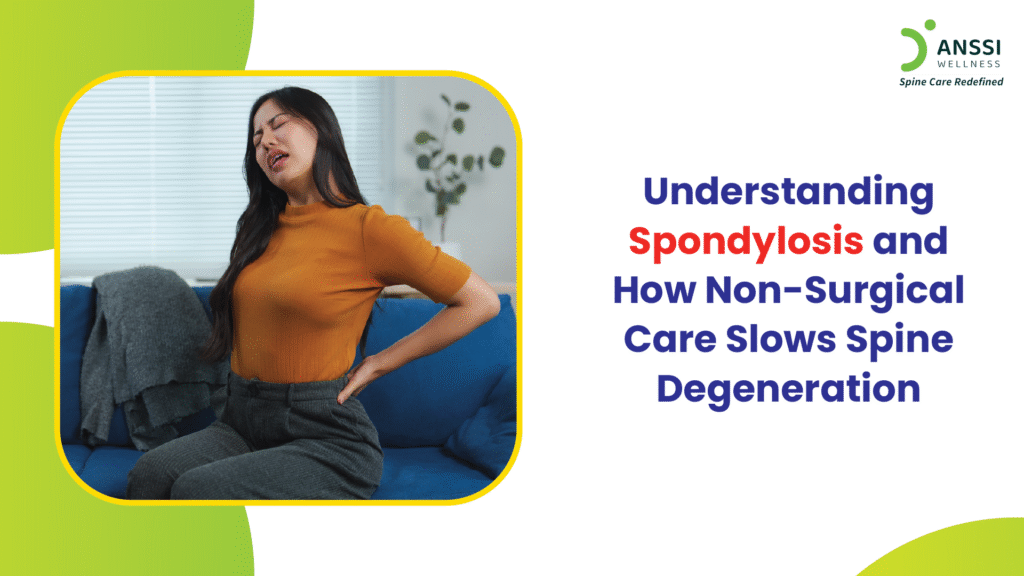
Back and neck pain are among the most common health concerns today, and one of the key underlying causes is spondylosis. Often referred to as spinal osteoarthritis, spondylosis is essentially the gradual wear and tear of the spinal discs, vertebrae, and joints.
While it is often associated with ageing, modern lifestyle factors such as prolonged sitting, poor posture, and lack of activity are making it increasingly common among younger adults as well. Understanding this condition and learning how to manage it effectively is crucial to maintaining spinal health and quality of life.
What is Spondylosis?
Spondylosis is a degenerative condition that develops when the structures in the spine, including discs and joints, start to break down over time. These changes can cause stiffness, reduced flexibility, and chronic pain.
It most commonly affects:
- Cervical spine (neck): Leading to stiffness, headaches, and radiating pain in the shoulders or arms.
- Lumbar spine (lower back): Causing back pain, leg pain, or mobility restrictions.
- Thoracic spine (mid-back): Less common but can still create discomfort and posture issues.
Risk factors include age, a sedentary lifestyle, repetitive strain on the spine, obesity, and genetic predisposition. While the condition cannot be completely prevented, adopting healthy habits can significantly delay its progression.
Symptoms and Impact
Spondylosis develops gradually, and many people tend to ignore its early warning signs. However, symptoms can worsen over time if left untreated.
Common symptoms include:
- Persistent stiffness in the back or neck
- Pain that intensifies with activity or prolonged sitting
- Muscle weakness, numbness, or tingling in arms and legs (if nerves are compressed)
- Reduced range of motion, making daily activities such as bending or lifting difficult
Beyond physical discomfort, spondylosis also impacts emotional well-being. Constant pain and mobility limitations can lead to frustration, anxiety, or even depression, affecting work, relationships, and social life.
Why Non-Surgical Care is Important
When people hear about spinal degeneration, they often assume surgery is inevitable. However, in most cases, surgery is not the first or best solution.
Non-surgical care offers effective ways to manage pain, improve mobility, and slow the progression of spondylosis without the risks associated with invasive procedures.
Advantages of non-surgical care include:
- Reduced risk compared to surgical complications.
- Focus on long-term management rather than short-term fixes.
- Helps preserve natural spinal structures.
- Accessible to people of different age groups and health backgrounds.
Non-Surgical Treatment Options
By choosing conservative treatment early, patients can often avoid or significantly delay the need for surgery.
1. Posture Correction and Ergonomic Adjustments
Poor posture while sitting, standing, or working on a computer can accelerate spinal degeneration. Simple changes such as using ergonomic chairs, maintaining proper sitting posture, and keeping screens at eye level can make a significant difference.
2. Physical Therapy and Targeted Exercises
Gentle stretching and strengthening exercises improve flexibility, reduce stiffness, and strengthen supporting muscles. A physical therapist can create a customised plan that relieves pressure from affected areas while enhancing mobility.
3. Non-Surgical Spinal Decompression Treatment
This advanced procedure uses a specialised machine to gently stretch the spine and relieve pressure from compressed discs and nerves. By creating negative pressure within the discs, spinal decompression helps improve hydration and nutrient flow, reducing pain and promoting natural healing. Non-surgical spinal decompression treatment is completely non-invasive, painless, and highly effective for spondylosis patients.
4. Lifestyle Modifications
- Weight management: Excess weight increases strain on the spine.
- Regular activity: Walking, swimming, or yoga keeps the spine flexible.
- Stress management: Relaxation techniques such as meditation and deep breathing reduce muscle tension that often worsens spinal pain.
Long-Term Benefits of Non-Surgical Care
Non-surgical treatments do not just focus on symptom relief; they address the underlying issues contributing to degeneration.
With consistency, patients can expect:
- Reduced pain and inflammation
- Improved mobility and flexibility
- Slowed progression of spinal degeneration
- Better posture and overall spinal alignment
- Enhanced quality of life and independence
Most importantly, non-surgical methods empower patients to take an active role in their recovery and long-term spine health.
About ANSSI:
ANSSI Wellness focuses on improving the quality of life for patients suffering from spinal issues, aiming to provide relief where other conventional treatments have failed. Through advanced Non-Surgical Spinal Decompression Treatment, ANSSI is committed to helping patients avoid surgery and recover in a safe, effective, and compassionate environment.
Connect with ANSSI Wellness on LinkedIn, Instagram, and Facebook for expert guidance.