Spondylosis has traditionally been viewed as an age-related condition, but in today’s digital world, it is becoming increasingly common among teenagers, working professionals, and individuals with sedentary lifestyles. Long hours at desks, improper posture, and poor ergonomics are silently damaging the spine.
You may not realise that your everyday sitting, standing, and sleeping habits may be contributing to your spondylosis symptoms. The good news? With the right posture corrections and non-surgical treatments, recovery is absolutely possible.
How Poor Posture Affects the Spine
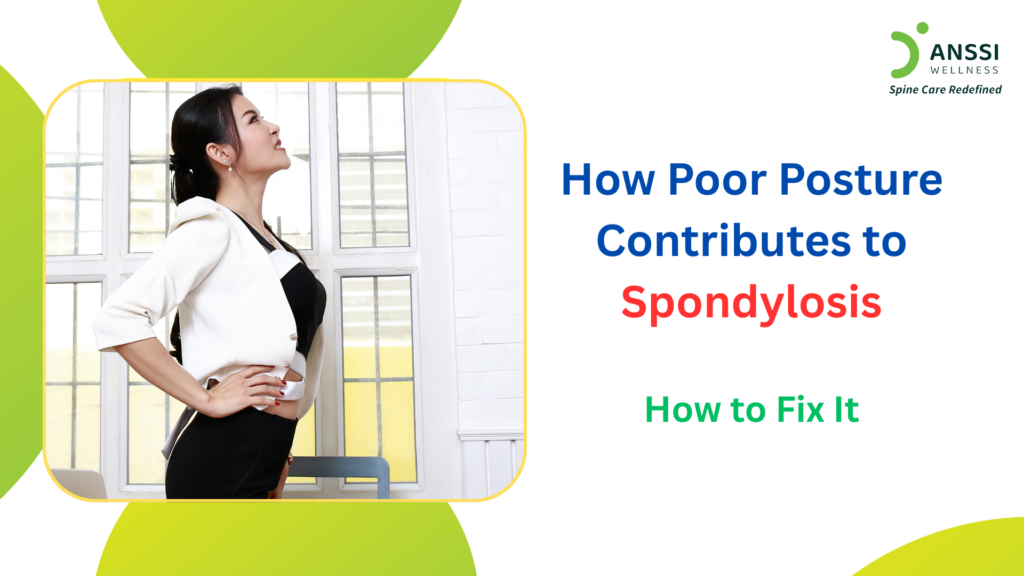
Posture is more than just the way we sit or stand. It directly determines how much pressure the spine has to endure.
- When posture is correct, the spine is aligned in its natural curvature, reducing stress on discs, joints, and supporting muscles.
- But poor posture disrupts this alignment, increasing the load on the spine and accelerating degeneration.
Common postural issues like slouching, rounded shoulders, and forward-head posture are some of the biggest contributors to both cervical and lumbar spondylosis. For example, when the head is tilted forward by just 15 degrees, the stress on the neck becomes almost double. This added strain makes spinal discs work harder, leading to wear and tear, dehydration, bulging, or even early nerve compression.
Daily habits also add to the problem:
- Excessive mobile phone use causes “text neck”, while prolonged sitting weakens back muscles and increases disc pressure.
- Poorly designed workstations force the body to lean forward or hunch, creating chronic stress on already inflamed spinal structures.
- Over time, these repeated stresses worsen stiffness, pain, numbness, and episodes of cervical or lumbar spondylosis.
Ergonomic Mistakes That Make Spondylosis Worse
Many people unknowingly create a spine-unfriendly environment around themselves. A few common ergonomic errors that aggravate spondylosis include:
- Incorrect chair height: If the feet don’t rest flat on the floor, the lower back gets overloaded.
- No lumbar support: A flat-backed chair forces slouching, increasing strain on the lumbar spine.
- Screen placed too low: This causes neck bending and forward-head posture.
- Improper keyboard/mouse placement: Encourages leaning forward and rounding shoulders.
- Sleeping on soft or saggy mattresses: These fail to support the spine’s natural curve.
- Using high pillows: This keeps the neck at an upward angle throughout the night, increasing cervical tension.
- Poor posture while driving: Leaning forward or sitting too far from the steering wheel adds pressure to the lower back.
- Lifting objects incorrectly: Bending from the waist instead of the knees strains the lumbar region.
All these habits place constant stress on the spine, worsening pain and accelerating spondylosis symptoms.
Simple Posture Corrections for Relief
Correcting posture doesn’t require drastic lifestyle changes. It only requires consistent awareness and small adjustments. Here are simple ways to maintain a healthy spine position:
While Sitting
- Keep your back straight with shoulders relaxed.
- Put a little cushion behind your lower back or use a chair with enough lumbar support.
- Ensure your feet rest flat on the floor; avoid crossing legs.
- Keep your screen at eye level to avoid neck bending.
While Standing
- Maintain even weight distribution on both feet.
- Avoid locking your knees.
- Keep your shoulders aligned with your hips.
While Sleeping
- Use a firm mattress that supports the spine.
- Sleep on your back or sideways, not on your stomach.
- Use a thin pillow for cervical support.
Desk Ergonomics
- Keep the monitor at eye level.
- Ensure elbows are at 90 degrees while typing.
- Keep the keyboard close to avoid leaning forward.
Micro-Breaks
Taking a short break every 30-45 minutes helps relax tight muscles and reduce disc pressure. Simple neck and shoulder stretches during breaks can make a big difference.
Lifestyle and Exercise Tips
Movement is essential for spinal health. Sedentary lifestyles contribute to weak muscles, stiff joints, and reduced blood flow to spinal discs, creating an ideal environment for spondylosis to progress.
1. Strengthen Your Core
Strong core and back muscles help support the spine and reduce strain on discs. Simple exercises like bridges, planks, and bird-dog strengthen these areas.
2. Improve Neck Mobility
Gentle neck stretches, chin tucks, and shoulder rolls reduce stiffness and relieve cervical pressure.
3. Daily Mobility Exercises
Cat-cow, pelvic tilts, and lumbar rotations improve the flexibility of the spinal joints.
Non-Surgical Treatments That Help in Recovery
Not all spondylosis cases require surgery. In fact, most people recover effectively through non-invasive treatments such as:
Physiotherapy
A physiotherapist can provide targeted exercises, manual therapy, and posture retraining to help relieve pain and improve mobility.
Heat and Ice Therapy
Heat therapy relaxes tight muscles.
Ice therapy reduces inflammation after strenuous activity.
Non-Surgical Spinal Decompression Treatment (NSSDT)
This advanced US-based treatment reduces pressure on compressed spinal discs by gently stretching the spine.
It helps:
- Improve disc hydration
- Reduce bulging and nerve compression
- Promote natural healing
Patients with chronic back or neck pain, slipped discs, sciatica, or cervical spondylosis often benefit significantly from non-surgical spinal decompression treatment.
About ANSSI:
ANSSI Wellness focuses on improving the quality of life for patients suffering from spinal issues, aiming to provide relief where other conventional treatments have failed. Through advanced Non-Surgical Spinal Decompression Treatment, ANSSI is committed to helping patients avoid surgery and recover in a safe, effective, and compassionate environment.
Connect with ANSSI Wellness on LinkedIn, Instagram, and Facebook for expert guidance.