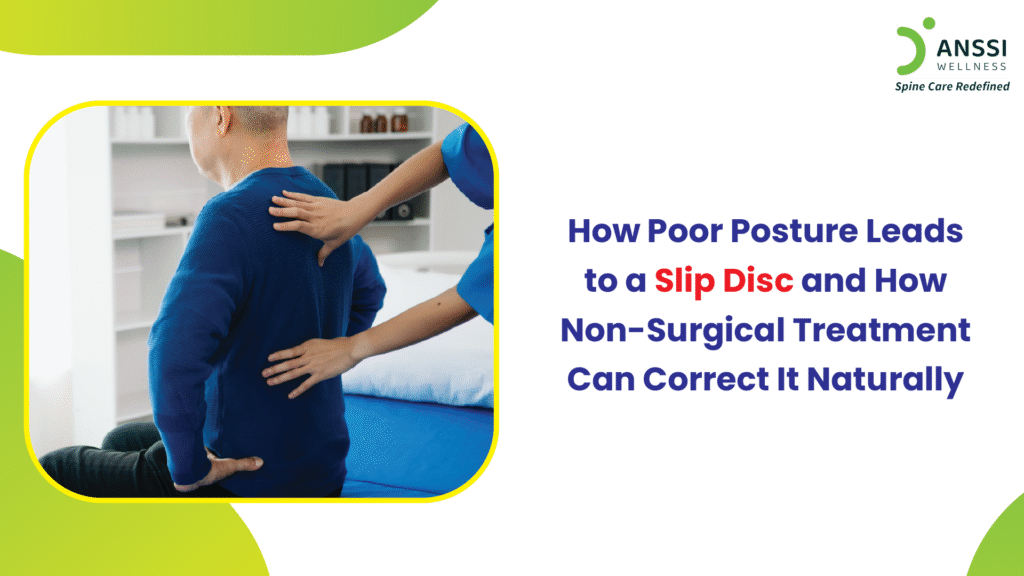
In today’s world of laptops, smartphones, and long working hours, poor posture has silently become one of the most common causes of back and neck problems. What may begin as a slight slouch or a forward head tilt can eventually lead to serious spinal issues; one of the most significant being a slipped disc.
The good news? With awareness, lifestyle changes, and non-surgical treatment options, it’s possible to reverse this condition naturally and regain a pain-free life.
Understanding a Slipped Disc
The spine is made up of a series of bones (vertebrae) cushioned by soft, gel-like discs that act as shock absorbers. These discs ensure smooth movement and flexibility in the back. However, when one of these discs slips out of place or bulges due to uneven pressure, it is referred to as a “slipped disc” or “herniated disc.”
Poor posture, such as hunching over a computer, bending forward for long periods, or sitting without back support, puts continuous strain on the spinal column. Over time, this uneven pressure weakens the outer layer of the disc, causing it to bulge or rupture. This not only compresses nearby nerves but also leads to pain, numbness, or weakness in various parts of the body.
A slipped disc can occur anywhere along the spine, but it is most common in the lumbar (lower back) and cervical (neck) regions due to constant movement and pressure.
How Poor Posture Contributes to Disc Damage
Posture is more than just how you sit; it’s the foundation of spinal health. When your spine is misaligned due to improper posture, the body compensates by overusing certain muscles and ligaments.
Here’s how that leads to disc problems:
- Forward Head Posture: Constantly looking down at phones or laptops increases the load on the cervical spine, straining the discs in the neck region.
- Slouching While Sitting: When you slump forward, your lower back loses its natural curve, placing direct pressure on lumbar discs.
- Prolonged Standing or Sitting: Staying in one position for hours reduces blood flow to spinal tissues, causing stiffness and early degeneration.
- Incorrect Lifting Habits: Lifting heavy objects with a bent back instead of bending at the knees compresses the spinal discs further.
Over time, these factors accelerate wear and tear, leading to disc dehydration, bulging, or herniation.
Early Signs and Symptoms to Watch For
A slipped disc doesn’t always happen overnight, but it develops gradually. Recognising the following early symptoms can prevent long-term complications.
- Persistent pain in the neck or lower back
- Tingling or numbness in arms, hands, legs, or feet
- Sharp or radiating pain along the sciatic nerve (sciatica)
- Muscle weakness or reduced grip strength
- Difficulty bending, sitting, or standing for long durations
If left untreated, the condition can worsen and even affect mobility. Seeking early diagnosis and appropriate treatment can make a significant difference in recovery outcomes.
Lifestyle and Posture Correction for Long-Term Relief
Preventing recurrence requires adopting healthier daily habits. Here are some proven strategies for better posture and spinal health:
- Maintain Ergonomic Sitting: Use a chair with proper lumbar support. Maintain a straight back, relaxed shoulders, and flat feet.
- Adjust Screen Height: Your computer screen should be at eye level to avoid bending your neck.
- Take Frequent Breaks: Avoid sitting or standing for more than 45-60 minutes at a stretch. Short walks or stretches can help keep your spine flexible.
- Practise Core Strengthening Exercises: Activities like yoga, Pilates, or physiotherapy-based exercises strengthen the muscles supporting the spine.
- Sleep Right: Use a firm mattress and sleep on your back or side with a pillow that supports your neck’s natural curve.
- Avoid Heavy Lifting: If lifting is unavoidable, bend your knees, not your back.
These small, consistent habits can greatly reduce spinal strain and maintain disc health for years to come.
Non-Surgical Spinal Decompression: Natural Healing Without Surgery
For years, surgery was considered the go-to solution for severe disc issues. However, with advancements in modern spine care, Non-Surgical Spinal Decompression Treatment (SDDT) has emerged as a highly effective, non-invasive alternative.
This USA-based treatment gently stretches the spine using a controlled, computer-guided decompression system. By creating negative pressure within the spinal discs, it allows the herniated or bulging disc to retract naturally. This process also improves the flow of oxygen, water, and essential nutrients back into the discs, promoting natural healing and rehydration.
Key benefits of Spinal Decompression Treatment include:
- Completely non-surgical and drug-free approach
- Relief from nerve compression, sciatica, and chronic pain
- Enhanced disc repair and spinal alignment
- Safe for all age groups, with no downtime or hospital stay
Patients who undergo spinal decompression often report significant pain reduction, improved flexibility, and restored mobility, without the risks associated with surgery or long-term medication.
About ANSSI:
ANSSI Wellness focuses on improving the quality of life for patients suffering from spinal issues, aiming to provide relief where other conventional treatments have failed. Through advanced Non-Surgical Spinal Decompression Treatment, ANSSI is committed to helping patients avoid surgery and recover in a safe, effective, and compassionate environment.
Connect with ANSSI Wellness on LinkedIn, Instagram, and Facebook for expert guidance.