
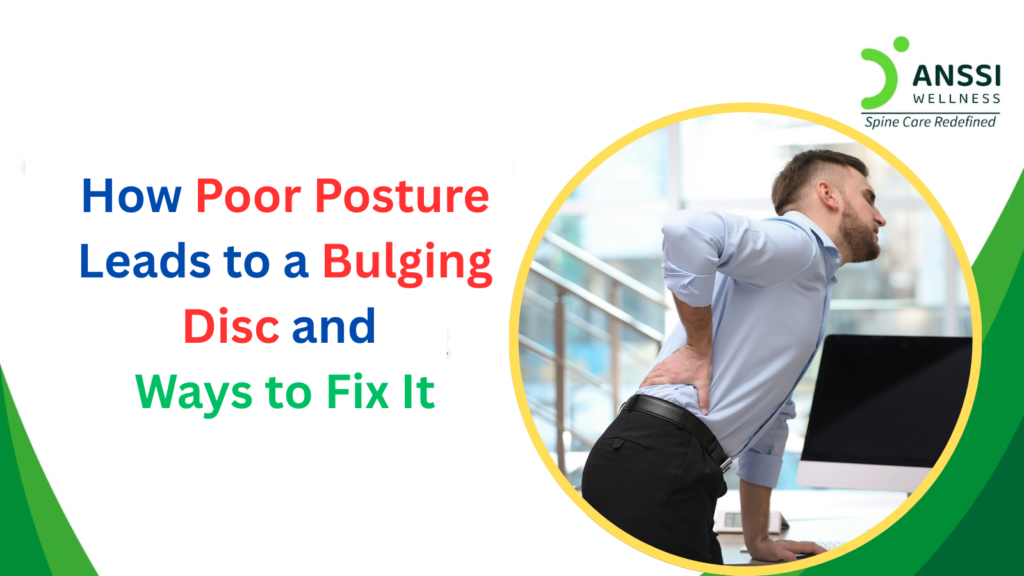
Back and neck pain are becoming increasingly common in today’s digital world. Long hours at desks, constant mobile usage, and reduced physical activity have made poor posture a silent contributor to spinal problems. Many people are surprised to learn that something as simple as slouching can gradually lead to a bulging disc, a condition that can cause chronic pain and nerve irritation.
Understanding how poor posture affects your spine is the first step toward prevention and long-term relief.
Understanding Spinal Discs and Their Role
Your spine is made up of small bones called vertebrae. Between each vertebra sits a soft, cushion-like structure known as an intervertebral disc.
Each disc has two main parts:
- Annulus fibrosus, the tough outer layer
- Nucleus pulposus, the soft, gel-like inner core
These discs act as shock absorbers. They allow flexibility and help distribute weight evenly when you move, bend, or lift.
For discs to stay healthy, the spine must remain properly aligned. When posture is poor, uneven pressure builds on certain areas of the disc, gradually weakening its structure.
What is a Bulging Disc?
A bulging disc occurs when the outer layer of the disc weakens and begins to protrude outward. Unlike a herniated disc, the inner core does not necessarily rupture through the outer layer, but the bulge can still press against nearby nerves.
Over time, this pressure may lead to:
- Back or neck pain
- Radiating pain into arms or legs
- Tingling or numbness
- Muscle weakness
How Poor Posture Leads to a Bulging Disc
Poor posture is one of the major risk factors for developing this condition.
1. Forward Head Posture (Tech Neck)
When you look down at your phone or lean forward toward a computer screen, your head shifts ahead of your shoulders. This position dramatically increases the load on your cervical spine.
For every inch your head moves forward, the pressure on your neck discs multiplies. Over time, this constant strain weakens the disc’s outer layer, making it more likely to bulge.
2. Slouching While Sitting
Slouching flattens the natural curve of your lower back. This misalignment places excessive pressure on the front portion of the lumbar discs.
Prolonged slouching causes:
- Uneven weight distribution
- Increased disc compression
- Reduced shock absorption
- Accelerated disc wear and tear
As a result, the outer disc material gradually weakens and begins to protrude.
3. Prolonged Sitting
Sitting for long hours reduces movement in the spine. Spinal discs depend on movement to receive nutrients and maintain hydration.
When you sit continuously:
- Disc nutrition decreases
- Hydration reduces
- Disc elasticity weakens
Dehydrated discs are more prone to bulging and degeneration.
4. Weak Core Muscles
Poor posture is often linked to weak abdominal and back muscles. Without proper muscular support, the spine bears excessive load.
This added stress increases pressure on the discs, especially during bending or lifting activities.
Symptoms of a Posture-Related Bulging Disc
A bulging disc may develop gradually, and early symptoms are often mild. However, as nerve compression increases, you may experience:
- Persistent back or neck pain
- Pain radiating to arms or legs
- Tingling or numbness
- Muscle weakness
- Stiffness and reduced mobility
Ignoring these signs can allow the condition to worsen over time.
Ways to Fix and Prevent Posture-Related Disc Problems
The good news is that posture-related disc problems are largely preventable and manageable.
1. Correct Your Sitting Posture
Maintain a neutral spine position by:
- Keeping your back straight
- Shoulders relaxed and aligned
- Feet flat on the floor
- Knees at hip level
Avoid crossing legs or leaning forward for extended periods.
2. Improve Your Workstation Ergonomics
Set up your desk to support spinal alignment:
- Keep your computer screen at eye level
- Use a chair with proper lumbar support
- Position keyboard and mouse within easy reach
- Avoid looking down at your phone for long periods
Ergonomic adjustments reduce strain on discs.
3. Take Frequent Movement Breaks
Avoid sitting for more than 30-45 minutes at a time. Stand, stretch, or walk briefly to:
- Improve circulation
- Restore disc hydration
- Reduce muscle tension
Regular movement keeps discs healthy.
4. Strengthen Your Core
Strong core muscles provide essential support to the spine.
Exercises that help include:
- Planks
- Pelvic tilts
- Bird-dog exercises
- Gentle back extensions
Strengthening stabilises the spine and reduces disc pressure.
5. Maintain a Healthy Weight
Excess body weight increases spinal load, especially on lumbar discs. Maintaining a healthy weight reduces strain and slows degeneration.
Seek Professional Evaluation if Pain Persists
If pain lasts more than two weeks or includes tingling, numbness, or weakness, consult a spine specialist. Early diagnosis prevents progression to more serious disc conditions.
In some cases, advanced non-surgical treatments such as spinal decompression and targeted physiotherapy may be recommended to relieve nerve pressure and promote disc healing.
About ANSSI:
ANSSI Wellness focuses on improving the quality of life for patients suffering from spinal issues, aiming to provide relief where other conventional treatments have failed. Through advanced Non-Surgical Spinal Decompression Treatment, ANSSI is committed to helping patients avoid surgery and recover in a safe, effective, and compassionate environment.
Connect with ANSSI Wellness on LinkedIn, Instagram, and Facebook for expert guidance.