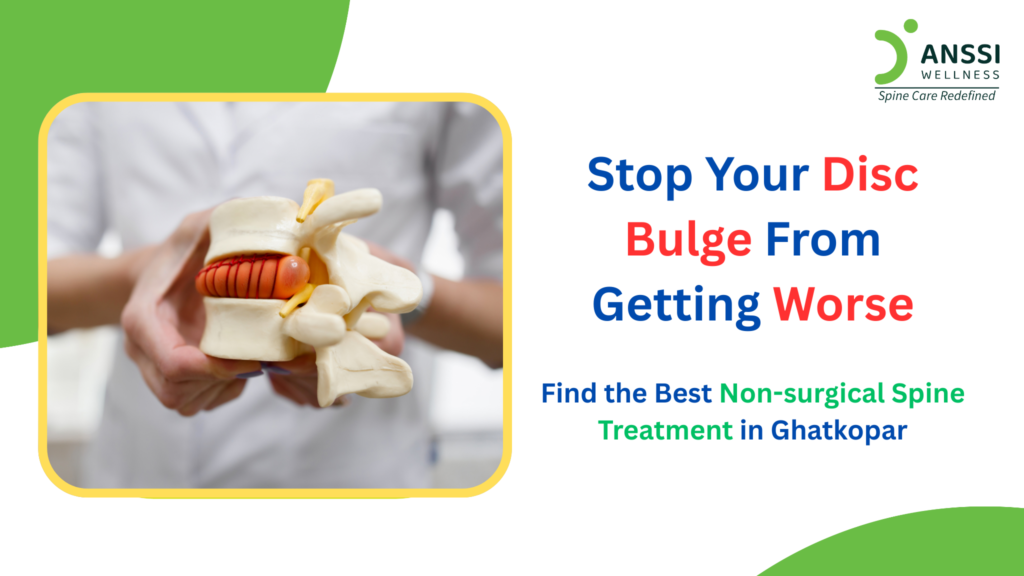
A disc bulge is often considered a minor spinal issue, especially when the pain is occasional or manageable with medication. However, what many people fail to realise is that a disc bulge is frequently the first warning sign of a deeper spinal problem.
If ignored or treated only symptomatically, it can gradually worsen, leading to nerve compression, chronic pain, and long-term mobility limitations. Understanding the progression of a disc bulge and choosing the right treatment at the right time can make a significant difference in recovery and quality of life.
Understanding Disc Bulge and Its Impact on Daily Life
The spine is made up of vertebrae cushioned by intervertebral discs that act as shock absorbers. These discs help the spine move smoothly while protecting nerves from pressure.
A disc bulge occurs when the outer layer of a disc weakens and protrudes outward beyond its normal boundary. Unlike a slip disc or herniated disc, the outer layer does not tear initially, which is why symptoms may seem mild or inconsistent at first.
Despite appearing manageable, a disc bulge can disrupt daily life. Prolonged sitting, standing, bending, or lifting may trigger pain. Many patients experience stiffness in the back or neck, difficulty sleeping, reduced flexibility, and a constant feeling of discomfort that affects work productivity and emotional well-being.
Disc Bulge, Nerve Compression, and Chronic Pain
One of the most serious consequences of a disc bulge is nerve compression. When a bulging disc presses against nearby spinal nerves, it disrupts normal nerve signals.
- This often results in radiating pain that travels from the spine to the arms or legs, depending on the affected region.
- Patients may experience numbness, tingling, burning sensations, muscle weakness, or sharp, shooting pain.
- Over time, untreated nerve compression can lead to chronic pain, reduced mobility, and even loss of function.
- Chronic pain does not just affect the body. It impacts mental health, sleep quality, and overall lifestyle, making early and effective treatment essential.
Why Medication Alone Is Not a Long-Term Solution
For many patients, the first line of treatment for a disc bulge involves painkillers, muscle relaxants, or anti-inflammatory medications. While these medications may temporarily reduce pain and inflammation, they do not address the root cause of the problem.
Medication does not reduce disc pressure, repair disc damage, or relieve nerve compression in a lasting way. As a result, symptoms often return once the medication is stopped. Long-term reliance on medication also increases the risk of side effects, dependency, and digestive or kidney-related issues.
This is why a structural and rehabilitative approach to spine care is crucial for lasting relief.
Non-Surgical Solutions to Prevent Disc Bulge Progression
Advanced non-surgical spine treatments focus on correcting the underlying mechanical problem rather than masking symptoms. One of the most effective methods for treating a disc bulge is Non-Surgical Spinal Decompression Treatment.
- Spinal decompression gently stretches the spine in a controlled manner, creating negative pressure within the disc.
- This helps retract the bulging portion of the disc, reduces pressure on compressed nerves, and improves the flow of oxygen, nutrients, and fluids to the affected area.
- Over time, this promotes disc rehydration, healing, and pain relief.
When combined with physiotherapy, posture correction, and strengthening exercises, spinal decompression helps stabilise the spine and prevent recurrence. This holistic approach ensures both short-term relief and long-term spine health.
Holistic, Non-Invasive Care at ANSSI Wellness Ghatkopar
ANSSI Wellness’s Ghatkopar clinic is recognised for its comprehensive, non-surgical approach to spine care. The clinic focuses on treating the root cause of disc-related conditions using advanced, USA protocol-based spinal decompression technology.
Each patient undergoes a detailed spine assessment to identify the exact cause and severity of the disc bulge. Based on this evaluation, a personalised treatment plan is created that may include non-surgical spinal decompression, targeted physiotherapy, posture correction, ergonomic guidance, and lifestyle modifications.
The expert spine specialists at ANSSI Wellness ensure that treatment is safe, non-invasive, and customised to individual needs. This integrated approach not only relieves pain but also improves spinal alignment, flexibility, and strength, reducing the chances of future degeneration.