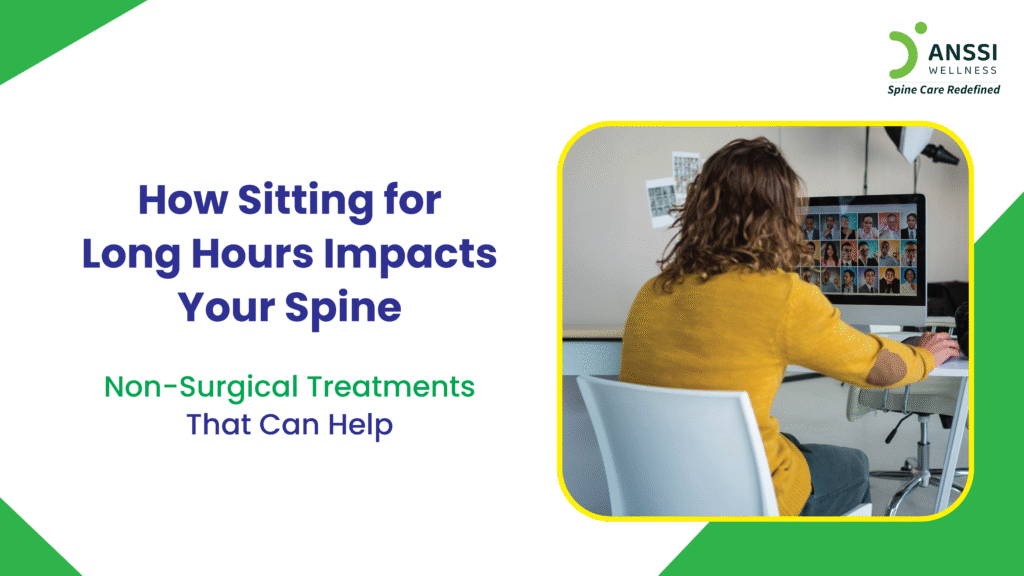
In today’s work culture, long sitting hours have become the norm. Whether you’re working at a desk, attending online meetings, commuting, or browsing screens, your spine spends most of the day in a fixed, unsupported posture. While sitting may look harmless, it is one of the leading contributors to chronic back and neck pain worldwide.
Most people don’t realise the impact until discomfort turns into persistent pain. Understanding how prolonged sitting affects the spine and identifying the right non-surgical treatments can help you prevent long-term spinal damage.
How Long Sitting Harms the Spine
When you sit for extended hours, especially without breaks, your spine undergoes continuous stress. The lumbar (lower back) region is particularly vulnerable because sitting increases disc pressure by nearly 40% compared to standing.
Over time, this pressure compresses the intervertebral discs, which are the natural shock absorbers between your spinal bones.
Here’s what happens inside your spine when you sit too long:
- Spinal discs compress, reducing their ability to cushion impact.
- Blood circulation decreases, causing stiffness, inflammation, and muscle tightness.
- Core and back muscles weaken, reducing their ability to support the spine.
- Hip flexors shorten, contributing to poor alignment and lower back strain.
Sitting also slows your metabolism and reduces the lubrication of spinal joints. As a result, even small movements, like standing, bending, or lifting, can trigger sudden pain or discomfort. For individuals with pre-existing spinal issues, long sitting worsens symptoms significantly.
The Role of Poor Posture
Prolonged sitting becomes even more harmful when paired with poor posture. Most people unintentionally lean toward their screens, cross their legs, or slouch without realising that the spine is absorbing uneven pressure. Over months and years, this leads to chronic degeneration and nerve-related issues.
Common posture mistakes include:
- Forward head posture, which increases neck strain.
- Rounded shoulders, contributing to upper back stiffness.
- Loss of lumbar curve, leading to disc stress in the lower back.
- Slumped sitting, which weakens stabilising muscles and accelerates disc degeneration.
Poor desk setup further adds to the problem. A low laptop screen, high keyboard, non-supportive chair, or awkward mouse placement forces the spine into unnatural positions. These repeated posture errors weaken the spine’s natural alignment and make it more vulnerable to chronic pain.
Health Risks Associated with a Sedentary Lifestyle
A sedentary lifestyle doesn’t just cause temporary discomfort; it leads to progressive spinal conditions. Many individuals begin with mild stiffness but later develop serious nerve-related or degenerative issues.
Some of the most common consequences of prolonged sitting include:
- Disc Bulge and Herniated Disc: When discs are under prolonged pressure, the soft material inside can shift outward, compressing nearby nerves.
- Sciatica: Sciatic nerve compression leads to radiating pain from the lower back down the leg, often triggered by long sitting.
- Cervical Spondylosis: Neck strain due to poor posture and screen use accelerates the wear-and-tear of cervical discs.
- Muscle Imbalances and Chronic Spasms: Weak core and tight back muscles cause persistent stiffness and reduced mobility.
- Poor Circulation and Reduced Flexibility: Reduced blood flow affects healing, increases inflammation, and contributes to morning stiffness.
Left untreated, these issues often lead to chronic pain that affects productivity, daily activities, and overall quality of life.
Early Warning Signs You Should Never Ignore
Spine-related conditions develop gradually. The body sends subtle warnings long before the pain becomes severe. Recognising early symptoms helps prevent long-term damage.
Look for signs such as:
- Persistent neck or lower back stiffness
- Pain that worsens after sitting or standing
- Numbness or tingling in arms, fingers, legs, or feet
- Radiating leg pain or a burning sensation
- Headaches or heaviness in the head
- Difficulty bending, lifting, or twisting
- Reduced flexibility or ability to stand for long durations
These symptoms indicate stress on spinal discs, nerves, and muscles. Early intervention, especially non-surgical, can stop the progression before it becomes severe.
Non-Surgical Treatment Options That Restore Spinal Health
Many individuals assume that chronic back or neck pain will eventually lead to surgery or lifelong medication. Fortunately, most spinal issues caused by prolonged sitting can be treated effectively using non-invasive, drug-free approaches.
1. Non-Surgical Spinal Decompression Treatment (NSSDT)
This advanced, technology-driven treatment gently stretches the spine using a computer-controlled system. It reduces pressure inside spinal discs, allowing bulged or herniated material to retract away from nerves.
Benefits include:
- Reduces disc pressure and irritation of nerves
- Restores nutrient flow to help discs heal naturally
- Improves mobility and posture
- 100% non-invasive with no downtime
Spinal decompression is highly effective for conditions caused by sedentary lifestyles, such as disc bulge, herniated disc, sciatica, and chronic lower back pain.
2. Physiotherapy and Posture Correction Therapy
Strengthening core muscles and realigning the spine helps reverse posture damage.
-
- Physiotherapy improves flexibility, reduces inflammation, and supports long-term recovery.
- Posture correction therapy trains the body to sit, stand, and move correctly.
3. Lifestyle Modification Programs
Simple changes can significantly benefit spinal health:
- Taking micro-breaks every 45-60 minutes
- Using ergonomic chairs and desk setups
- Performing daily stretches and exercises
- Maintaining active habits to improve circulation
About ANSSI:
ANSSI Wellness focuses on improving the quality of life for patients suffering from spinal issues, aiming to provide relief where other conventional treatments have failed. Through advanced Non-Surgical Spinal Decompression Treatment, ANSSI is committed to helping patients avoid surgery and recover in a safe, effective, and compassionate environment.
Connect with ANSSI Wellness on LinkedIn, Instagram, and Facebook for expert guidance.