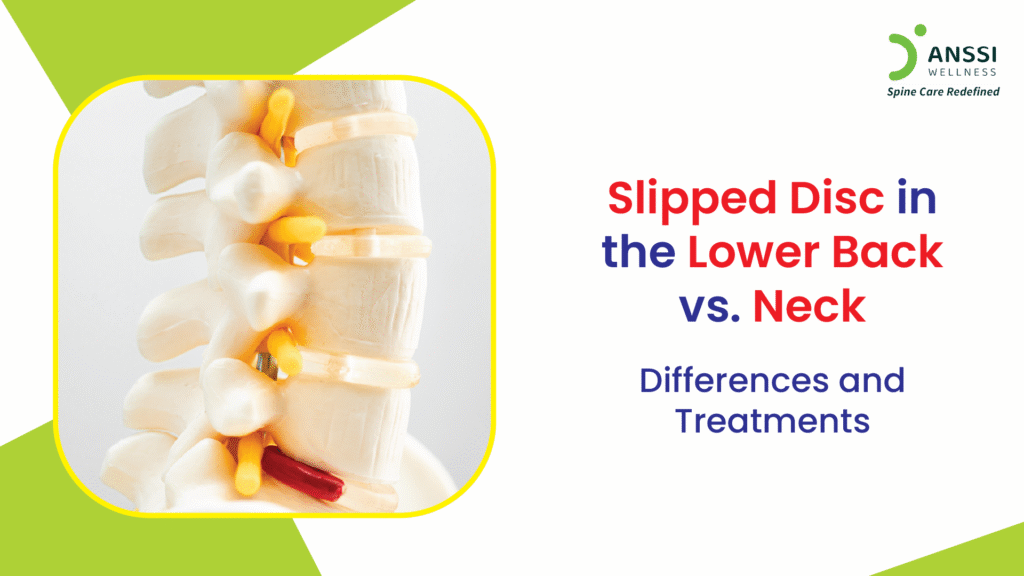
A slipped disc, also known as a herniated or bulging disc, is one of the most common spinal conditions affecting people today.
Discs are soft, cushion-like structures that sit between the vertebrae in your spine, acting as shock absorbers. When a disc slips out of place or protrudes, it can press on nearby nerves, causing pain, numbness, or weakness. While slipped discs can occur anywhere in the spine, they are most often found in the lower back (lumbar region) and neck (cervical region).
Although the condition may sound the same, slipped discs in the lower back and neck affect distinct parts of the body and require tailored treatments. Understanding these differences can help individuals recognise symptoms early and seek effective, non-surgical care.
Slipped Disc in the Lower Back (Lumbar Region)
The lumbar spine bears much of the body’s weight, making it highly vulnerable to disc problems.
Causes:
- Heavy lifting with poor form
- Sedentary lifestyle and prolonged sitting
- Obesity increasing the spinal load
- Poor posture or repetitive strain
Symptoms:
- Persistent lower back pain
- Sciatica, where pain radiates down the buttocks and legs
- Numbness, tingling, or weakness in one or both legs
- Difficulty walking, standing for long periods, or bending
Since the lumbar spine supports mobility and daily activities, a slipped disc here can significantly disrupt normal life.
Slipped Disc in the Neck (Cervical Region)
The cervical spine is responsible for neck flexibility and head movement. Because of constant movement and strain, discs in this area are also at risk.
Causes:
- Age-related disc degeneration
- Poor ergonomics, especially from prolonged screen time
- Sudden trauma, whiplash, or accidents
- Repetitive strain on the neck and shoulders
Symptoms:
- Chronic neck pain and stiffness
- Radiating pain into the shoulders, arms, or hands
- Numbness or tingling in fingers
- Frequent headaches or dizziness in some cases
Unlike lumbar disc issues, cervical slipped discs tend to affect upper body function, hand coordination, and daily tasks such as writing or lifting objects.
Key Differences Between Lumbar and Cervical Slipped Discs
Although both involve disc herniation, the impact varies depending on location.
- Area of the body affected: Lumbar discs impact the lower body (legs, hips), while cervical discs affect the upper body (arms, hands).
- Pain patterns: Lumbar slipped discs often cause sciatica, while cervical discs cause radiating pain in the shoulders and arms.
- Mobility limitations: Lumbar slipped discs make walking, bending, or standing painful; cervical slipped discs impair neck movement and arm strength.
- Daily life impact: Lumbar affects overall mobility; cervical affects fine motor skills and upper body function.
Recognising these differences helps doctors diagnose accurately and patients understand their condition better.
Non-Surgical Treatment Options
Many patients fear that a slipped disc automatically means surgery, but in most cases, non-surgical treatments provide safe and effective relief.
1. Non-Surgical Spinal Decompression Treatment
- A non-invasive treatment that gently stretches the spine
- Relieves pressure on the herniated disc and pinched nerves
- Promotes natural healing by improving blood and nutrient flow
- Especially effective for chronic lower back or neck pain
2. Physiotherapy and Exercise
- Specific strengthening and stretching routines to support the spine
- Helps improve flexibility, posture, and muscle balance
- Reduces recurrence of disc issues by correcting spinal alignment
3. Lifestyle and Ergonomic Changes
- Maintaining good posture while sitting, working, or lifting
- Ergonomic chairs, standing desks, or supportive pillows
- Regular low-impact exercises like walking or swimming
- Weight management to reduce strain on spinal discs
4. Stress Reduction and Relaxation Techniques
- Deep breathing, meditation, or yoga to ease muscle tension
- Stress management to prevent worsening of symptoms caused by muscle stiffness
When Surgery May Be Necessary
In rare cases where symptoms do not improve with conservative treatment or when nerve compression leads to severe weakness, surgery might be considered. However, non-surgical care should always be the first line of treatment, as it is safer, less invasive, and highly effective for most patients.
About ANSSI:
ANSSI Wellness focuses on improving the quality of life for patients suffering from spinal issues, aiming to provide relief where other conventional treatments have failed. Through advanced Non-Surgical Spinal Decompression Treatment, ANSSI is committed to helping patients avoid surgery and recover in a safe, effective, and compassionate environment.
Connect with ANSSI Wellness on LinkedIn, Instagram, and Facebook for expert guidance.