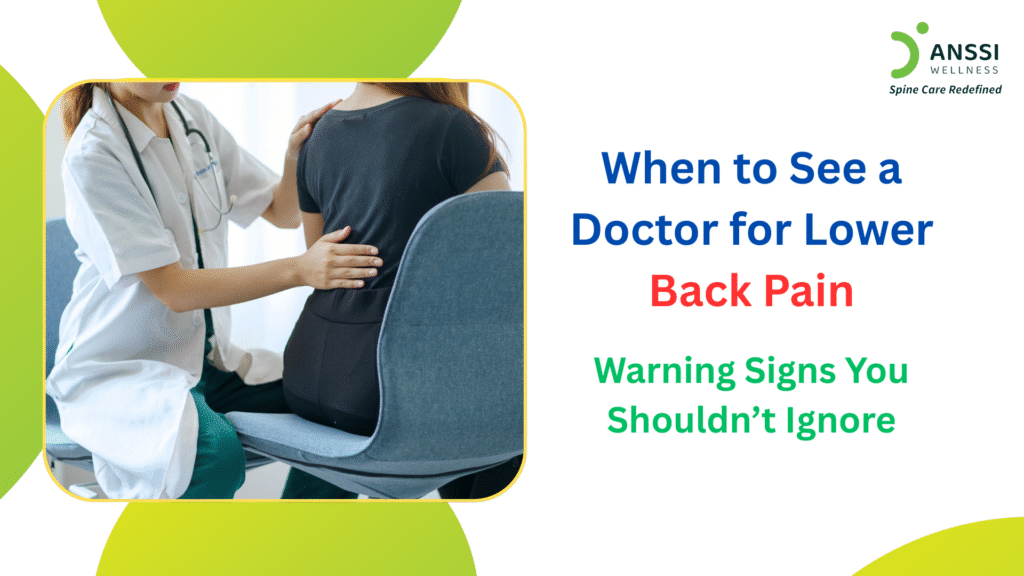
Lower back pain is one of the most common health problems of modern life. Whether caused by long sitting hours, poor posture, or sudden strain, most people experience it at some point. Unfortunately, many ignore the early signs, assuming the pain will go away on its own. While some minor episodes do improve with rest, persistent or severe back pain can be a warning sign of a deeper spinal issue. Understanding when to consult a doctor can prevent long-term complications and protect your spinal health.
Common Causes of Lower Back Pain
Lower back pain can arise from a variety of reasons, and identifying the cause is essential for proper treatment.
- One of the most common triggers is muscle strain, often caused by lifting heavy objects incorrectly, sudden twisting movements, or overexertion during workouts.
- In today’s digital world, poor posture, especially slouching over laptops or mobile phones, puts continuous stress on the spine.
- A sedentary lifestyle also contributes significantly. Sitting for long hours weakens the core muscles that support the spine, increasing the risk of pain.
- Obesity is another important factor, as excess abdominal weight shifts the body’s balance and places strain on the lower spine.
- Structural issues within the spine are also common causes. These include:
- Disc bulge or herniation, where the spinal disc presses against nerves
- Sciatica, which causes radiating leg pain
- Spinal stenosis, where the spinal canal narrows
- Arthritis, leading to inflammation and stiffness
- General age-related degeneration
Each cause may require different treatment strategies, making proper diagnosis crucial.
Warning Signs You Should Never Ignore
While occasional lower back discomfort may not be serious, certain symptoms require immediate medical attention.
- One of the biggest warning signs is pain that lasts longer than 2-3 weeks, even after rest and home care. This suggests an underlying issue that needs evaluation.
- Another major red flag is pain that radiates down the legs, often reaching the thighs, calves, or feet. This could indicate nerve compression caused by a disc bulge or sciatica.
- Numbness, tingling, or weakness in the legs is also concerning. These neurological symptoms signal that the nerves may be affected, and delaying treatment can lead to permanent damage.
- If you experience difficulty standing, walking, or maintaining balance, it may mean the spine’s structural stability is compromised.
- Similarly, severe stiffness in the morning, especially if it lasts longer than 30 minutes, may be associated with inflammatory spinal conditions.
- More serious symptoms include loss of bowel or bladder control, which can be related to cauda equina syndrome, a rare but urgent condition requiring immediate medical attention.
- Pain after an accident, injury, or fall should not be ignored, as it could involve fractures or ligament damage.
- Lastly, unexplained weight loss accompanied by back pain can sometimes indicate underlying systemic issues and should be evaluated promptly.
Diagnostic Tests to Identify the Root Cause
When you visit a doctor for lower back pain, the first step involves a thorough clinical consultation. The doctor will ask about your symptoms, lifestyle, medical history, and activity patterns. This helps identify possible causes and risk factors.
A physical examination follows, where the doctor evaluates posture, muscle strength, flexibility, and nerve function. Based on the findings, further diagnostic tests may be recommended.
Common diagnostic tools include:
- X-ray: Useful for identifying bone problems, fractures, or spinal alignment issues.
- MRI (Magnetic Resonance Imaging): The most detailed test for soft tissue analysis, disc bulge, herniation, nerve compression, and inflammation.
- CT Scan: Provides detailed imaging for complex bone and structural issues.
- EMG (Electromyography) and Nerve Conduction Studies: Helps assess the health of nerves and muscles, especially when symptoms like tingling or weakness are present.
These tests help pinpoint the exact cause of lower back pain, enabling doctors to create an accurate and personalised treatment plan.
Non-Surgical Treatment Options
The good news is that many cases of lower back pain do not require surgery. A wide range of effective non-surgical treatments can provide relief, restore mobility, and prevent the condition from worsening.
1. Physiotherapy
Physiotherapy plays a vital role in strengthening the spine, improving posture, and restoring mobility. Guided exercises target weak muscles, improve flexibility, and correct imbalances. Manual therapy techniques can help reduce stiffness and alleviate pain.
2. Heat and Cold Therapy
Heat therapy relaxes tight muscles and improves blood flow, while cold therapy reduces inflammation and numbs sharp pain. Alternating between the two can be particularly effective in the early stages of pain.
3. Ergonomic Corrections
Many people develop back pain due to poor workstation design. Simple adjustments like using a chair with lumbar support, keeping the screen at eye level, or maintaining a neutral spine position can significantly reduce strain.
4. Posture Training
Learning how to sit, stand, walk, and lift correctly helps prevent repeated episodes of back pain. Posture correction exercises and ergonomic awareness play an essential preventive role.
5. Non-Surgical Spinal Decompression Treatment
One of the most advanced non-surgical options is Non-Surgical Spinal Decompression Treatment. This USA-based technology gently stretches the spine, reducing pressure on compressed discs and nerves. It creates a negative pressure within the disc, allowing it to retract and heal naturally.
Spinal decompression is especially beneficial for conditions like disc bulge, herniated discs, sciatica, and chronic lower back pain. It is safe, non-invasive, medication-free, and painless, making it an excellent alternative for patients who wish to avoid surgery.
About ANSSI:
ANSSI Wellness focuses on improving the quality of life for patients suffering from spinal issues, aiming to provide relief where other conventional treatments have failed. Through advanced Non-Surgical Spinal Decompression Treatment, ANSSI is committed to helping patients avoid surgery and recover in a safe, effective, and compassionate environment.
Connect with ANSSI Wellness on LinkedIn, Instagram, and Facebook for expert guidance.