Managing spinal canal stenosis while working a sedentary job can be challenging. Long hours at a desk, limited movement, and improper posture can worsen symptoms and increase nerve compression. However, with the right ergonomic adjustments and daily habits, it is possible to reduce discomfort and maintain productivity.
This practical workplace guide will help you create a back-friendly work environment and apply safe habits that support spinal health.
Understanding Spinal Canal Stenosis
Spinal canal stenosis occurs when the spinal canal narrows, placing pressure on the spinal cord or nearby nerves. It typically affects the neck (cervical stenosis) or lower back (lumbar stenosis).
Common Symptoms Include:
- Lower back or neck pain
- Leg pain while walking
- Tingling or numbness
- Muscle weakness
- Pain that gets worse when standing or sitting for extended periods of time
For individuals working desk jobs, prolonged static postures can aggravate symptoms. Therefore, optimising workplace ergonomics is essential.
Creating an Ideal Desk Setup
A properly arranged workstation can significantly reduce spinal stress.
1. Choose the Right Chair
Your chair should:
- Provide firm lumbar support.
- Support your lower back’s natural curvature.
- Allow height adjustment.
- Enable your feet to rest flat on the floor.
If your chair lacks lumbar support, consider using a small cushion or lumbar roll.
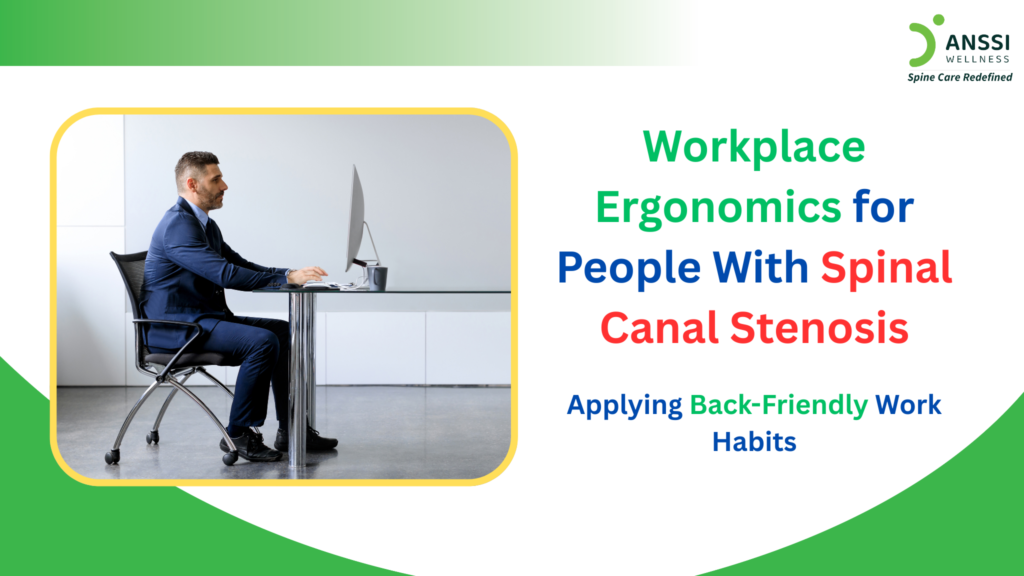
2. Maintain Neutral Spine Alignment
A neutral spine means maintaining the natural curves of your back without excessive arching or slouching.
To achieve this:
- Sit upright with shoulders relaxed.
- Keep your hips pushed back into the chair.
- Avoid leaning forward or slumping.
- Keep ears aligned over shoulders.
Good alignment reduces pressure on narrowed spinal spaces.
3. Proper Leg and Foot Positioning
Keep feet flat on the floor.
- Knees should be at approximately 90 degrees.
- Avoid crossing your legs.
- If your feet cannot comfortably reach the floor, use a footrest.
Proper lower body alignment stabilises the pelvis and reduces lower back strain.
4. Monitor and Screen Placement
Improper screen height often leads to forward bending or neck strain.
- Place the monitor at eye level.
- Keep the screen about an arm’s length away.
- Don’t spend a lot of time staring at laptops.
- Use a laptop stand and external keyboard if necessary.
Correct screen positioning prevents unnecessary spinal flexion.
5. Keyboard and Mouse Position
- Keep elbows at 90 degrees.
- Position keyboard and mouse within easy reach.
- Avoid overstretching arms.
- Avoid bending your wrists up or down; instead, keep them neutral.
Reducing upper body strain helps prevent muscle tension that can worsen symptoms.
Importance of Movement Breaks
One of the most important habits for people with spinal canal stenosis is regular movement.
Why Movement Matters
Prolonged sitting increases spinal compression and reduces circulation.
Movement:
- Improves blood flow
- Reduces nerve irritation
- Enhances joint flexibility
- Relieves muscle stiffness
How Often Should You Move?
- Take a break every 30-45 minutes.
- Stand for 2-5 minutes.
- Walk around your workspace.
- Gently stretch your back and legs.
Setting a reminder on your phone or computer can help maintain consistency.
Simple Desk Stretches for Stenosis
Incorporating gentle stretches during work hours can reduce discomfort.
1. Seated Pelvic Tilt
- Sit upright.
- Gently tilt the pelvis forward and backwards.
- Repeat 10-15 times.
This promotes spinal mobility.
2. Standing Back Extension
- Stand up.
- Place hands on hips.
- Gently lean backwards.
- Hold for 5 seconds.
This can relieve lumbar pressure for some individuals (consult your healthcare provider if unsure).
Applying Back-Friendly Work Habits
Beyond workstation setup, daily habits play a major role in symptom management.
1. Avoid Prolonged Forward Bending
Whether tying shoes or picking up objects, avoid bending from the waist.
Instead:
- Bend your knees.
- Keep back straight.
- Use leg muscles for support.
This protects the lumbar spine.
2. Practise Safe Lifting Techniques
Even light objects should be lifted carefully:
- Hold objects close to your body.
- Avoid twisting while lifting.
- Turn your whole body instead of rotating your spine.
Twisting movements can aggravate nerve compression.
3. Strengthen Your Core Outside Work Hours
Strong abdominal and back muscles support spinal stability.
Perform exercises such as:
- Pelvic tilts
- Bridges
- Gentle planks
- Supervised physiotherapy routines
Before beginning any new workout regimen, always get medical advice.
4. Consider a Sit-Stand Desk
Alternating between sitting and standing can reduce prolonged spinal stress. However, standing too long can also aggravate symptoms. Balance is key.
Aim for:
- 20-30 minutes sitting
- 10-15 minutes standing
- Frequent small movements
Lifestyle Considerations Beyond the Workplace
Work ergonomics is just one part of managing stenosis.
Additional supportive habits include:
- Maintaining a healthy body weight
- Walking regularly
- Using supportive footwear
- Sleeping on a supportive mattress
- Managing stress levels
Holistic care improves overall spine health.
When to Seek Medical Advice
If you experience:
- Increasing leg weakness
- Severe numbness
- Difficulty walking
- Loss of bladder or bowel control
Seek immediate medical attention.
For persistent symptoms that interfere with work or daily life, consult a spine specialist. Early evaluation can help explore non-surgical treatment options such as physiotherapy, posture correction programs, or advanced non-surgical spinal decompression treatment.
About ANSSI:
ANSSI Wellness focuses on improving the quality of life for patients suffering from spinal issues, aiming to provide relief where other conventional treatments have failed. Through advanced Non-Surgical Spinal Decompression Treatment, ANSSI is committed to helping patients avoid surgery and recover in a safe, effective, and compassionate environment.
Connect with ANSSI Wellness on LinkedIn, Instagram, and Facebook for expert guidance.