A pinched nerve can disrupt daily life in ways many people don’t expect. From persistent pain and tingling to weakness and restricted movement, nerve compression affects how we work, rest, and move.
While the underlying problem is similar, a pinched nerve in the neck (cervical spine) and a pinched nerve in the lower back (lumbar spine) present differently and often require tailored treatment approaches. Understanding these differences is essential for timely care and long-term relief.
Understanding Nerve Compression
Spinal nerves exit the spinal cord through small openings between vertebrae. When these nerves are irritated or compressed (by a bulging or herniated disc, bone spurs, tight muscles, or inflamed joints), symptoms arise along the nerve’s pathway.
Posture, repetitive strain, age-related degeneration, and lifestyle habits play a major role in where and how compression occurs. Because the cervical spine supports head movement and arm function, and the lumbar spine bears body weight and controls leg movement, symptoms differ by location.
Pinched Nerve in the Neck (Cervical Region)
Common Symptoms
- Neck stiffness and localised pain
- Pain radiating to the shoulder, arm, or hand
- Tingling or numbness in fingers
- Arm or hand weakness
- Headaches or reduced neck mobility
Typical Causes
- “Tech neck” and bad posture from extended screen time
- Cervical disc bulge or herniation
- Cervical spondylosis (age-related wear and tear)
- Sudden strain or whiplash injuries
Daily Impact
Activities like computer work, driving, or even sleeping can worsen symptoms. Fine motor tasks, typing, gripping, or lifting, often become uncomfortable.
Pinched Nerve in the Lower Back (Lumbar Region)
Common Symptoms
- Lower back pain that radiates to the buttock or leg (sciatica)
- Numbness or tingling in the thigh, calf, or foot
- Leg weakness or heaviness
- Pain that worsens with sitting or bending
Typical Causes
- Lumbar disc herniation or bulge
- Prolonged sitting and poor ergonomics
- Heavy lifting or sudden twisting
- Spinal stenosis or degenerative disc disease
Daily Impact
Walking, standing, and sitting tolerance may drop. Climbing stairs, driving, or lifting groceries can trigger sharp pain.
Key Differences: Cervical vs Lumbar Nerve Compression
- Pain Pattern: Cervical compression radiates to arms; lumbar compression radiates to legs.
- Function Affected: Neck issues affect hand coordination; lower back issues affect mobility and balance.
- Risk if Untreated: Both can worsen, but lumbar compression may significantly limit walking, while cervical compression can impair fine motor control.
Diagnosis Methods
Accurate diagnosis guides effective treatment. Clinicians typically begin with a physical examination to assess strength, reflexes, and sensation.
Common tests include:
- MRI: Visualises discs, nerves, and soft tissues
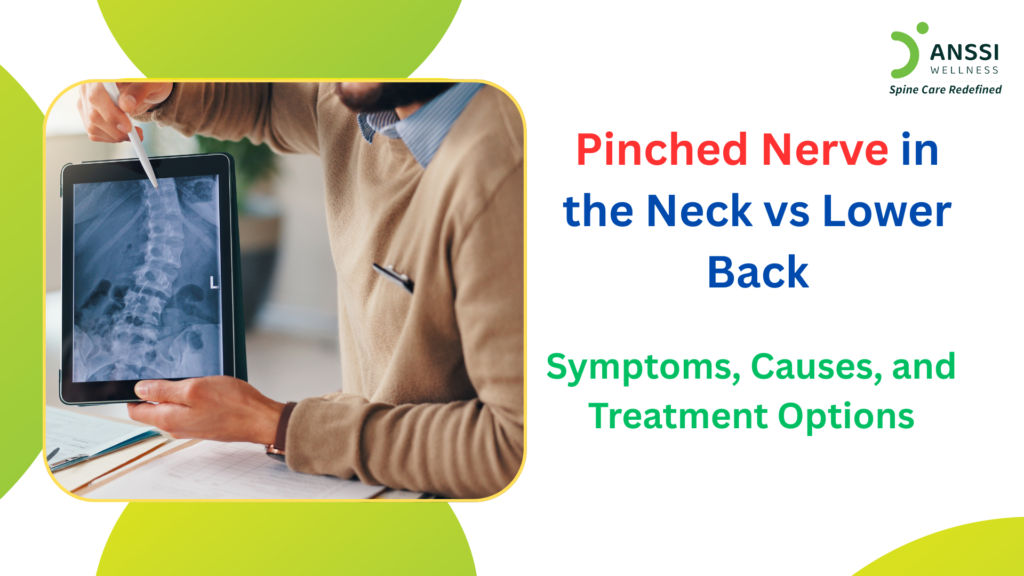
- X-ray: Assesses alignment and degenerative changes
- Nerve conduction studies: Evaluate nerve function when needed
Early diagnosis helps prevent chronic nerve damage and prolonged pain.
Treatment Options and How They Differ
1. Posture Correction and Ergonomics
- Cervical: Screen at eye level, supportive pillows, frequent neck breaks
- Lumbar: Lumbar support, seat height adjustment, regular movement
2. Physiotherapy
- Cervical programs focus on neck stabilisation, shoulder mobility, and gentle traction
- Lumbar programs emphasise core strengthening, hip mobility, and spinal stability
3. Non-Surgical Spinal Decompression Treatment
For disc-related nerve compression, non-surgical spinal decompression treatment gently stretches the spine to reduce pressure on affected nerves and discs. This drug-free, non-invasive approach encourages nutrient flow to discs and supports natural healing.
Clinics like ANSSI Wellness use USA-based decompression technology to customise care for both cervical and lumbar conditions, without surgery or hospitalisation.
4. Lifestyle Modifications
Weight management, stress reduction, sleep optimisation, and regular low-impact activity (walking, swimming, yoga) support recovery in both regions.
When Surgery is Considered
Surgery is typically a last resort. It is reserved for progressive weakness, severe neurological deficits, or persistent pain unresponsive to conservative care.
About ANSSI:
ANSSI Wellness focuses on improving the quality of life for patients suffering from spinal issues, aiming to provide relief where other conventional treatments have failed. Through advanced Non-Surgical Spinal Decompression Treatment, ANSSI is committed to helping patients avoid surgery and recover in a safe, effective, and compassionate environment.
Connect with ANSSI Wellness on LinkedIn, Instagram, and Facebook for expert guidance.