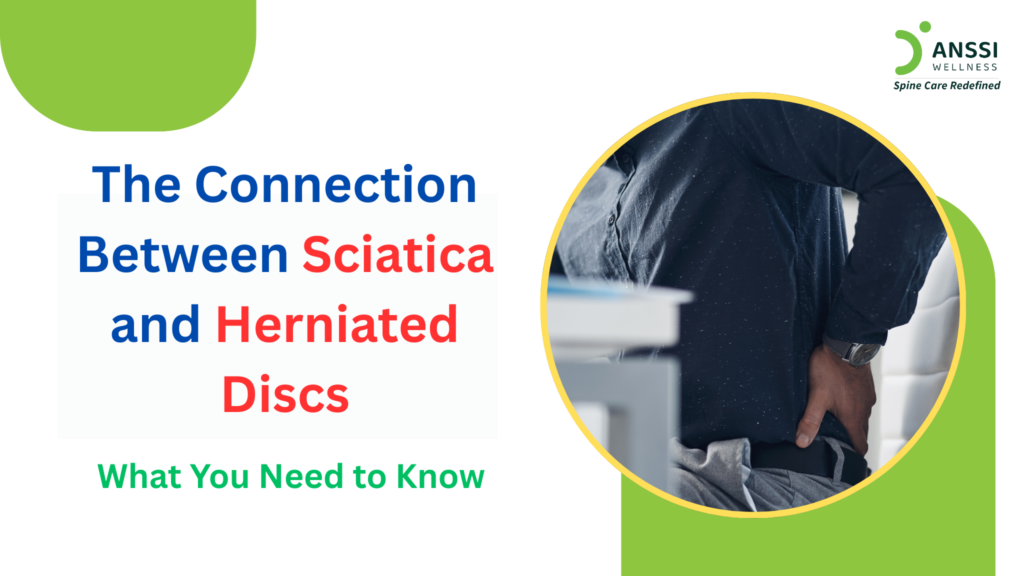
Lower back pain that travels down the leg can be alarming and disruptive. For many people, this pain is not just a muscle strain; it’s sciatica. One of the most common underlying causes of sciatica is a herniated disc in the lumbar (lower back) spine.
Understanding how these two conditions are connected can help you seek timely care and choose the right, non-surgical path to recovery.
What is Sciatica?
Sciatica is a set of symptoms caused by irritation or compression of the sciatic nerve, the longest nerve in the human body. It begins in the lower back, runs through the hips and buttocks, and extends down each leg.
When this nerve is compressed, people may experience sharp or burning pain, tingling, numbness, or weakness that typically affects one side of the body. Unlike general back pain, sciatica often worsens with sitting, bending, or sudden movements.
What is a Herniated Disc?
Between each vertebra in the spine lies a soft, cushion-like structure called an intervertebral disc. These discs act as shock absorbers and ensure flexibility.
A herniated disc occurs when the inner gel-like core pushes out through a tear or weakness in the outer layer. This is most common in the lumbar spine because it bears the body’s weight and absorbs daily stress from movement, lifting, and posture.
How a Herniated Disc Causes Sciatica
The connection between sciatica and herniated discs lies in nerve compression.
When a lumbar disc herniates, it can press against nearby nerve roots that form the sciatic nerve. This pressure triggers inflammation and disrupts nerve signals, causing pain to radiate from the lower back into the leg.
The severity of symptoms depends on how much the nerve is compressed and the location of the disc herniation.
Common Symptoms to Watch For
Sciatica caused by a herniated disc often presents with a distinct pattern of symptoms:
- Pain that starts in the lower back and travels down the buttock and leg
- Tingling or “pins and needles” sensation in the leg or foot
- Numbness or muscle weakness
- Pain that worsens with sitting, coughing, or bending
- Difficulty standing or walking for long periods
When these symptoms persist or worsen, they may indicate ongoing nerve compression that requires medical attention.
Risk Factors and Lifestyle Triggers
Several factors increase the likelihood of developing a herniated disc and sciatica.
- Sedentary lifestyles and prolonged sitting weaken spinal support muscles.
- Poor posture, especially slouching or forward bending, increases disc pressure.
- Obesity adds an extra load to the lumbar spine.
- Improper lifting techniques can cause sudden disc injury.
- Age-related disc degeneration also makes discs more vulnerable to herniation.
Diagnosis and Evaluation
Accurate diagnosis is essential for effective treatment.
- A spine specialist will typically begin with a physical examination, assessing reflexes, strength, and range of motion.
- Imaging tests, especially MRI scans, are commonly used to confirm disc herniation and identify nerve compression.
- In some cases, nerve conduction studies may be recommended to evaluate nerve function.
Non-Surgical Treatment Options
The majority of sciatica cases caused by herniated discs can be managed without surgery. Non-surgical treatment focuses on relieving nerve pressure, reducing inflammation, and restoring spinal function.
- Physiotherapy helps strengthen core muscles, improve flexibility, and correct posture.
- Lifestyle modifications such as ergonomic adjustments, weight management, and regular movement reduce recurring strain.
- Pain management techniques, including heat/cold therapy and guided exercises, offer symptomatic relief.
- One advanced option is Non-Surgical Spinal Decompression Treatment, which gently stretches the spine to reduce pressure on compressed discs and nerves. By creating negative pressure within the disc, this treatment encourages retraction of the herniated portion and improves nutrient flow for healing. Clinics such as ANSSI Wellness specialise in delivering this drug-free, non-invasive treatment using USA-based decompression technology.
About ANSSI:
ANSSI Wellness focuses on improving the quality of life for patients suffering from spinal issues, aiming to provide relief where other conventional treatments have failed. Through advanced Non-Surgical Spinal Decompression Treatment, ANSSI is committed to helping patients avoid surgery and recover in a safe, effective, and compassionate environment.
Connect with ANSSI Wellness on LinkedIn, Instagram, and Facebook for expert guidance.