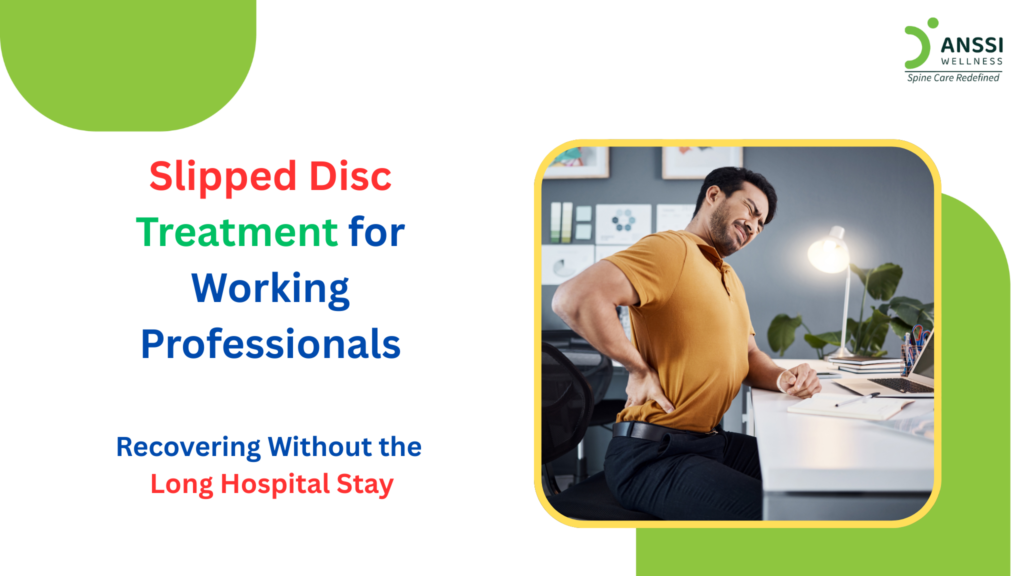
Many working professionals worry that treating a slipped disc may require surgery and long hospital stays, which can disrupt their work and daily life. However, modern spine care now offers several non-surgical treatment options that can help patients recover safely and effectively without hospitalisation.
With the right treatment and lifestyle adjustments, many individuals can achieve long-term relief and return to their normal routine.
Why Working Professionals Are at Higher Risk
Working professionals, especially those in desk-based jobs, face several lifestyle factors that increase the risk of developing a slipped disc.
One of the primary reasons is prolonged sitting. Sitting for many hours places continuous pressure on the spinal discs, particularly in the lower back. When the spine remains in a fixed position for extended periods, the discs experience increased stress, which can eventually lead to disc bulging or herniation.
Poor workstation ergonomics also contributes to spinal problems. Many professionals work with improperly positioned chairs, desks, or computer screens. Slouching, leaning forward, or bending the neck for long periods can create uneven pressure on the spine.
Another major factor is excessive use of mobile devices and laptops. Looking down at screens for long hours can strain the neck and upper spine, while poor sitting posture can affect the lower back.
Lack of regular physical activity also weakens the muscles that support the spine. Strong core and back muscles help stabilise the spine and protect the discs. When these muscles become weak due to inactivity, the spine becomes more vulnerable to injury.
Additionally, work-related stress can lead to muscle tension in the back and neck. Over time, this tension may contribute to spinal discomfort and increase the risk of disc problems.
Understanding Slipped Disc and Its Symptoms
A slipped disc, also known as a herniated or bulging disc, occurs when one of the soft discs between the vertebrae moves out of its normal position.
These discs act as cushions that absorb shock and allow the spine to move smoothly. When a disc becomes damaged or weakened, the inner gel-like material may push outward and press on nearby spinal nerves. This pressure on the nerves can lead to pain and other uncomfortable symptoms.
One of the most common symptoms is lower back pain that may worsen with movement, sitting, or bending. In some cases, the pain may radiate down the legs, a condition commonly known as sciatica.
A slipped disc in the neck region can cause neck pain, stiffness, and discomfort that spreads to the shoulders or arms.
Other symptoms may include tingling sensations, numbness, or weakness in the arms or legs. These symptoms occur because the affected nerves are responsible for sending signals to different parts of the body.
Early diagnosis is important because untreated disc problems may worsen over time and lead to chronic pain or limited mobility.
Non-Surgical Treatment Options for Faster Recovery
Many slipped disc cases can be successfully managed with non-surgical treatments that focus on reducing pressure on the spinal discs and supporting natural healing.
Physiotherapy
Physiotherapy is often one of the first treatment approaches. A physiotherapist can design a personalised exercise program that strengthens the muscles supporting the spine. Stronger muscles help stabilise the spine and reduce stress on the discs.
Posture Correction
Posture correction is another important aspect of treatment for working professionals. Learning proper sitting posture and making ergonomic adjustments at the workplace can significantly reduce spinal strain. Simple changes, such as adjusting chair height, positioning computer screens at eye level, and taking regular movement breaks, can help protect the spine.
Lifestyle Modifications
Lifestyle modifications are also essential for recovery. Regular physical activity, stretching exercises, and maintaining a healthy weight can improve spinal health and reduce the risk of future disc problems.
Non-Surgical Spinal Decompression Treatment
One of the most advanced non-surgical treatments available today is Non-Surgical Spinal Decompression Treatment. This treatment uses specialised equipment to gently stretch the spine in a controlled manner. By creating space between the vertebrae, spinal decompression reduces pressure on the affected discs and nerves.
This process allows the discs to rehydrate and promotes the natural healing process within the spine. For many patients suffering from slipped disc-related pain, this treatment can provide significant relief without the need for surgery.
Because Non-Surgical Spinal Decompression Treatment is non-invasive, patients can continue their daily routines while undergoing therapy, making it particularly suitable for working professionals.
Benefits of Non-Surgical Spine Care for Professionals
Non-surgical spine treatments offer several advantages for busy professionals who want effective treatment without disrupting their work schedule.
- One of the biggest benefits is minimal downtime. Unlike surgery, which may require weeks or months of recovery, non-surgical treatments allow patients to resume normal activities much sooner.
- These treatments also help avoid the potential risks associated with spinal surgery, such as infections, surgical complications, and extended rehabilitation periods.
- Another key benefit is that non-surgical approaches focus on addressing the root cause of the pain rather than simply masking the symptoms. By reducing disc pressure and strengthening the spine, these treatments aim to provide long-term relief and improved spinal health.
For professionals who depend on their physical well-being to maintain productivity, these treatment options offer a practical and effective solution.
About ANSSI:
ANSSI Wellness focuses on improving the quality of life for patients suffering from spinal issues, aiming to provide relief where other conventional treatments have failed. Through advanced Non-Surgical Spinal Decompression Treatment, ANSSI is committed to helping patients avoid surgery and recover in a safe, effective, and compassionate environment.
Connect with ANSSI Wellness on LinkedIn, Instagram, and Facebook for expert guidance.