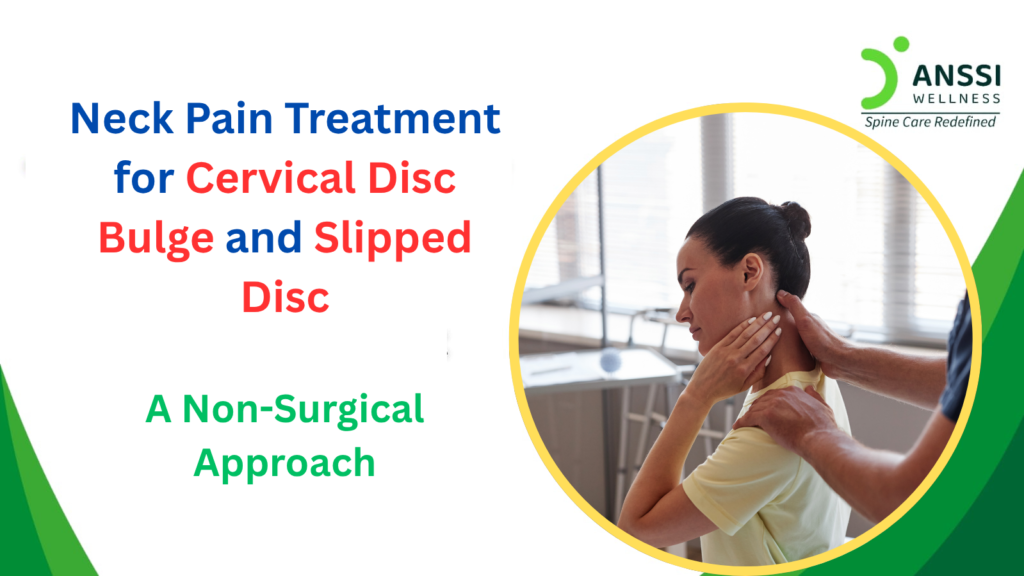
Neck pain has become a common complaint in today’s digital world. Long hours spent on computers, frequent mobile usage, and poor posture have contributed to a rise in spinal issues affecting the cervical region. Among the most common causes of persistent neck pain are Cervical Disc Bulge and Slipped Disc.
While these conditions can sound alarming, the good news is that many cases can be effectively treated without surgery. A non-surgical approach focuses on relieving pain, improving spinal health, and addressing the root cause for long-term relief.
Understanding Cervical Disc Bulge and Slipped Disc
The cervical spine is made up of vertebrae separated by soft discs that act as cushions and shock absorbers. These discs help maintain flexibility and allow smooth movement of the neck.
- A cervical disc bulge occurs when a disc protrudes outward beyond its normal boundary.
- A slipped disc, or herniated disc, is a more advanced condition where the inner material of the disc pushes through the outer layer.
In both cases, the bulging or herniated disc can press on nearby nerves. This nerve compression is what leads to pain and other symptoms.
What Happens When a Disc is Affected
When a disc in the cervical spine loses its normal structure, it can disrupt the alignment and function of the spine. The pressure on nearby nerves can lead to inflammation and irritation.
This not only causes local neck pain but can also affect other parts of the body. Since cervical nerves connect to the shoulders, arms, and hands, symptoms may extend beyond the neck.
If left untreated, the condition can worsen over time, leading to increased pain, reduced mobility, and difficulty performing daily activities.
Symptoms to Watch For
The symptoms of a cervical disc bulge or slipped disc can vary depending on the severity of the condition and the nerves affected.
Common symptoms include:
- Persistent neck pain and stiffness
- Pain radiating to the shoulders, arms, or upper back
- Tingling or “pins and needles” sensation in the hands
- Numbness in the arms or fingers
- Muscle weakness or reduced grip strength
- Difficulty turning or moving the neck
These symptoms may worsen with prolonged sitting, poor posture, or sudden movements.
Limitations of Medication and Surgery
When neck pain becomes severe, many people turn to painkillers for relief. While medications can reduce inflammation and provide temporary comfort, they do not address the underlying cause of the problem.
Painkillers cannot reposition a bulging disc or relieve nerve compression. As a result, the pain often returns once the effect of the medication wears off.
Surgery is usually considered in severe or advanced cases. However, it comes with certain risks and challenges:
- Long recovery periods
- High costs
- Potential complications
- Possibility of recurring symptoms
Because of these limitations, non-surgical treatments are often recommended as the first and most effective approach.
Effective Non-Surgical Treatment Options
Non-surgical treatments focus on relieving pressure on the affected disc, improving spinal alignment, and promoting natural healing.
Physiotherapy and Posture Correction
Physiotherapy plays a key role in managing cervical disc issues. A structured exercise program helps strengthen the muscles that support the neck and upper back.
Stronger muscles reduce the load on the spine and improve stability. Physiotherapy also focuses on correcting posture, which is essential for reducing strain on the cervical spine.
Patients are guided on proper sitting positions, screen alignment, and movement techniques to prevent further damage.
Lifestyle and Ergonomic Changes
Daily habits have a significant impact on neck health. Simple changes can help reduce stress on the spine and support recovery.
- Keep screens at eye level to avoid bending the neck.
- Use ergonomic chairs with proper support.
- Take regular breaks during long working hours.
- Avoid prolonged use of mobile devices in a downward position.
- Maintain an active lifestyle with regular movement.
These changes help prevent continuous strain and promote better spinal alignment.
Non-Surgical Spinal Decompression Treatment
One of the most advanced treatments for cervical disc problems is Non-Surgical Spinal Decompression Treatment. This procedure is designed to relieve pressure on spinal discs and nerves.
It works by gently stretching the cervical spine using specialised equipment. This controlled stretching creates negative pressure within the discs, which may help pull the bulging disc material back into place.
Benefits of spinal decompression treatment include:
- Relief from nerve compression
- Reduced pain and inflammation
- Improved blood flow and nutrient supply to discs
- Enhanced healing and recovery
Because it directly targets the root cause, non-surgical spinal decompression treatment provides more sustainable results compared to temporary treatments.
About ANSSI:
ANSSI Wellness focuses on improving the quality of life for patients suffering from spinal issues, aiming to provide relief where other conventional treatments have failed. Through advanced Non-Surgical Spinal Decompression Treatment, ANSSI is committed to helping patients avoid surgery and recover in a safe, effective, and compassionate environment.
Connect with ANSSI Wellness on LinkedIn, Instagram, and Facebook for expert guidance.