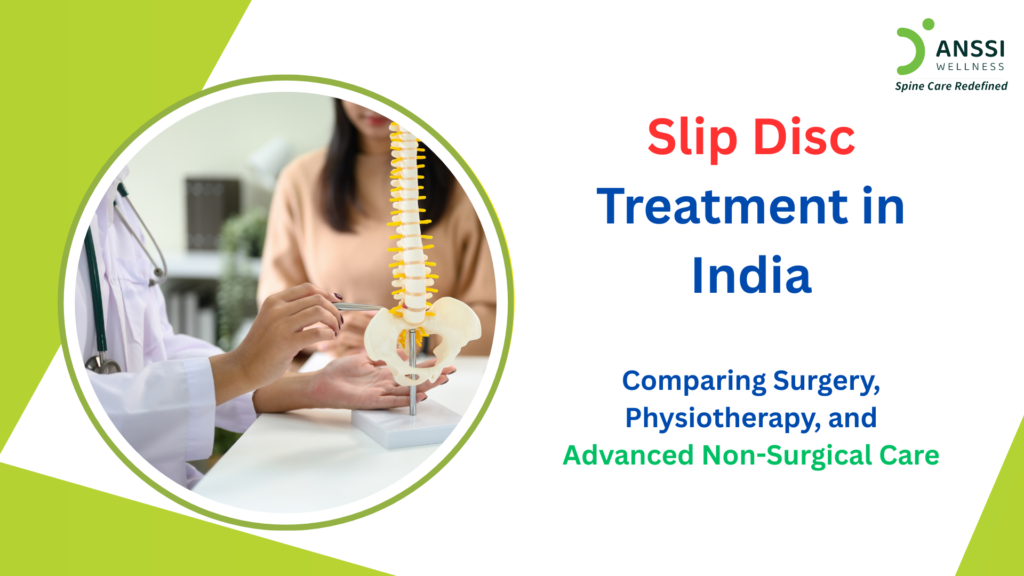
A slipped disc is one of the most common causes of chronic back pain and nerve-related discomfort. It can affect daily life by causing pain while sitting, walking, bending, or even sleeping. Many patients diagnosed with a slipped disc immediately worry about surgery, while others try painkillers or physiotherapy without knowing which option is truly best for their condition.
In India, patients now have access to multiple treatment approaches, ranging from surgery to physiotherapy and advanced non-surgical care. Understanding the differences between these options is important for making the right treatment decision.
The best approach depends on the severity of the condition, the symptoms, and the root cause of the pain.
Understanding a Slipped Disc
The spine is made up of bones called vertebrae, separated by soft discs that act as cushions. These discs absorb shock, support movement, and help maintain flexibility in the spine.
A slipped disc, also known as a herniated disc or disc bulge, occurs when one of these discs becomes damaged or weakened. The soft inner portion of the disc may push outward through the outer layer and press on nearby nerves.
This pressure on the nerves can cause several symptoms depending on the location of the disc problem. Common symptoms include lower back pain, neck pain, stiffness, and pain that radiates to the legs or arms. When the nerve compression affects the lower back, it may cause sciatica, where pain travels from the back down the leg.
Patients may also experience tingling, numbness, or weakness in the arms, hands, legs, or feet. In severe cases, movement may become difficult and daily activities may be affected significantly.
When Surgery is Recommended
Many people assume surgery is the primary treatment for a slipped disc, but this is not always true. In fact, surgery is usually recommended only in severe or emergency situations.
Surgical treatment may be necessary when there is major nerve compression causing serious symptoms such as progressive muscle weakness, loss of bladder or bowel control, or severe pain that does not improve with conservative treatment.
Spinal surgery aims to remove the part of the disc pressing on the nerve. While surgery can be effective in certain cases, it also comes with risks. These may include infection, nerve damage, complications from anaesthesia, and a long recovery period.
Patients often require hospitalisation followed by weeks or months of rehabilitation. In some cases, surgery may reduce symptoms temporarily but not completely solve the underlying spinal problem.
Because of these factors, most spine specialists consider surgery as the last option after non-surgical treatments have been explored.
Role of Physiotherapy in Slip Disc Treatment
Physiotherapy plays a major role in treating mild to moderate slipped disc cases and is often one of the first recommended treatment approaches.
A physiotherapist designs a personalised exercise plan to strengthen the muscles supporting the spine. Strong core and back muscles help reduce pressure on the affected disc and improve spinal stability.
Stretching exercises also improve flexibility and help reduce stiffness. Physiotherapy can improve posture, movement patterns, and body mechanics, which are important for preventing further strain on the spine.
For patients with desk jobs or poor posture habits, physiotherapy also includes posture correction and ergonomic guidance. Learning how to sit, stand, and lift correctly helps protect the spine during daily activities.
While physiotherapy is highly effective, it works best when combined with lifestyle changes such as regular movement, weight management, and avoiding activities that worsen the condition.
Advanced Non-Surgical Care: A Modern Alternative
In recent years, advanced non-surgical treatments have become a preferred option for many patients who want long-term relief without surgery.
One of the most effective options is Non-Surgical Spinal Decompression Treatment.
- This modern technique uses specialised equipment to gently stretch the spine in a controlled manner. By creating space between the vertebrae, spinal decompression reduces pressure on the affected discs and nearby nerves.
- This process helps the discs rehydrate and encourages the body’s natural healing process. As the pressure decreases, symptoms such as back pain, sciatica, tingling, and numbness often improve significantly.
- Unlike painkillers that only mask symptoms, spinal decompression addresses the root cause of the problem by improving disc health and reducing nerve compression.
- This treatment is particularly beneficial for patients suffering from slipped disc, disc bulge, sciatica, degenerative disc disease, and chronic back pain.
- Because it is non-invasive, patients can continue their daily routines without the risks, hospitalisation, or long recovery associated with surgery.
For many individuals, advanced non-surgical care offers a safer and more practical solution for lasting relief.
Which Option is Right for You?
Choosing the right slipped disc treatment depends on several factors, including the severity of symptoms, the location of the disc problem, and the patient’s overall spinal health.
- Mild to moderate cases often respond well to physiotherapy and lifestyle changes.
- Patients with persistent pain, nerve compression, or disc degeneration may benefit greatly from advanced non-surgical spinal decompression.
- Surgery is usually reserved for severe cases involving serious nerve damage or loss of function.
This is why accurate diagnosis is essential. A proper evaluation through physical examination and imaging tests such as MRI helps spine specialists recommend the most suitable treatment plan.
Personalised treatment is always more effective than choosing a one-size-fits-all solution.
About ANSSI:
ANSSI Wellness focuses on improving the quality of life for patients suffering from spinal issues, aiming to provide relief where other conventional treatments have failed. Through advanced Non-Surgical Spinal Decompression Treatment, ANSSI is committed to helping patients avoid surgery and recover in a safe, effective, and compassionate environment.
Connect with ANSSI Wellness on LinkedIn, Instagram, and Facebook for expert guidance.