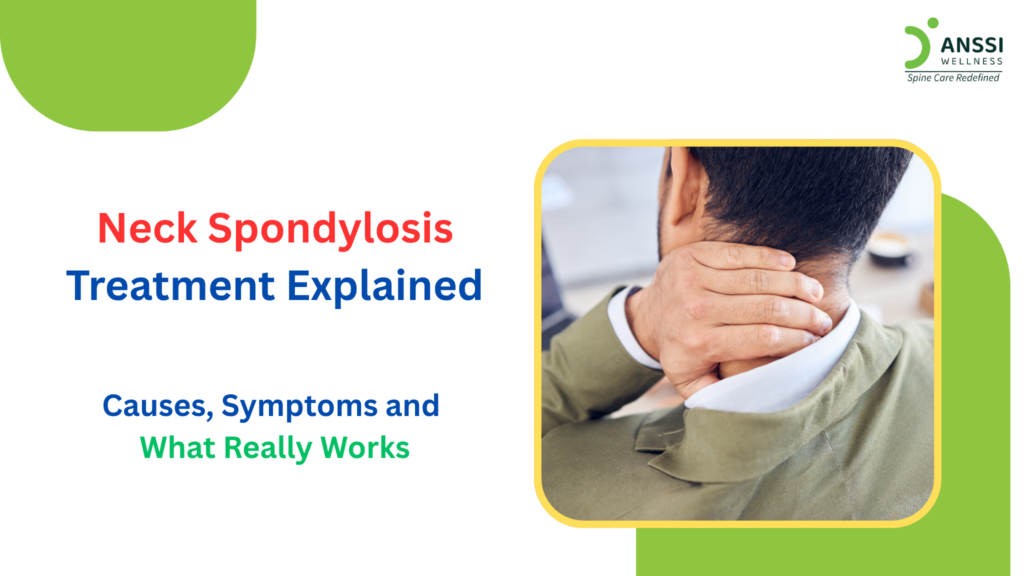
Many adults, especially office workers and professionals who spend long hours at desks, experience persistent discomfort in the neck region without realising that it may be caused by neck spondylosis. This condition is often linked to ageing, poor posture, and daily strain on the cervical spine.
For first-time patients, understanding neck spondylosis can feel confusing. Questions such as “Why is my neck always stiff?” or “Do I need surgery?” are common. The good news is that with early diagnosis and the right treatment, many people can manage neck spondylosis effectively without surgery.
What is Neck Spondylosis?
Neck spondylosis, also known as cervical spondylosis, is an age-related condition that affects the cervical spine, which is the neck portion of the spine. It occurs when the discs, joints, and bones in the neck gradually undergo wear and tear over time.
The spinal discs act as cushions between the vertebrae and help the neck move smoothly. As people age, these discs can lose hydration and elasticity, becoming thinner and less effective. This can lead to stiffness, reduced flexibility, and pressure on nearby nerves.
In some cases, bone spurs may also develop as the body tries to repair the wear and tear. These changes can further contribute to pain and nerve compression.
Although ageing is a natural cause, neck spondylosis is now increasingly common among younger adults due to prolonged screen use, poor posture, and sedentary work habits.
Common Causes of Neck Spondylosis
Several factors contribute to the development of neck spondylosis.
- The most common cause is natural ageing. As the body ages, the cervical discs and joints gradually degenerate. This process may begin as early as the 30s and become more noticeable with time.
- Poor posture is another major factor. Many people spend long hours looking down at laptops, smartphones, or tablets. This forward head posture, often called “Tech Neck”, places extra stress on the cervical spine and accelerates disc wear.
- Long hours of sitting without proper neck movement also contribute to stiffness and reduced spinal flexibility.
- A sedentary lifestyle weakens the muscles that support the neck and shoulders, making the spine more vulnerable to strain.
- Previous neck injuries, such as whiplash or sports injuries, may also increase the risk of developing cervical spondylosis later in life.
- Repetitive strain from certain work activities and weak neck and shoulder muscles can further worsen the condition.
Symptoms You Should Not Ignore
Neck spondylosis symptoms can vary depending on the severity of the degeneration and whether nearby nerves are affected.
- One of the most common symptoms is persistent neck pain and stiffness. Many people feel discomfort when turning their head or after sitting in one position for too long.
- Pain may also radiate to the shoulders, upper back, or arms. This happens when nerve roots in the cervical spine become compressed.
- Headaches that begin at the base of the skull and move upward are another common sign. These headaches are often linked to muscle tension and nerve irritation in the neck.
- Some patients may experience tingling, numbness, or weakness in the arms or hands. These symptoms suggest nerve involvement and should not be ignored.
- Reduced flexibility and difficulty turning the neck fully are also signs that the cervical spine may be affected.
If symptoms continue to worsen or interfere with your daily life, a professional evaluation becomes necessary.
How Neck Spondylosis is Diagnosed
Accurate diagnosis is essential for choosing the right treatment plan.
Physical Examination
A doctor usually begins with a physical examination, checking the neck’s range of motion, posture, muscle strength, and reflexes. This helps identify stiffness, nerve involvement, and mobility restrictions.
The specialist may also assess symptoms such as radiating pain, numbness, or weakness to determine whether nerves are being compressed.
Imaging Tests
Imaging tests play an important role in confirming the diagnosis.
- X-rays can show bone spurs, disc space narrowing, and structural changes in the cervical spine.
- In more complex cases, an MRI scan may be recommended to evaluate soft tissues such as spinal discs and nerves.
- A CT scan may also be used to get a detailed view of bone structures.
Proper diagnosis ensures that treatment focuses on the actual cause rather than only temporary symptom relief.
What Really Works: Effective Treatment Options
Many patients fear that surgery is the only solution for neck spondylosis. But in most cases, effective non-surgical treatments provide excellent long-term relief.
Non-Surgical Spinal Decompression Treatment
One of the most advanced treatment options available today is Non-Surgical Spinal Decompression Treatment. This procedure gently stretches the cervical spine using specialised equipment.
By creating space between the vertebrae, spinal decompression helps reduce pressure on compressed discs and nerves. This process allows the discs to rehydrate and supports natural healing.
For patients with disc bulges, nerve compression, or chronic cervical pain, this treatment can provide long-term relief without surgery. Unlike painkillers that only mask symptoms, spinal decompression addresses the root cause of the pain.
Physiotherapy
A physiotherapist designs personalised exercises to strengthen the neck, shoulders, and upper back muscles. Stronger muscles provide better support to the cervical spine and reduce strain.
Stretching exercises also improve flexibility and help reduce stiffness.
Posture Correction and Ergonomic Changes
Correcting posture is essential for recovery. Proper sitting posture and ergonomic workstation setup can significantly reduce stress on the neck.
Simple habits such as keeping screens at eye level and taking regular movement breaks can prevent further strain.
Lifestyle Modifications
Daily stretching, staying physically active, and avoiding prolonged sitting are important for long-term spinal health. Regular movement helps maintain flexibility and reduces muscle tension.
About ANSSI:
ANSSI Wellness focuses on improving the quality of life for patients suffering from spinal issues, aiming to provide relief where other conventional treatments have failed. Through advanced Non-Surgical Spinal Decompression Treatment, ANSSI is committed to helping patients avoid surgery and recover in a safe, effective, and compassionate environment.
Connect with ANSSI Wellness on LinkedIn, Instagram, and Facebook for expert guidance.