Chronic back pain has become one of the most common health concerns in modern lifestyles. Working professionals, drivers, homemakers, and elderly individuals frequently experience persistent lower back pain that affects their daily activities, work productivity, and overall quality of life. One of the leading causes behind long-term back pain is chronic back disc problems.
Many patients worry that surgery is the only option once spinal disc issues are diagnosed. However, advancements in non-surgical spine care have made it possible for many people to recover effectively without undergoing invasive procedures.
Understanding the causes, symptoms, and available treatment options is the first step toward long-term relief and improved spinal health.
What Causes Chronic Back Disc Pain?
The spine contains discs between the vertebrae that act as cushions and shock absorbers. These discs help maintain flexibility and allow smooth movement. Over time, however, these discs can weaken, degenerate, or become damaged.
Disc Degeneration
One of the most common causes of chronic back disc pain is age-related disc degeneration. As people age, spinal discs gradually lose water content and elasticity, making them more vulnerable to wear and tear.
Slipped Disc and Disc Bulge
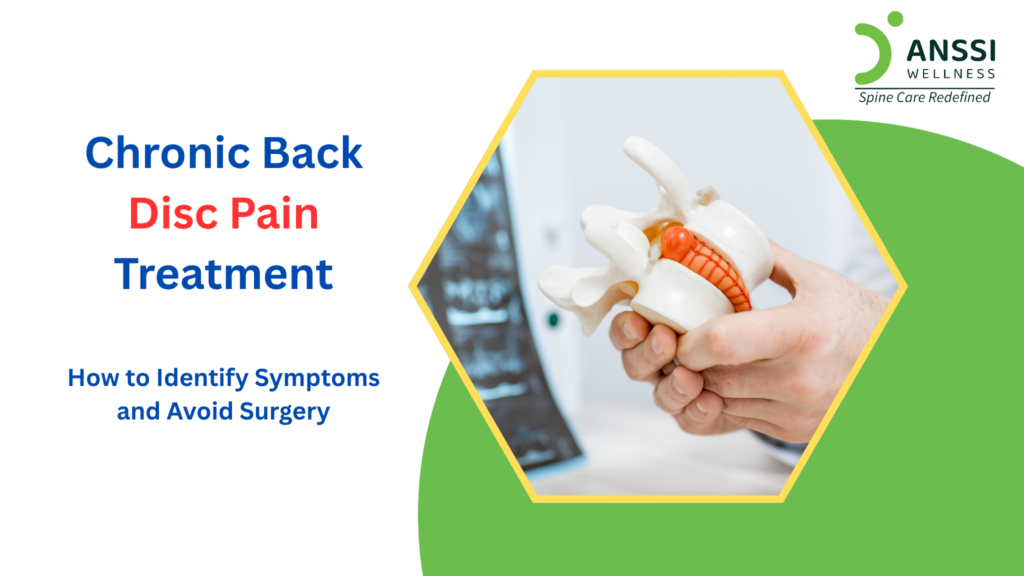
A slipped or herniated disc occurs when the soft inner portion of the disc pushes through its outer layer. A disc bulge may also develop when the disc extends outward due to pressure or degeneration. Both conditions can compress nearby nerves and lead to chronic pain.
Poor Posture and Prolonged Sitting
Poor posture while sitting, especially during long working hours, places continuous stress on the lower back. Sedentary lifestyles and incorrect workstation setups are major contributors to spinal disc problems.
Obesity and Lack of Exercise
Excess body weight increases pressure on the spine, while weak core muscles reduce spinal support. Lack of regular exercise also contributes to reduced flexibility and poor spinal stability.
Heavy Lifting and Repetitive Strain
Improper lifting techniques, physically demanding work, repetitive bending, and sudden injuries can strain spinal discs and accelerate degeneration.
Identifying these causes is important because effective treatment should focus not only on pain relief but also on correcting contributing lifestyle factors.
Typical Symptoms of Back Disc Problems
The symptoms of chronic back disc pain vary depending on the severity and location of the disc issue.
- Persistent Lower Back Pain: The most common symptom is ongoing lower back pain that lasts for weeks or months. The pain may worsen after prolonged sitting, standing, or physical activity.
- Sciatica and Radiating Pain: When a damaged disc compresses the sciatic nerve, pain may travel from the lower back into the hips, buttocks, and legs. This condition is commonly known as sciatica.
- Numbness and Tingling: Nerve compression may cause tingling sensations or numbness in the legs or feet. Some patients also experience burning pain or electric shock-like sensations.
- Muscle Weakness: Severe nerve pressure can affect muscle strength, making it difficult to walk, climb stairs, or lift objects comfortably.
- Difficulty with Daily Activities: Many patients find it challenging to sit for long periods, bend forward, stand comfortably, or sleep without discomfort. Over time, chronic pain can significantly reduce mobility and quality of life.
Recognising these symptoms early can help prevent worsening of the condition.
Why Early Diagnosis Matters
Early diagnosis plays a crucial role in successful treatment and recovery. Ignoring chronic back pain may allow the condition to progress further, increasing the risk of nerve damage and long-term complications.
A spine specialist typically begins with a detailed medical history and physical examination. Imaging tests such as MRI scans and X-rays help identify disc bulges, herniation, degeneration, and nerve compression.
Accurate diagnosis ensures that treatment is targeted toward the root cause of pain rather than simply managing symptoms temporarily. Early intervention also increases the chances of avoiding surgery.
Non-Surgical Treatments That Help Avoid Surgery
Many chronic back disc problems can be effectively treated through advanced non-surgical methods. These treatments focus on relieving nerve pressure, improving spinal function, and promoting natural healing.
Non-Surgical Spinal Decompression Treatment
One of the most advanced treatments available for chronic disc pain is non-surgical spinal decompression treatment. This treatment gently stretches the spine using specialised equipment in a controlled and calculated manner.
The stretching creates negative pressure within the spinal discs, helping reduce nerve compression and encouraging bulging discs to move back toward their normal position.
Spinal decompression also improves blood circulation and nutrient delivery to the affected discs, supporting tissue healing and reducing inflammation.
Physiotherapy and Core Strengthening Exercises
Physiotherapy helps strengthen the muscles supporting the spine, improve flexibility, and restore mobility. Guided exercises also reduce stress on spinal discs and improve posture.
Strong core muscles provide better spinal stability and help prevent recurrence of back pain.
Posture Correction and Ergonomic Guidance
Correct posture is essential for long-term recovery. Ergonomic changes in the workplace, proper sitting posture, and safe lifting techniques help reduce pressure on the lower back.
Lifestyle Modifications and Weight Management
Maintaining a healthy body weight and staying physically active reduces spinal strain and improves overall spinal health. Regular stretching and movement also help prevent stiffness and muscle weakness.
Pain Management Without Long-Term Medication
While painkillers may provide temporary relief, long-term medication use can lead to side effects and dependency risks. Non-surgical treatment focuses on natural healing through rehabilitation, physiotherapy, and decompression techniques instead of relying solely on medication.
Advantages of Non-Surgical Care Over Surgery
Non-surgical spine care offers several important benefits compared to surgery.
It is non-invasive, safer, and does not require hospitalisation or anaesthesia. Patients usually experience minimal downtime and can continue their daily activities during treatment.
Unlike surgery, which may involve long recovery periods and potential complications, non-surgical care focuses on restoring spinal health naturally. By targeting the root cause of pain, it provides long-term relief and reduces the likelihood of recurrence.
This approach is especially beneficial for working professionals and individuals seeking effective treatment without disrupting their routine.
Book Consultation:
Call +91 9004726844 | 9920936844
Visit www.anssiwellness.com
References:
- Effects of Vertebral Axial Decompression On Intradiscal Pressure. Ramos G., MD, Martin W., MD. Journal of Neurosurgery 81: 350-353, 1994.
- Vertebral Axial Decompression Therapy for Pain Associated with Herniated or Degenerated Discs or Facet Syndrome: An Outcome Study. Gose E., Ph.D, Naguszewski W., MD, Naguszewski R., MD. Journal of Neurological Research, Volume 20, No 3, April 1998.
- The Effects of Vertebral Axial Decompression On Sensory Nerve Dysfunction In Patients with Low Back Pain and Radiculopathy. Tilaro F., MD, Miskovich D. MD. Canadian Journal of Clinical Medicine Vol. 6, No 1, January 1999
About ANSSI:
ANSSI Wellness focuses on improving the quality of life for patients suffering from spinal issues, aiming to provide relief where other conventional treatments have failed. Through advanced Non-Surgical Spinal Decompression Treatment, ANSSI is committed to helping patients avoid surgery and recover in a safe, effective, and compassionate environment.
Connect with ANSSI Wellness on LinkedIn, Instagram, and Facebook for expert guidance.