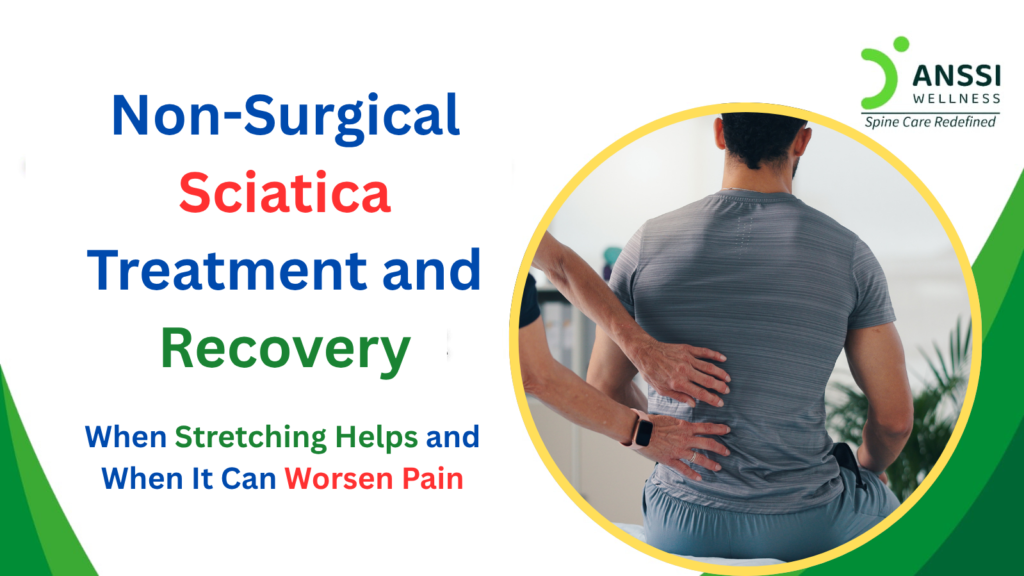
Sciatica is one of the most common causes of lower back and leg pain. The condition can make your everyday activities, such as walking, sitting, bending, or sleeping, extremely uncomfortable. Many people searching for relief are advised to perform stretches and exercises at home, but not all stretches are beneficial for every patient. In some cases, the wrong movements can actually worsen nerve irritation and increase pain.
Understanding when stretching helps and when it can be harmful is an important part of sciatica recovery. Combined with advanced non-surgical treatments such as physiotherapy and Non-Surgical Spinal Decompression Treatment, a properly guided recovery program can help you reduce pain, improve mobility, and avoid surgery.
Understanding Sciatica and Why Movement Matters
Sciatica occurs when the sciatic nerve, the largest nerve in the body, becomes compressed or irritated. The sciatic nerve begins in the lower spine and travels through the hips, buttocks, and down each leg.
The most common causes of sciatica include slipped disc, disc bulge, spinal stenosis, degenerative disc disease, and poor posture. When spinal discs or surrounding structures place pressure on the nerve roots, symptoms such as radiating leg pain, numbness, tingling, and muscle weakness can occur.
Movement plays an important role in recovery because prolonged inactivity can make stiffness and muscle tightness worse. Gentle and controlled movement improves blood circulation, maintains flexibility, and helps reduce tension around the affected nerve.
However, because every sciatica case is different, exercises should be selected carefully. The same stretch that helps one patient may aggravate symptoms in another.
When Stretching Helps Sciatica Recovery
Proper stretching can provide significant relief for many sciatica patients when performed correctly and under guidance.
- One major benefit of stretching is that it helps relax tight muscles around the lower back, hips, and buttocks. Tight muscles, especially the piriformis and hamstrings, can increase pressure around the sciatic nerve and worsen discomfort.
- Gentle stretching also improves spinal mobility and flexibility. When the muscles and joints move more freely, the spine experiences less strain during daily activities.
- Another benefit is improved circulation. Stretching encourages blood flow to the affected tissues, which supports healing and reduces stiffness caused by inactivity.
For patients undergoing treatment, a personalised exercise program designed by a physiotherapist or spine specialist is far more effective than following random routines found on the Internet. These programs are tailored according to the patient’s condition, spinal alignment, pain level, and recovery stage.
Examples of commonly recommended gentle exercises may include:
- Pelvic tilts
- Knee-to-chest stretches
- Gentle lower back mobility exercises
- Controlled core strengthening routines
- Walking programs for improved circulation and mobility
When done correctly, these exercises help stabilise the spine and reduce stress on the affected nerve.
When Stretching Can Worsen Sciatica Pain
Although stretching can be beneficial, certain exercises and movements may aggravate the condition if performed incorrectly.
- One of the biggest mistakes patients make is performing aggressive bending or twisting movements. Deep forward bends or forceful spinal twists may increase pressure on damaged discs and worsen nerve compression.
- Similarly, intense hamstring stretching can sometimes irritate the sciatic nerve further, especially during the acute phase of pain. Patients often assume that “more stretching” means faster recovery, but overstretching can inflame sensitive nerve tissues.
- Poor posture during exercise is another common issue. Rounding the lower back while stretching or lifting can place additional strain on the spine and worsen symptoms.
- Exercising without a proper diagnosis can also be risky. Sciatica symptoms may originate from different spinal conditions, including a slipped disc, spinal stenosis, or degenerative changes. A movement that is safe for one condition may not be appropriate for another.
Pain should never be ignored during exercise. If a movement causes increased leg pain, numbness, tingling, or weakness, it should be stopped immediately.
Sudden jerking movements, heavy lifting, high-impact workouts, and unsupervised gym exercises should generally be avoided during recovery unless approved by a healthcare professional.
Non-Surgical Treatments That Support Sciatica Recovery
Modern non-surgical treatments focus on reducing nerve pressure, improving spinal function, and helping the body heal naturally.
Physiotherapy
Physiotherapy is one of the most important parts of sciatica treatment. A physiotherapist designs a structured recovery plan that includes stretching, strengthening exercises, posture correction, and movement training.
Strengthening the core and lower back muscles helps improve spinal stability and reduces strain on the affected discs and nerves.
Posture and Ergonomic Correction
Poor sitting posture and prolonged desk work are major contributors to sciatica. Ergonomic improvements such as supportive seating, proper desk height, and correct lifting techniques help reduce spinal stress.
Patients are also encouraged to take movement breaks during long sitting periods.
Lifestyle Modifications
Maintaining a healthy weight, staying physically active, and avoiding prolonged inactivity are important for long-term recovery.
Low-impact activities such as walking and swimming are often recommended because they improve mobility without placing excessive strain on the spine.
Non-Surgical Spinal Decompression Treatment
One of the most advanced non-invasive options available today is Non-Surgical Spinal Decompression Treatment.
- This treatment uses specialised equipment to gently stretch the spine in a controlled manner.
- By creating space between the vertebrae, spinal decompression reduces pressure on the spinal discs and sciatic nerves.
- This process helps improve disc hydration and encourages natural healing of damaged tissues.
- Many patients experience relief from radiating leg pain, numbness, and lower back discomfort after undergoing spinal decompression.
The treatment is especially beneficial for conditions such as slipped disc, disc bulge, degenerative disc disease, and chronic sciatica. Unlike surgery, non-surgical spinal decompression treatment does not involve hospitalisation, surgery, or lengthy recovery periods.
Recovery Tips and Precautions
Successful sciatica recovery requires consistency and patience. Exercises and therapies should be performed gradually rather than aggressively.
- You should always listen to your body during recovery. Mild stretching discomfort may be normal, but sharp pain, increased numbness, or worsening symptoms are warning signs that an exercise may not be appropriate.
- It is also important to avoid prolonged bed rest. While short periods of rest may help during severe pain episodes, too much inactivity can weaken muscles and delay recovery.
- Professional supervision plays a key role in safe rehabilitation. Working with a qualified physiotherapist or spine specialist ensures that exercises are adjusted according to progress and symptoms.
Book Consultation:
Call +91 9004726844 | 9920936844
Visit www.anssiwellness.com
About ANSSI:
ANSSI Wellness focuses on improving the quality of life for patients suffering from spinal issues, aiming to provide relief where other conventional treatments have failed. Through advanced Non-Surgical Spinal Decompression Treatment, ANSSI is committed to helping patients avoid surgery and recover in a safe, effective, and compassionate environment.
Connect with ANSSI Wellness on LinkedIn, Instagram, and Facebook for expert guidance.