Back and neck pain have become increasingly common in today’s fast-paced and technology-driven lifestyle. Long working hours, prolonged sitting, excessive smartphone usage, and poor posture habits are placing tremendous stress on the spine. One of the serious spinal conditions linked to these habits is a herniated disc.
A herniated disc can affect a person’s ability to work, sleep, walk, exercise, and perform daily activities comfortably. While ageing and spinal degeneration contribute to disc problems, posture plays a major role in both the development and management of this condition.
Maintaining proper posture is not only important for preventing spinal damage but also for supporting recovery and reducing the risk of worsening symptoms. Understanding how posture affects spinal health can help individuals take proactive steps to protect their spine and avoid long-term complications.
Understanding a Herniated Disc
The spine consists of vertebrae separated by soft spinal discs that act as shock absorbers. Each disc contains a soft gel-like centre surrounded by a tougher outer layer.
A herniated disc occurs when the inner portion of the disc pushes through a weakened or damaged outer layer. This disc material may then irritate or compress nearby spinal nerves, causing pain and neurological symptoms.
Herniated discs most commonly affect:
- The cervical spine (neck)
- The lumbar spine (lower back)
Common symptoms may include:
- Neck or lower back pain
- Pain radiating into the arms or legs
- Sciatica
- Tingling or numbness
- Muscle weakness
- Difficulty sitting, standing, or walking comfortably
In severe cases, the condition can significantly affect mobility and overall quality of life.
How Poor Posture Contributes to a Herniated Disc
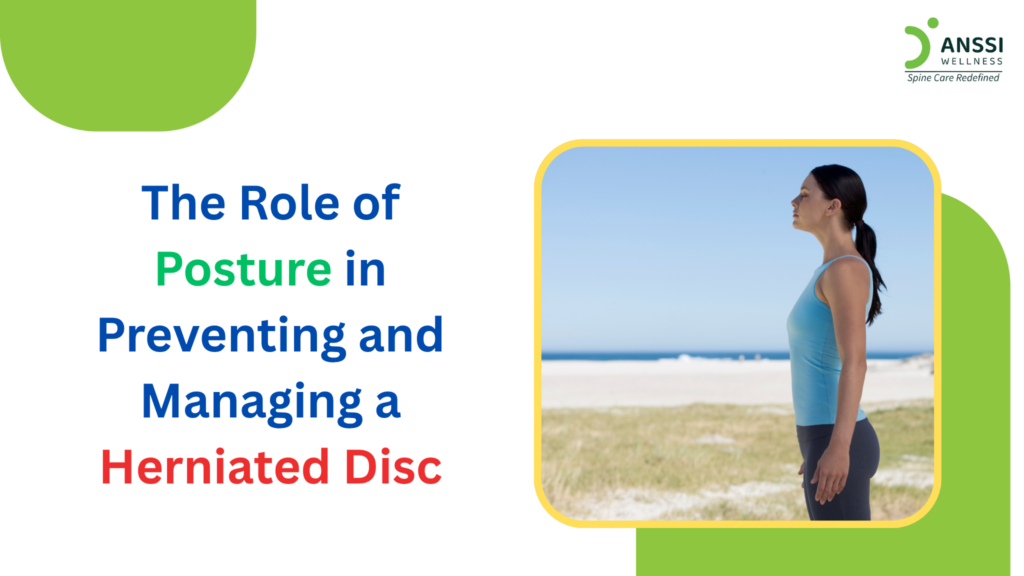
Posture directly influences how pressure is distributed across the spine. Poor posture places excessive mechanical stress on spinal discs, muscles, and joints over time.
Prolonged Sitting and Slouching
Many people spend hours sitting at desks, driving, or using electronic devices. Slouching while sitting increases pressure on the lower back discs and weakens the muscles that support the spine.
When the spine remains in a curved or unsupported position for long periods, the discs experience uneven pressure that may gradually contribute to disc bulging or herniation.
Forward Head Posture
Constantly looking down at smartphones or laptops often causes forward head posture. This places extra strain on the cervical spine and surrounding muscles.
Over time, the increased pressure may accelerate disc degeneration and contribute to neck pain or cervical disc herniation.
Improper Lifting Techniques
Lifting heavy objects while bending incorrectly places sudden pressure on spinal discs. Twisting movements combined with lifting can further increase the risk of disc injury.
Weak Core and Back Muscles
Poor posture often develops alongside weak spinal support muscles. Without proper muscular support, spinal discs absorb greater stress during daily activities.
Sedentary Lifestyle
Lack of movement reduces flexibility, weakens muscles, and contributes to poor spinal alignment, increasing the likelihood of spinal problems over time.
Posture Habits That Support Spinal Health
Good posture habits can significantly reduce spinal stress and help prevent disc-related problems.
Maintain a Neutral Spine
Whether sitting or standing, keeping the spine in a neutral position helps distribute body weight evenly and reduces pressure on discs.
Use Ergonomic Workstations
A properly adjusted chair, desk, and computer screen can help support healthy posture during long working hours.
Important ergonomic measures include:
- Keeping feet flat on the floor
- Maintaining knee and hip alignment
- Positioning screens at eye level
- Supporting the lower back
- Take Frequent Movement Breaks
Sitting continuously for long periods increases spinal compression. Standing, stretching, or walking for a few minutes every hour helps improve circulation and reduce disc pressure.
Practise Proper Lifting Techniques
When lifting objects:
- Bend at the knees
- Keep the back straight
- Hold the object close to the body
- Avoid sudden twisting movements
- Strengthen Core Muscles
Exercises that strengthen abdominal, back, and pelvic muscles provide better support for the spine and improve posture naturally.
Improve Sleeping Posture
Sleeping positions also affect spinal health. Using supportive mattresses and maintaining spinal alignment during sleep can reduce strain on discs.
Warning Signs That Need Medical Attention
Although occasional back discomfort may improve with rest, certain symptoms should never be ignored.
- Persistent Pain: Back or neck pain lasting several weeks may indicate underlying disc damage.
- Radiating Pain: Pain travelling into the arms, buttocks, or legs may suggest nerve compression caused by a herniated disc.
- Tingling and Numbness: Burning sensations, tingling, or numbness in the limbs can indicate nerve irritation.
- Muscle Weakness: Weakness in the arms or legs may affect walking, lifting, or balance and requires medical evaluation.
- Loss of Balance or Coordination: Difficulty maintaining coordination may signal more serious nerve involvement.
- Bladder or Bowel Dysfunction: Loss of bladder or bowel control is considered a medical emergency and requires immediate medical attention.
Early diagnosis is important because untreated nerve compression may worsen over time and increase the risk of long-term complications.
Non-Surgical Treatment Options
Many people fear that a herniated disc automatically requires surgery. However, early treatment often allows patients to recover successfully through non-surgical methods.
Non-Surgical Spinal Decompression Treatment
One advanced non-invasive option is Non-Surgical Spinal Decompression Treatment. This procedure uses a specialised decompression system that gently stretches the spine in a controlled manner.
The treatment creates negative pressure within spinal discs, helping reduce nerve compression and encouraging the movement of nutrients into damaged discs.
Spinal decompression may help relieve pain, improve mobility, and support natural disc healing without surgery.
Physiotherapy and Posture Correction
Physiotherapy programs help strengthen spinal muscles, improve flexibility, and correct posture-related imbalances contributing to disc stress.
Rehabilitation Exercises
Targeted exercises help improve spinal stability and reduce pressure on affected discs.
Lifestyle and Ergonomic Modifications
Adjusting daily habits, work environments, and physical activities plays a major role in long-term recovery and prevention.
References:
- Yates, Justin P. MSc; McGill, Stuart M. PhD. The Effect of Vibration and Posture on the Progression of Intervertebral Disc Herniation. Spine 36(5):p 386-392, March 1, 2011.
- Seidler A, Bolm-Audorff U, Siol T, et al. Occupational risk factors for symptomatic lumbar disc herniation; a case-control study. Occupational and Environmental Medicine 2003;60:821-830.
- The Effects of Vertebral Axial Decompression On Sensory Nerve Dysfunction In Patients with Low Back Pain and Radiculopathy. Tilaro F., MD, Miskovich D. MD. Canadian Journal of Clinical Medicine Vol. 6, No 1, January 1999.
About ANSSI:
ANSSI Wellness focuses on improving the quality of life for patients suffering from spinal issues, aiming to provide relief where other conventional treatments have failed. Through advanced Non-Surgical Spinal Decompression Treatment, ANSSI is committed to helping patients avoid surgery and recover in a safe, effective, and compassionate environment.
Book Consultation:
Call +91 9004726844 | 9920936844
Visit www.anssiwellness.com
Connect with ANSSI Wellness on LinkedIn, Instagram, and Facebook for expert guidance.