Sciatica is one of the most common causes of chronic lower back and leg pain, affecting millions of people worldwide. The condition can make simple daily activities such as walking, sitting, standing, or even sleeping extremely uncomfortable. While some individuals experience occasional mild symptoms, others suffer from severe, radiating pain that significantly affects their quality of life.
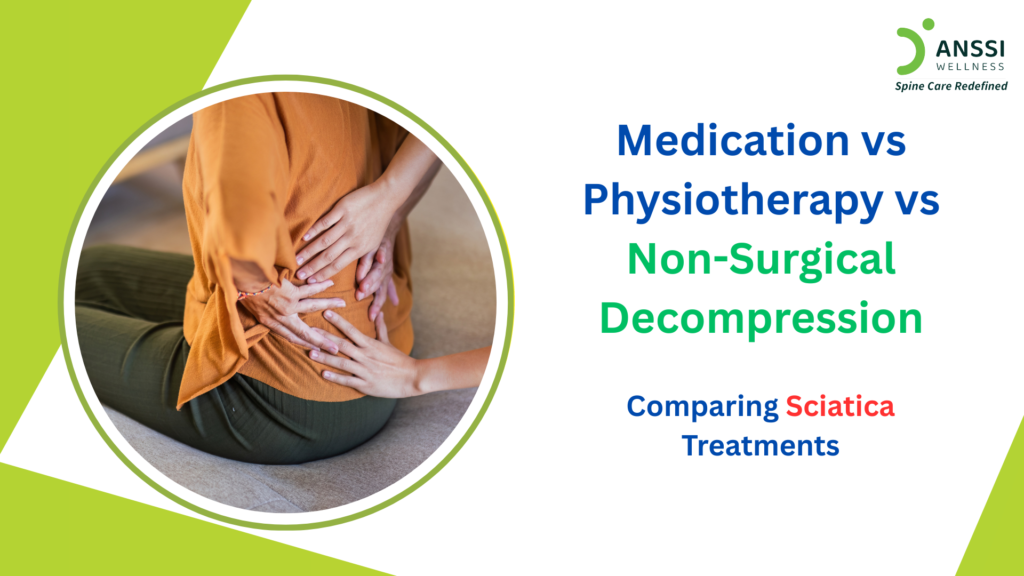
When diagnosed with sciatica, many patients become confused about which treatment option is best. Some rely on medications for quick relief, while others choose physiotherapy or advanced non-surgical treatments. Understanding how each treatment works is important because not all approaches target the root cause of sciatica.
Although medications and physiotherapy can play valuable roles in symptom management and rehabilitation, advanced Non-Surgical Spinal Decompression Treatment is increasingly recognised as an effective solution for addressing the underlying spinal compression responsible for chronic sciatica pain.
Understanding Sciatica and Its Root Cause
Sciatica is not a disease itself but a symptom caused by irritation or compression of the sciatic nerve, the largest nerve in the body. The sciatic nerve originates in the lower spine and travels through the hips, buttocks, and down each leg.
Sciatica commonly develops due to spinal conditions such as:
- Slipped disc or herniated disc
- Disc bulge
- Degenerative disc disease
- Spinal stenosis
- Spondylosis
When spinal discs become damaged or displaced, they may press against nearby nerve roots that form the sciatic nerve. This compression produces symptoms such as:
- Sharp radiating pain from the lower back to the leg
- Tingling or numbness
- Burning sensation
- Muscle weakness
- Difficulty standing or walking
- Pain during sitting or bending
Because the root cause often involves spinal nerve compression, treatments that only mask symptoms may provide temporary relief without correcting the actual problem.
Medication for Sciatica
Medication is usually one of the first treatments recommended for sciatica pain. Doctors may prescribe:
- Painkillers
- Anti-inflammatory medications
- Muscle relaxants
- Nerve pain medications
These medicines help reduce inflammation and discomfort, especially during acute flare-ups.
Benefits of Medication
- Quick Pain Relief: Medications can temporarily reduce pain intensity, allowing patients to perform daily activities more comfortably.
- Reduced Inflammation: Anti-inflammatory drugs may help decrease swelling around irritated nerves.
- Easy Accessibility: Most medications are widely available and relatively easy to use under medical supervision.
Limitations of Medication
Despite providing temporary comfort, medications have several drawbacks.
- Does Not Treat the Root Cause: Painkillers cannot repair damaged discs or relieve spinal compression permanently. Once the medication effect wears off, symptoms often return.
- Side Effects: Long-term medication use may cause stomach irritation, drowsiness, dizziness, kidney problems, or dependency risks.
- Temporary Solution: Medication mainly focuses on symptom control rather than long-term spinal recovery.
For chronic sciatica patients, relying solely on medication may not provide sustainable improvement.
Physiotherapy for Sciatica
Physiotherapy is another commonly recommended treatment for sciatica. It focuses on improving posture, flexibility, muscle strength, and spinal support through guided exercises and rehabilitation programs.
A physiotherapy plan may include:
- Stretching exercises
- Core strengthening exercises
- Postural correction
- Mobility training
- Manual therapy
- Heat or cold therapy
Benefits of Physiotherapy
- Improved Mobility: Regular physiotherapy can reduce stiffness and improve flexibility in the lower back and legs.
- Better Muscle Support: Strengthening core and spinal muscles helps support the spine and reduce mechanical stress.
- Rehabilitation and Prevention: Physiotherapy teaches patients how to move safely and prevent future injury.
- Non-Invasive Approach: The treatment does not involve surgery or prolonged medication use.
Limitations of Physiotherapy
Although physiotherapy can be highly beneficial, it may not fully resolve severe cases of nerve compression.
- Slower Results: Some patients require several weeks or months before experiencing significant improvement.
- Limited Effect on Severe Disc Compression: If a bulging or herniated disc is strongly compressing the sciatic nerve, exercise alone may not adequately relieve pressure.
- Pain During Exercise: Certain movements or stretches may aggravate symptoms if not carefully supervised.
Physiotherapy is often most effective when combined with treatments that directly address spinal disc pressure.
Non-Surgical Spinal Decompression Treatment
Advanced Non-Surgical Spinal Decompression Treatment is a modern, non-invasive procedure designed to target the root cause of sciatica by relieving spinal disc and nerve compression.
The treatment uses a computer-controlled decompression system that gently stretches the spine in a precise and controlled manner. This creates negative pressure within the affected spinal discs.
This negative pressure helps pull bulging or herniated disc material away from compressed nerves, reducing irritation and inflammation around the sciatic nerve.
The decompression process also improves the flow of oxygen, water, and nutrients into damaged discs, supporting natural healing and recovery.
Benefits of Non-Surgical Spinal Decompression
- Targets the Root Cause: Unlike medications that only reduce pain temporarily, spinal decompression directly addresses nerve compression.
- Drug-Free and Surgery-Free: The treatment avoids surgical risks, injections, and prolonged medication dependency.
- Supports Disc Healing: Improved nutrient flow may help damaged spinal discs recover naturally over time.
- Long-Term Relief: By reducing mechanical pressure on nerves, many patients experience longer-lasting improvement.
Comfortable and Non-Invasive: Patients remain fully clothed and relaxed during treatment sessions without hospitalisation or downtime.
Comparing the Three Treatments
Each treatment option has its own role in managing sciatica, but their effectiveness varies depending on the severity and cause of the condition.
Pain Relief
- Medication provides the fastest short-term pain relief.
- Physiotherapy gradually improves mobility and muscle function.
- Spinal decompression reduces pain by relieving nerve pressure directly.
Treating the Root Cause
- Medication mainly masks symptoms.
- Physiotherapy improves spinal support but may not fully remove severe nerve compression.
- Non-surgical decompression specifically targets disc-related nerve pressure.
Long-Term Effectiveness
- Medication often requires ongoing use.
- Physiotherapy supports long-term spinal health when continued consistently.
- Spinal decompression aims to provide more sustained relief by improving disc function.
Safety and Recovery
- Medication may produce side effects with long-term use.
- Physiotherapy and decompression are non-invasive and generally safer alternatives.
- Spinal decompression avoids surgical recovery time and hospitalisation.
Combination Approach
In many cases, doctors may combine treatments for better outcomes. Medication may help manage severe pain initially, physiotherapy may improve muscle strength, and spinal decompression may relieve the underlying disc pressure causing sciatica.
References:
- Vroomen, Patrick C. A. J.; de Krom, Marc C. T. F. M.; Slofstra, Patty D.; Knottnerus, J. Andre*. Conservative Treatment of Sciatica: A Systematic Review. Journal of Spinal Disorders 13(6):p 463-469, December 2000.
- Dove, L., Jones, G., Kelsey, L. et al. How effective are physiotherapy interventions in treating people with sciatica? A systematic review and meta-analysis. Eur Spine J 32, 517–533 (2023).
- Effects of Vertebral Axial Decompression On Intradiscal Pressure. Ramos G., MD, Martin W., MD. Journal of Neurosurgery 81: 350-353, 1994.
- Dermatosomal Somatosensory Evoked Potential Demonstration of Nerve Root Decompression After VAX-D Therapy. Naguszewski W., MD, Naguszewski R., MD, Gose E., Ph.D. Journal of Neurological Research Vol 23 , No 7, October 2001.
About ANSSI:
ANSSI Wellness focuses on improving the quality of life for patients suffering from spinal issues, aiming to provide relief where other conventional treatments have failed. Through advanced Non-Surgical Spinal Decompression Treatment, ANSSI is committed to helping patients avoid surgery and recover in a safe, effective, and compassionate environment.
Book Consultation:
Call +91 9004726844 | 9920936844
Visit www.anssiwellness.com
Connect with ANSSI Wellness on LinkedIn, Instagram, and Facebook for expert guidance.