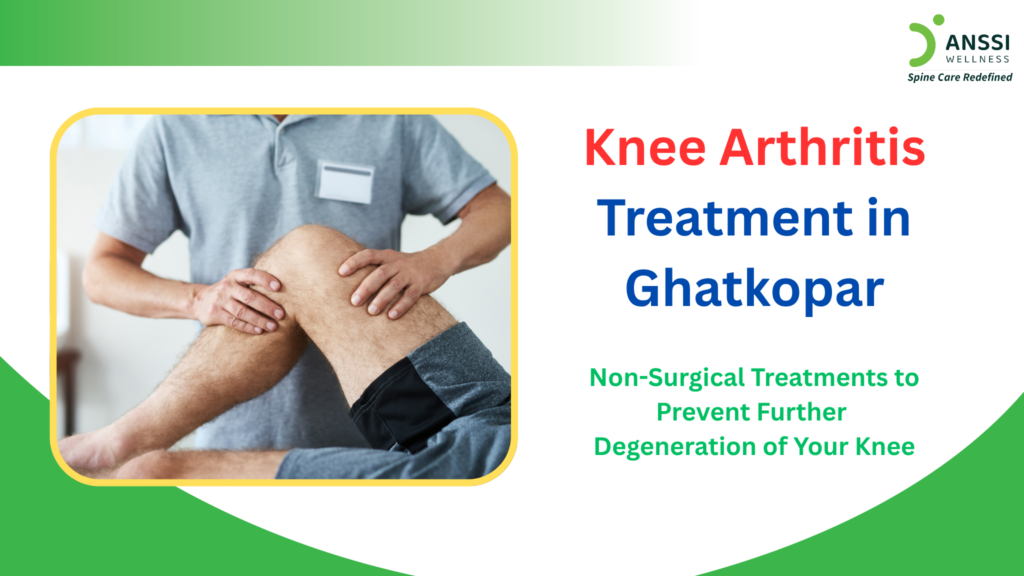
Knee arthritis is one of the leading causes of chronic joint pain among adults. Whether you are an office professional climbing stairs at work, a homemaker managing daily household activities, a senior citizen trying to remain independent, or someone whose job requires prolonged standing, knee pain can gradually interfere with every aspect of life.
Many people dismiss early knee pain as a normal part of ageing or temporary fatigue. Unfortunately, osteoarthritis is a progressive condition. Without timely treatment, the knee joint may continue to deteriorate, making everyday activities increasingly difficult. The good news is that early-stage knee arthritis can often be managed effectively through non-surgical treatments that help reduce pain, improve mobility, and slow further joint degeneration.
Understanding Early Knee Osteoarthritis
The knee is one of the largest and most active joints in the human body. It is covered with a smooth layer of cartilage that allows the bones to move freely while absorbing the forces generated during walking, climbing stairs, and standing.
In osteoarthritis, this protective cartilage gradually wears away. As the cushioning becomes thinner, the bones begin to experience increased friction during movement. The surrounding tissues may become inflamed, leading to pain, stiffness, swelling, and reduced flexibility.
Several factors can contribute to the development of knee osteoarthritis, including:
- Age-related wear and tear
- Excess body weight
- Previous knee injuries
- Repetitive stress from work or sports
- Family history of arthritis
- Weak muscles supporting the knee joint
Recognising these risk factors allows patients to seek treatment before significant joint damage occurs.
Why Knee Arthritis Cases are Increasing
Modern lifestyles have increased the number of people experiencing chronic knee pain.
Many office workers spend long hours sitting, resulting in weaker thigh and leg muscles that provide less support to the knee joint. Reduced physical activity and increasing obesity further increase stress on the knees.
Residents who regularly climb stairs in residential buildings, travel extensively using public transport, or stand for prolonged periods at work also place repetitive loads on their knee joints. Previous sports injuries or occupational strain may accelerate cartilage degeneration even further.
These factors make early osteoarthritis increasingly common among people of different age groups.
Early Symptoms You Should Not Ignore
The symptoms of knee arthritis usually develop gradually.
Early warning signs include:
- Pain while walking or climbing stairs
- Morning stiffness that improves with movement
- Swelling around the knee
- Clicking or grinding sensations during movement
- Difficulty squatting or sitting cross-legged
- Reduced walking distance because of pain
Many people continue their normal routine despite these symptoms. However, persistent knee pain should never be ignored, as early diagnosis offers the best opportunity to slow disease progression.
Non-Surgical Treatment Options
Fortunately, many patients with early-stage osteoarthritis can benefit from conservative treatment without immediately considering surgery.
Lifestyle Modification
Simple changes can significantly reduce stress on the knee joint.
Maintaining a healthy body weight decreases the load transmitted through the knee during walking. Regular low-impact exercise such as walking or cycling helps maintain joint mobility and muscle strength.
Avoiding activities that excessively strain the knee while remaining physically active is equally important.
Physiotherapy
Physiotherapy plays a central role in managing early osteoarthritis.
A physiotherapist designs an exercise programme that strengthens the quadriceps, hamstrings, and surrounding muscles. Better muscle support improves joint stability and reduces stress on damaged cartilage.
Stretching exercises also improve flexibility and reduce stiffness.
Medication
Pain-relieving medications or anti-inflammatory medicines may help control symptoms during flare-ups. However, these medicines mainly provide temporary symptom relief and do not reverse cartilage degeneration.
For this reason, medications are often combined with rehabilitation and lifestyle modification rather than being relied upon as the sole treatment.
Advanced Knee Rehabilitation Programme
For appropriately selected patients with early-stage knee osteoarthritis, ANSSI Wellness’s Ghatkopar clinic offers an Advanced Knee Rehabilitation Programme designed to provide comprehensive conservative care.
The programme combines several evidence-based rehabilitation approaches, including:
- Knee decompression technology
- Physiotherapy
- Muscle strengthening exercises
- Flexibility training
- Balance improvement
- Posture correction
- Lifestyle counselling
Following a detailed orthopaedic consultation and clinical evaluation, a personalised rehabilitation plan is developed based on the patient’s symptoms, medical history, physical examination, and imaging findings where required.
The objective is to reduce stress on the knee joint, improve mobility, strengthen supporting muscles, and help patients perform daily activities with greater comfort.
It is important to understand that this programme is intended for appropriately selected patients, particularly those with early-stage osteoarthritis. Individuals with advanced joint destruction or severe deformity may require different treatment approaches, including surgical consultation.
Why Early Treatment Matters
Seeking treatment during the early stages of osteoarthritis offers several important advantages.
Early rehabilitation may:
- Reduce pain and stiffness
- Improve walking ability
- Maintain independence
- Enhance joint flexibility
- Slow the progression of joint degeneration
- Delay or reduce the need for knee replacement surgery in suitable patients
The longer joint degeneration continues untreated, the more difficult it becomes to preserve normal knee function.
Why Choose ANSSI Wellness Ghatkopar?
Patients visiting ANSSI Wellness Ghatkopar receive a comprehensive evaluation before treatment begins.
The clinic provides:
- Orthopaedic consultation
- Clinical examination
- Imaging review when appropriate
- Personalised rehabilitation planning
- Physiotherapy
- Advanced Knee Rehabilitation Programme
- Ongoing guidance on exercise and lifestyle modification
This integrated approach focuses on helping patients manage knee arthritis through structured, non-surgical care whenever clinically appropriate.
About ANSSI:
ANSSI Wellness focuses on improving the quality of life for patients suffering from knee issues, aiming to provide relief where other conventional treatments have failed. Through Advanced Knee Rehabilitation Treatment, ANSSI is committed to helping patients avoid surgery and recover in a safe, effective, and compassionate environment.
Connect with ANSSI Wellness on LinkedIn, Instagram, and Facebook for expert guidance.
Clinical References:
- Silverwood V, Blagojevic-Bucknall M, Jinks C, Jordan JL, Protheroe J, Jordan KP. Current evidence on risk factors for knee osteoarthritis in older adults: a systematic review and meta-analysis. Osteoarthritis and Cartilage. 2015;23(4):507-515.
- Bannuru RR, Osani MC, Vaysbrot EE, et al. OARSI guidelines for the non-surgical management of knee, hip, and polyarticular osteoarthritis. Osteoarthritis and Cartilage. 2019;27(11):1578-1589.
- Fransen M, McConnell S, Harmer AR, Van der Esch M, Simic M, Bennell KL. Exercise for osteoarthritis of the knee: a Cochrane systematic review. British Journal of Sports Medicine. 2015;49(24):1554-1557.
- Skou ST, Roos EM, Laursen MB, et al. A randomised, controlled trial of total knee replacement. New England Journal of Medicine. 2015;373(17):1597-1606.