
Sciatica can turn simple everyday activities into a challenge. Sitting at a desk, getting out of bed, walking to work, or even standing for a few minutes may become uncomfortable when pain travels from the lower back or buttock down the leg.
Unlike ordinary back pain, sciatica involves irritation or compression of the sciatic nerve or its nerve roots. The condition can cause pain, tingling, numbness, or weakness along the path of the nerve. Common causes include disc-related problems such as a herniated or bulging disc, spinal degeneration and, in some cases, narrowing around the nerves.
Exercise can play an important role in managing sciatica, but not every exercise is suitable for every person. The right movement may help one patient while aggravating symptoms in another. Understanding what is safe, what to avoid, and when to seek professional help is therefore essential.
How Can Sciatica Affect Your Life?
Sciatica can interfere with much more than physical comfort. Persistent leg or back pain can make it difficult to sit for long periods, sleep comfortably, commute, exercise, or perform household activities.
People with severe symptoms may begin avoiding movement because they are afraid that activity will make their pain worse. Unfortunately, prolonged inactivity can contribute to stiffness, reduced muscle strength, and loss of physical conditioning.
This does not mean that you should simply exercise through the pain. Instead, the goal is to maintain gentle, appropriate movement while avoiding activities that aggravate the irritated nerve.
Why is Exercise Important for Sciatica?
Appropriate exercise can help maintain spinal mobility, reduce stiffness, and improve the strength and flexibility of muscles supporting the lower back and pelvis. Regular movement may also help patients gradually return to their normal activities.
However, exercise should be considered part of an overall treatment plan rather than a universal cure for sciatica.
The ideal exercise programme depends on the underlying cause, the severity of symptoms, and how your body responds to particular movements. A physiotherapist or other qualified healthcare professional can help determine which exercises are appropriate.
Safe Exercises You May Be Able to Try at Home
For some people with mild or stable sciatica, gentle exercises may be helpful. Always perform movements slowly and stop if symptoms significantly worsen.
1. Gentle Walking
Walking is one of the simplest ways to remain active. Short, comfortable walks can help prevent prolonged inactivity. Start with a manageable distance and gradually increase it if walking does not aggravate your symptoms.

2. Pelvic Tilts
Pelvic tilts involve gently moving the pelvis while lying down. This controlled movement can encourage mobility in the lower back and help activate the muscles around the abdomen and pelvis.

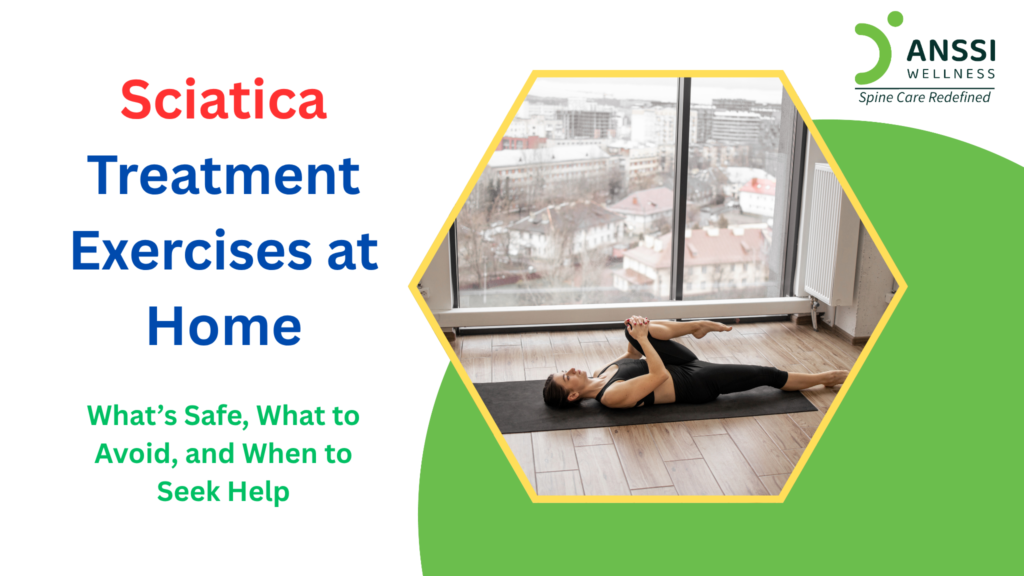
3. Gentle Knee-to-Chest Movement
For some patients, bringing one knee gently towards the chest while lying down may provide a comfortable stretch in the lower back. However, this exercise is not suitable for everyone, particularly if it increases leg symptoms.

4. Hamstring Stretching
Tight hamstrings can contribute to discomfort and restricted movement. Gentle hamstring stretching may help improve flexibility when performed correctly. Avoid aggressive stretching or bouncing.

5. Gentle Core Strengthening
Strengthening the muscles that support the spine can be an important component of long-term back care. Simple, controlled core exercises may be introduced gradually according to your symptoms and physical ability.

6. Nerve-Mobility Exercises
Specific nerve-gliding or nerve-mobility exercises may sometimes be recommended for people with nerve-related symptoms. These exercises should ideally be taught by a qualified physiotherapist because performing them incorrectly or too aggressively can aggravate symptoms.

What Should You Avoid When Exercising?
When dealing with sciatica, more exercise is not necessarily better. Certain movements may increase irritation around an already sensitive nerve.
Avoid or modify activities that cause significant or progressively worsening symptoms. Such activities may include:
- Heavy lifting
- Sudden twisting movements
- High-impact exercise during an acute flare-up
- Deep or aggressive stretching
- Repeated bending if it aggravates your symptoms
- Exercising through increasing leg pain, numbness, or weakness
- Returning suddenly to intense workouts after a period of inactivity
If a particular movement causes pain to travel further down the leg, produces more tingling or numbness, or leaves you significantly worse afterwards, stop the exercise and seek professional advice.
When Should You Stop Exercising?
Mild muscular discomfort during a new exercise can sometimes be expected, but increasing nerve-related symptoms should not be ignored.
Stop and seek professional guidance if you develop worsening pain that travels further down the leg, increasing numbness, new weakness, or difficulty performing normal movements.
The way your symptoms respond to exercise can also provide useful information to a healthcare professional. A personalised assessment can help identify which movements are appropriate and which should be avoided.
When Should You Seek Medical Help?
Not every episode of sciatica requires urgent medical attention. However, persistent, severe, or recurring symptoms should be evaluated, particularly if home exercises and activity modification are not providing improvement.
Medical assessment becomes especially important if you experience:
- Persistent or worsening leg pain
- Numbness that continues or increases
- New or progressive weakness in the leg or foot
- Difficulty walking normally
- Symptoms that repeatedly return
- Severe pain that interferes with sleep or daily activities
Certain symptoms require urgent medical attention. These include new problems controlling the bladder or bowel, numbness around the groin or saddle area, or significant or rapidly progressing weakness in the legs. These can indicate serious nerve compression and should not be managed with home exercises alone.
What If Exercise Isn’t Providing Enough Relief?
Exercise and physiotherapy can be valuable parts of sciatica management, but persistent symptoms may sometimes indicate an underlying structural problem such as a disc bulge or herniation.
In appropriately selected patients with certain disc-related conditions, treatment options such as Non-Surgical Spinal Decompression Treatment (NSSDT) may be discussed with a qualified doctor. The treatment is designed to provide controlled decompressive forces to the spine and may be considered as part of a broader non-surgical treatment programme.
The suitability of spinal decompression depends on the individual’s diagnosis and symptoms. It should not replace appropriate medical assessment, particularly when neurological symptoms are present.
About ANSSI:
ANSSI Wellness focuses on improving the quality of life for patients suffering from spinal issues, aiming to provide relief where other conventional treatments have failed. Through advanced Non-Surgical Spinal Decompression Treatment, ANSSI is committed to helping patients avoid surgery and recover in a safe, effective, and compassionate environment.
Book Consultation:
Call +91 9004726844 | 9920936844
Visit www.anssiwellness.com
Connect with ANSSI Wellness on LinkedIn, Instagram, and Facebook for expert guidance.