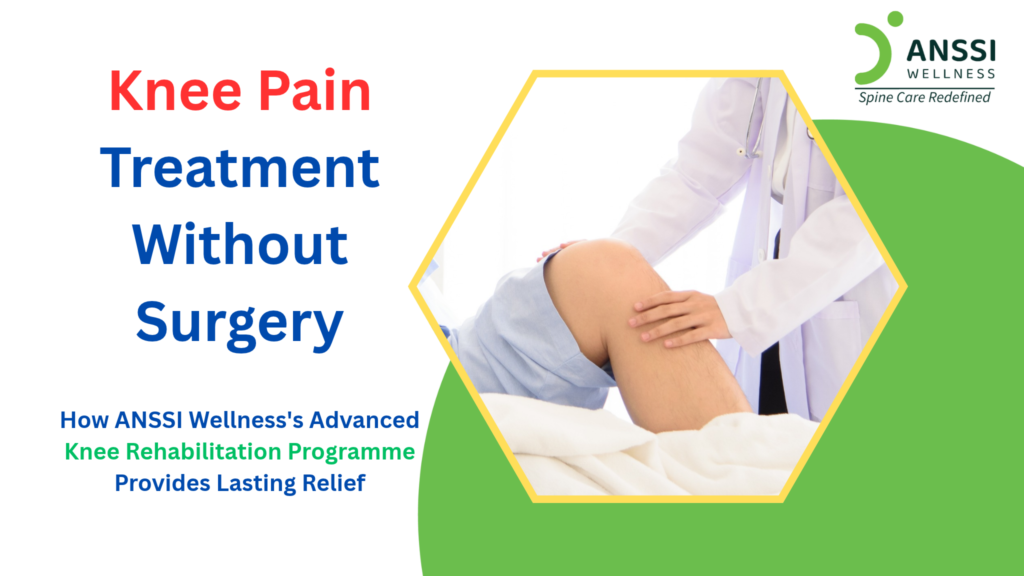
Chronic knee pain can gradually affect almost every aspect of daily life. Walking, climbing stairs, standing for extended periods, and even getting up from a chair may become uncomfortable. For many people, particularly those experiencing early to moderate knee osteoarthritis, the fear of surgery adds to the physical and emotional burden.
However, surgery is not the only treatment option for every patient. Depending on the cause and severity of knee pain, a structured non-surgical approach combining clinical assessment, physiotherapy, targeted exercises, and appropriate rehabilitation technology may help improve comfort and mobility.
At ANSSI Wellness, the Advanced Knee Rehabilitation Programme offers an integrated approach for selected patients seeking non-surgical management of chronic knee pain.
Understanding the Causes of Chronic Knee Pain
The knee is a complex joint involving bones, cartilage, ligaments, tendons, and surrounding muscles. Pain can develop when one or more of these structures becomes irritated, injured, or affected by a degenerative condition.
- Knee osteoarthritis is a common cause of persistent pain. It involves changes in the joint cartilage and underlying bone, sometimes accompanied by stiffness, swelling, and reduced movement.
- Other contributors include previous injuries, muscle weakness, excess body weight, and repetitive joint loading.
Common symptoms include:
- Pain while walking, standing, or climbing stairs.
- Stiffness after sitting for a prolonged period.
- Swelling or a feeling of tightness around the joint.
- Difficulty bending or straightening the knee.
- Reduced confidence when walking or performing everyday activities.
Persistent symptoms should be assessed by a qualified orthopaedic doctor rather than automatically attributed to osteoarthritis. An accurate diagnosis helps determine which treatment options are appropriate.
Step 1: Begin with a Comprehensive Knee Assessment
Effective knee pain management starts with understanding the patient’s condition.
- The assessment may include a review of medical history, previous injuries, symptom duration, walking difficulties, and activities that aggravate the pain.
- A doctor may also examine knee movement, muscle strength, swelling, alignment, balance, and walking patterns.
- X-rays can help identify joint-space changes and other bony features associated with osteoarthritis.
- MRI may be recommended when additional information about soft tissues or another suspected condition is needed.
This assessment helps establish realistic rehabilitation goals and identify any factors requiring medical attention before treatment begins.
Step 2: Understand the Role of Knee Decompression Technology
The Advanced Knee Rehabilitation Programme may incorporate knee decompression technology as part of a broader rehabilitation plan.
- Depending on the equipment and protocol used, controlled mechanical forces are applied to the knee with the intention of temporarily reducing joint loading and supporting symptom management.
- For selected patients, this may be considered alongside other conservative treatments.
- Its suitability depends on the individual’s diagnosis, symptoms, medical history, and response to treatment.
- A qualified doctor should explain the expected benefits, limitations, and available alternatives before treatment begins.
Step 3: Integrate Physiotherapy for Better Movement
Physiotherapy is an important component of non-surgical knee rehabilitation. Pain can lead people to move less, which may contribute to reduced muscle strength, poorer endurance, and greater difficulty performing everyday tasks.
An individualised physiotherapy programme can address these limitations through suitable movement exercises and functional training.
Depending on the patient’s needs, treatment may include:
- Gentle knee mobility exercises to improve comfortable movement.
- Quadriceps and hamstring strengthening to support joint function.
- Hip and lower-limb exercises to improve movement control.
- Balance training to support stability during daily activities.
- Guidance on modifying activities that aggravate symptoms.
The programme should progress according to the patient’s tolerance and functional improvement. Exercises that cause substantial or persistent worsening of pain should be reviewed by the treating professional.
Step 4: Follow a Structured Exercise and Lifestyle Plan
Rehabilitation does not end with supervised treatment sessions. Consistent exercise and practical lifestyle changes help patients work towards maintaining their progress.
- A suitable home programme may include progressive strengthening, flexibility exercises, and low-impact physical activities such as walking or cycling, where tolerated.
- Patients should receive guidance on the frequency and intensity of exercise rather than pushing through significant pain.
- For people who are overweight, weight management may reduce the mechanical load placed on the knees.
- Supportive footwear, appropriate activity modification, and avoiding prolonged inactivity may also help.
The objective is not simply to reduce pain during a treatment session. It is to improve the ability to perform meaningful activities, such as walking comfortably, climbing stairs, and maintaining independence.
Who May Benefit from the Advanced Knee Rehabilitation Programme?
A structured non-surgical rehabilitation approach may be appropriate for some people with early to moderate knee osteoarthritis, persistent knee discomfort, or reduced mobility associated with joint degeneration.
However, no single programme is suitable for everyone.
- Patients with severe joint damage, significant instability, particular injuries, or rapidly worsening symptoms may require additional medical evaluation and different treatment options.
- A hot, red, suddenly swollen knee, especially with fever, requires urgent medical assessment because infection or another serious condition may be responsible.
- Significant swelling after an injury or an inability to bear weight also warrants prompt evaluation.
What Results Can You Realistically Expect?
The goal of the Advanced Knee Rehabilitation Programme is to help suitable patients manage pain, improve movement, strengthen supporting muscles, and participate more comfortably in everyday activities.
- Progress varies according to the severity of joint changes, overall health, consistency with rehabilitation, and other contributing conditions.
- Some patients may notice improvement relatively early, while others need a longer-term management plan.
Although non-surgical care can improve pain and function, it cannot guarantee permanent relief or eliminate the possibility of future surgery. For people whose symptoms remain severe despite appropriate conservative treatment, an orthopaedic specialist doctor can discuss whether surgical options may offer greater benefit.
About ANSSI:
ANSSI Wellness focuses on improving the quality of life for patients suffering from knee issues, aiming to provide relief where other conventional treatments have failed. Through Advanced Knee Rehabilitation Treatment, ANSSI is committed to helping patients avoid surgery and recover in a safe, effective, and compassionate environment.
Connect with ANSSI Wellness on LinkedIn, Instagram, and Facebook for expert guidance.